Politicised arts commentary
Helen Lewishas written about the decline of professional comedy as it reaches for the low-hanging fruit of being anti-woke. Arguing that there is too much politicization of arts criticism, Helen writes: “We’ve switched from a review culture (is this well directed? acted? written?) to an opinion culture (what does it say about the Yanamamo).” Hear, hear. More Sontagian criticism, please.
Flaubert
A lovely essay about Flaubert’s devotion to Art (which he always capitalised) and his lifelong aversion to middle-class society. The opening describes how students find Madame Bovary boring or hate it because they hate Emma Bovary’s selfishness. (They may be interested to learn that Flaubert hate his characters, too.) But Flaubert is an unavoidable part of the history of the novel, influencing Zola and Proust and Tolstoy and Joyce and many others. As Scott Bradfield says, “It’s impossible to think of any other writer who proved such a large influence on two seemingly antithetical schools of fiction—both the “realistic novel” and the “romance.””
And here is James Wood’s 1999 essay about Flaubert and literary history, a classic.
The hotness of Jane Eyre
I certainly don’t agree with all of this article about “the hotness of Jane Eyre” by Bibliopathology by Matt Rowland Hill but it was a very interesting reframing of the dynamic between Rochester and Jane.
A contemporary Sex Positive reading of Jane Eyre might look like this: by agreeing heartily to the repetition of her trauma – by reenacting it in a consensual context – Jane Eyre gains mastery over its memory, and is ultimately liberated from it. Meanwhile that same consensual context becomes a way of licensing and taming Rochester’s domineering impulses.
Complicated sentences are good for you.
Great piece on Language Log (why aren’t they on Substack yet!?) about a new study from MIT which shows more brain activity when you are confronted with sentences that are complicated, unusual, or odd in some way. A combination of neuroscience, anecdotes from China, and poetry. Recommended.
Reading several books at once
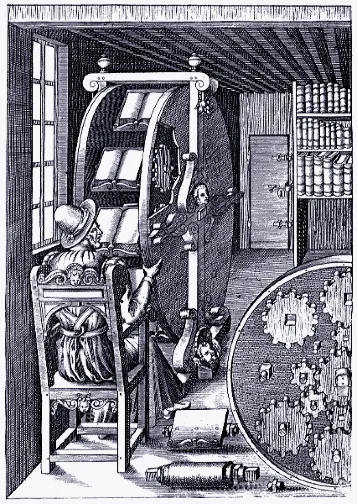
A lovely essay on TEXT! including a discussion of Renaissance book wheels, which are probably not real, but look enticing. People say the internet killed attention spans but this essay is a good example of the continuity between then and now. Scrolling a book wheel is like browsing the web, clicking between web pages is like flicking through a magazine, only reading the first half of everything is what we all do with books anyway.
Reading is always about many texts at the same time; reading is always plural and, in that sense, necessarily unfocused and dispersed.
Taylor Swift studies at Harvard
Written by the professor teaching the course. Madness. And they wonder why the humanities are “in decline”. Harold Bloom predicted that English Literature departments would split into Cultural Studies and smaller Literature departments, more akin to Classics. And here we are. Remember, this isn’t about whether you think Taylor Swift is good, but what you think English Literature departments ought to teach. Opportunity cost, anyone? If the person deciding you won't teach your subject anymore is you, what do you have to complain about?
Jane Austen and Taylor Swift
This essay generalises too much from a conversation overheard on a train about Taylor Swift, but the first half about Jane Austen is very good.
Anglo Saxon Psalter Discovered!
Possibly belonging to Harold Godwinson’s sister. And more here.