

Typically, I would write a post about seventieth literary anniversaries at this time of year, as a counterbalance to the insistence on centenaries. But 1956 wasn’t such an interesting year as some of the other ’50s (a vintage decade in general).
There are several interesting literary anniversaries this year. The Murder of Roger Ackroyd and Tom Sawyer come to mind. Winnie-the-Pooh, The Sun Also Rises, The Castle. And, of course, The Last Battle.
But for me, the most interesting literary anniversaries in 2026 are:
four hundred years since the death of Francis Bacon;
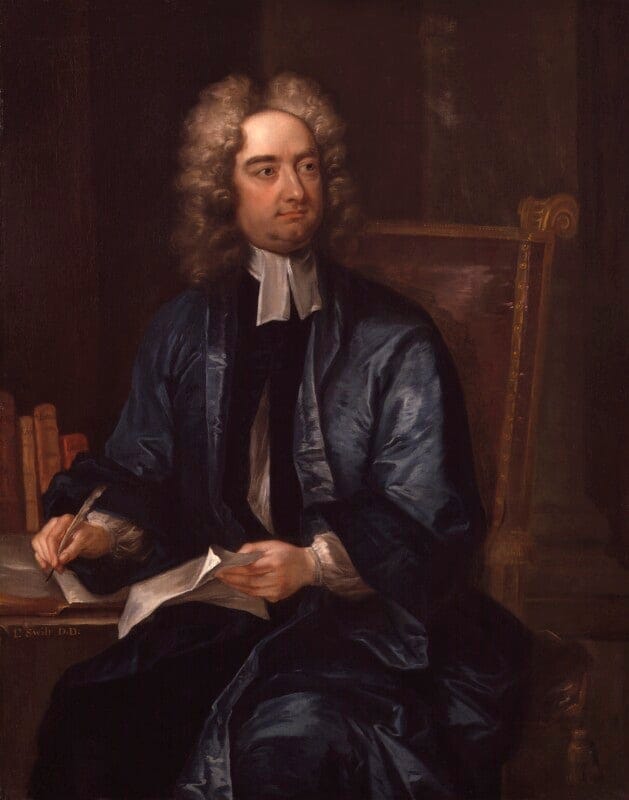
three hundred years since Gulliver’s Travels;
two-hundred-and-fifty years since The Wealth of Nations.
Bacon was, as well as a great essayist, one of the most important scientific writers in English. Gulliver’s Travels is surely one of the great books of the world, a masterwork of ambivalence about politics, slavery, commerce, and progress. As for Smith, is it possible to summarise his magnitude?
Bacon, Smith, and Swift share many qualities: they are all splendid prose writers; they are all interested in science, politics, and the future; they stand in a line of inheritance to each other.
And they represent a part of English literature that gets less attention outside the academy. They are not loved like Austen and Auden. But the essays, utopias, treatises, pamphlets, and philosophy of these three writers are as much literature as anything else.
Swift is perhaps the most intelligent writer in the English canon. Bacon has many turns of phrase that are as vivid and memorable as those of the great poets. Smith is a splendid writer who uses details and stories in his work in ways that he clearly learned from novelists.
The literary anniversaries that get the most attention tend to be centenaries and novels. These three anniversaries point to a more rational, discursive, and argumentative tradition in English literature. These writers are more practical and literal than the nineteenth-century novelists, but just as enticing and exciting to read.
I look forward to writing about them all this year.
Please add 400 years since John Aubrey’s birth in 1626… should be at least no.5 on your list?
Let's not forget the 800th anniversary of the death of St. Francis of Assisi who was not only a great religious figure but also the first poet in modern Italian literature. He was, that is, the first poet to write in the language of common people.