

I appeared on the Canadian radio programme ‘A Little More Conversation’ to talk about Second Act and late bloomers. Ben O’Hara-Byrne asked very good questions.
It’s OK to Take a Book Seriously
Hear! Hear! I enjoyed every word of this essay. “I think the major barrier to artistic progress nowadays is our insistence that art needs to progress. Because if we’re not allowed to circle back around and revisit the past, then the range of allowable art is inevitably going to become narrower and narrower and narrower.” By Naomi Kanakia.
Portrait of a Mother Reader
Interview with my wife (Catherine Oliver) about her reading habits. Great piece. “I don’t especially like discussing books. With fiction, I let myself become completely absorbed by the world of the story, and I don’t want to hear other people’s opinions or critical responses!” This is a good format.
The Critic as Friend
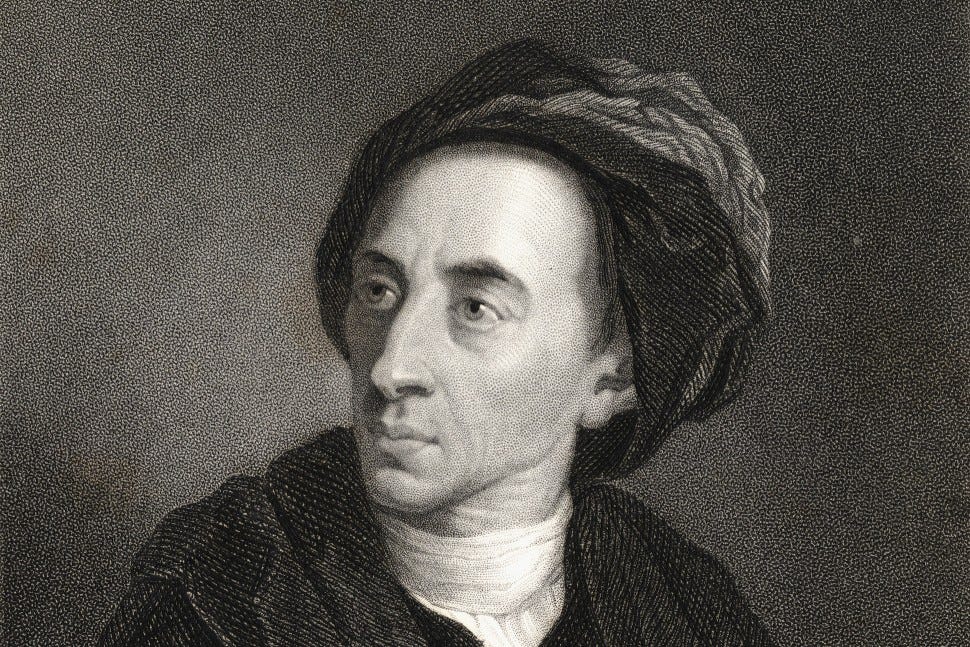
Merve Emre remains (one of) my favourite living critic(s). This is a splendid essay about the role of the critic in modern culture. She quotes everyone. I was bound to love this essay because I admire Pope so much, but there is something interesting in every paragraph. This is, more or less, what I try to do here at The Common Reader, too: “The critic models the practice of inquiry and the manner of feeling by which you, the reader, can also become a friend to the text.” (My thanks to Nabeel S. Qureshi for sending me this.)
Reading classic novels with ChatGPT
Good! I think the reference in this piece to marginal notes (and by implication, commonplace books) is very apt.
What makes a good franchise
I enjoy the cultural criticism of economists and Noah Smith makes many good points here about how franchise can be successful, despite the fact that, right now, they often aren’t. He’s right that less is often more: Borges and Kafka can frequently do more in a paragraph than other writers can do in whole chapters, whole books even.
Jan Swafford
Interview with the composer and Mozart biographer by Dan.
There aren’t that many genuinely new ideas in the world. They don’t happen that often and when everybody’s trying to create them, it’s chaos.
I would say that the zeitgeist now in the arts is chaos. That's what I think it is. It's anarchy and chaos. To find a grounding for yourself as an artist in any medium, and that I think is unique to this period, because you're grounding yourself in a period of chaos it's like you're trying to find firm ground in a flood. I think my line about what you have to do as a composer is that there’s the-- Lying around you is the rubble of all past systems of music. There's tonality, late tonality, the Renaissance, the Baroque, twelve-tone, serialism, minimalism, primitivism, and futurism.
All this stuff is just lying around. What you have to do as a composer is pick up bits and pieces of these ideas, techniques, philosophies, and aesthetics and from that cobble together your own thing.
Online and Tedious
An interesting essay making some similar points to my recent “discourse fiction” piece. This paragraph is especially true. It is hard to capture “what it is like to be online” — too many writers focus on the outer effects rather than the inner experience. There’s also a generally cynical detachment to the writers who approach this topic: generational ambivalence is not a big enough philosophy to sustain an artistic movement. “Affectless” is a good description of much of this prose.
“Internet writing” has become a category broad enough to mean essentially nothing because the internet is a technology in the same way that a book is a technology. There is an immersive quality to the internet, the Wikipedia rabbit holes and the endless link trees, that the affectless writing that has become the house style of online life fails to capture.
Moby Dick and Shakespeare
Another winner from Brad Skow, who we all have something to learn from. You should all subscribe.
Reading War & Peace out loud
And to her family, no less. Truly lovely piece about living as a common reader.
I love Jan Swafford. (And, thanks for the recommendation!)