

Jamie Njoku-Goodwin, former Director of Strategy to Rishi Sunak, has proposed that the copyright on British composers like Vaughan Williams and Benjamin Britten, should be extended and the revenue given to charities. (The royalties from Vaughan Williams and Britten already go to charities.) Njoku-Goodwin, who is on the board of Britten Pears Arts, the charity that receives Britten’s royalties, wishes to expand this idea to lots of other estates. In The Times, culture and music critic Richard Morrison endorses this policy.
But his proposal goes further. If the music of Vaughan Williams and Britten could continue generating royalties to support our arts scene in perpetuity, why not apply the same treatment to other British cultural giants whose copyrights expire in the next couple of decades? He cites as examples such figures as CS Lewis (out of copyright in 2034), Ian Fleming (2035), Noël Coward (2044), JRR Tolkien (2044) and Agatha Christie (2047).
If the policy was extended to these authors, the royalties under discussion would, of course, be quite large. Britten’s estate generates slightly less than £2 million a year for the Britten Pears Arts charity. Amazon paid $250 million for the most recent adaptation of Tolkien. Under the proposal, this money would be given to an “independently governed ‘cultural endowment fund’”.
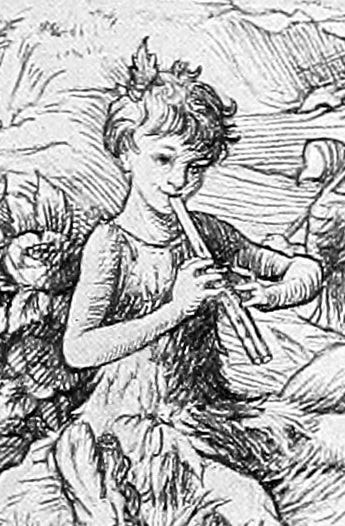
The perpetual copyright of Peter Pan is given as precedent. And Peter Pan is the best argument in favour of this sort of policy. A permanent funding arrangement for the Great Ormond Street hospital is clearly a public good. (Although even school productions need a licence and/or have to fundraise for the hospital.) But this is a unique case: the copyright is on a single, not a whole body of work. It is not obvious that things will work the same way when the rules are extended. And not every charity is as worthy as a children’s hospital.
Also, J.M. Barrie gifted Great Ormond Street Hospital the copyright thanks to the play’s obvious relevance to their work. In this proposal, it is author’s estates and bureaucrats who make the decisions, not authors themselves, which raises a moral problem: who are we to take this work for our own purposes, rather than allowing it to become public?
It is not clear whether Njoku-Goodwin is proposing a Peter Pan-type revenue-entitlement or a more general copyright with veto power. In either one, there would be negative secondary consequences, either higher costs to producers or a right of veto over further use. Both would be a tax on future creativity. Even under the Peter Pan model, the new bureaucracies will be incentivised to increase their revenue. Open the door once, and the issue is open forever…
Morrison’s endorsement leaves these economic problems aside. No mention is made of the problems of incentives, efficiency, deadweight loss, or distortionary effects. And it is assumed that the bureaucracy and charities involved will all make the best use of the money.
Copyright is supposed to provide an incentive for creation. If an author can be ripped-off within weeks or months of publishing, it disincentivizes writing. We are long past that point. Copyright is now often controlled by grandchildren, trusts, publishers, or estates, who did nothing to create the work. Copyright held by them does not help to create any new works of art. That won’t change by adding bureaucrats to the list.
Profit motive is an important motive for the distribution of art. Expired copyright allowed many cheap editions like Dover Thrift, and websites like Project Gutenberg, to exist. Readers have a choice of editions thanks to the expiration of copyright. Sherlock Holmes has become a whole culture, from Basil Rathbone movies to the Enola Holmes books and adaptations. Under this proposal, less work of that nature would exist as it would be controlled by the “fund”.
Instead, people will have to go to the works that are allowed to go into the public domain, as the protected work will be more expensive to produce. This means fewer performances at higher prices. Getting the new extended copyright status will involve lobbying and politics. Unlike the open market, where competition between different recordings and editions takes place, it will be a closed-door process. Charities will want to secure this revenue, and will lobby for it.
Worst of all, the costs of this scheme are divorced from the people involved. Morrison says that the estates will surely opt-in because they would lose revenue anyway. Good for them! It is the future publishers, film-makers, and orchestras who will be paying the extra costs. And that means the readers, listeners, and watchers—you and me. The idea that this “cost taxpayers nothing” is a selective and misleading perspective. When a work of art enters the public domain it is exactly that, public. And it is the public that pays when the work comes at a higher cost.
Morrison calls the idea of the public domain a “gentlemanly notion.” Like so many journalists, he sees this from the perspective of companies: “A striking feature of Njoku-Goodwin’s scheme is that copyright would be deployed for the public good, rather than to line corporate or private pockets.” But why is it better for that money to go to the bureaucrats who will work for this ‘cultural endowment fund’? In 2024, the Financial Times reported that “the median salary of a chief executive at the largest 100 UK charities was £175,000.” Does that count as “pocket-lining”? The real question is about the best way to fund charities and incentivize artistic production, which is not answered by these accusations.
Better charitable funding in the UK can be achieved without creating problems for the arts. Changes to the tax system would be a better solution. The Times recently published an article about how this can be done. They report that charitable donations get more generous tax-breaks in the USA than in the UK. And “public donations make up 2 per cent of GDP in the US, but about 0.6 to 0.8 per cent in the UK”. A simple change to the tax system—less GiftAid, more income tax deductibility—would increase the amount Brits give to charity with less bureaucracy and without distorting the culture market.
Schemes like this make everyone involved feel good. Who wants to write articles against the idea of charitable giving? But the UK has far too much of this sort of thing in the first place. Instead of setting up new schemes and organisations, it would be better for everyone to simplify the system instead. We need copyright that works for the real-world, not for Neverland.
Perpetual copyright under such terms is a bad idea for many reasons—not the least of which is the implicit government ownership of artistic creation. Let the people themselves own historical works of literature and music. That is what is meant in the legal term, “in public domain.”
Extending copyright as these agencies have suggested would, in effect, make the state the owner of these works. Most democratic countries limit government 'ownership' of intellectual property for good reasons, and it is an autocratic move for governments to seek to expand their control over intellectual property. It's hardly a surprise that such governments also tend to seek increasing control over expression. It's a grab.