

Their Englishness is, moreover, their peculiar triumph. The English novel has, on the whole, suffered from having been written after writers’ glory in being English had begun to decline. The most minor Elizabethan play has a quality—a kind of absoluteness or thoroughgoingness—that the most distinguished novel too often lacks. (Wuthering Heights is the best exception to this.) There is a great drop in pressure: greater, I think, than the change of medium—prose for verse—accounts for. In this field, the nineteenth-century Russians succeeded to what properly should have been the English heritage: heroicness, a kind of overbearing spirituality. Tolstoy is in the succession of Shakespeare, Dostoevsky of Webster. English novelists, whether consciously or unconsciously, wear their nationality as a shackle rather than as a decoration of honour. Moral strife is, largely, their subject: it is the greatest of subjects, but in approaching it they suffer from moral cramp. With the close of the eighteenth century, French classical influence with its restraints gone, fancy, let loose again, showed a good deal of weakness. Enforced form had bolstered this weakness up. But now columns gave place to arches and tracery: one no longer built to enclose light but to cast gothic shadows. Life is always impinged upon by a literary fashion, and Jane Austen saw round her a world in which, genteel and orderly as it was, the new sensibility began to luxuriate. On what promised to be a kind of garden jungle, a sinister dusk of ferns, she imposed her two twin orders, Elegance and Propriety. Qualities one would be prepared, in the last resort, to die for, that one would be prepared, at least, to sacrifice a life to, take on an ideality of their own. Her sense of values was more than positive; it would have been passionate once put to the proof. The unchangingness of her characters’ moral colour, the unswervingness of their pursuit of an aim, would make them major, apart from anything else. Her people are so relentlessly thoroughgoing—Anne Eliot in her regret, Miss Bates in her power to bore, Fanny in her humility, Mr. Darcy in his pride, Elinor in her stability, Harriet in her goosishness, Mrs. Bennett in her desire to get her girls off, Emma in her determination to rule—that she creates, in the heart of the mannered Regency, a muted Elizabethan world of her own. On the polite plane, violence has its equivalent. Witty, detached, engaging and travelling lightly, her pen has been dipped in the purest English ink. Persuasion and Emma are as outstandingly English as War and Peace is Russian or L’Education sentimentale French. Her keen eye is for the manner, but sees the spirit behind.
from The English Novelists (1936), ed. by Verschoyle Derek
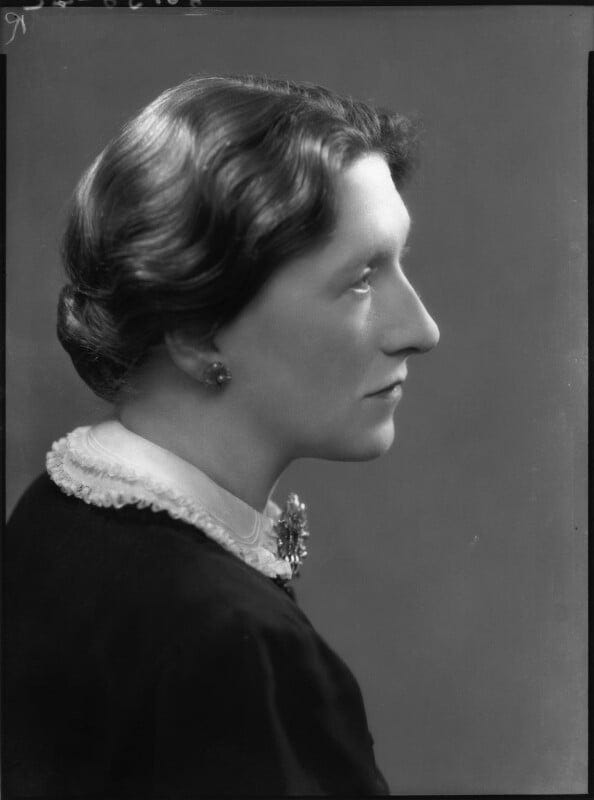
The nationality-as-shackle line is extraordinary. Bowen is identifying something that goes well beyond the English novel — the idea that belonging too completely to a tradition can make a writer cautious rather than free. The Russians she envies didn’t write without national consciousness, they wrote through it so completely it became invisible. What Austen does, the way Bowen reads her, is even more interesting: she takes the shackle and makes it structural. The manners aren’t decoration — they’re load-bearing. Every restraint is doing the work that wildness does in Dostoevsky. The violence is there. It’s just been given a chair and asked to sit properly.
That's full of insights! Thanks.