

The day before the storm began, the creek froze over, nearly two inches thick, the water bubbling under the surface, pooling where it could, and the small waterfalls that pour out of overflow pipes froze solid, as if they had been stopped by the passing touch of a fairy’s finger. All the next day, ice fell from the sky. Inches and inches of settled snow, like a classic American cartoon, making little white caps on the street lamps, lining the tree branches like frosting, blanketing the ground in those undulations that animators mimicked so distinctively. Whenever a path was dug out, it filled in again by the time you turned to go back home. Everything was still. Standing under a small oak tree that kept its brown leaves, you could hear the falling ice, making a streaming-rattling noise, like rice grains pouring to the ground.
On the third day, they came to clear away the storm. Streets were cut out, spades and shovels hacked and ground. Someone pushed along a little machine that sucked snow up from the ground and hoofed it out of a pipe, like a vacuum. Cars were brushed and cleared, lest the snow should turn to ice clamps. Squirrels tentatively returned to the trees. The sky was clear and tall and blue. This was mild compared to some places where trees came down under the weight of ice. A million Americans had no power.
After a week, the streets are still piled with hunks and blocks of ice. Slippery sheets stretch out across the sidewalk. By the Arlington Central Library, a Lamborghini is still trapped. On the surrounding streets, so much of the snow is yellow. The dogs of north Arlington still go out to pee, and as it is always below zero (sometimes as low as -13, feels like -18, centigrade) their owners take the chance to put them in doggy outfits. There were half a dozen children sledging near our house, but far more dogs were being walked in cute jumpers.
We drove to Shenandoah where the river is thick with ice and rows of mailboxes poke up from the smooth ice drifts like hellebores and daffodils bowing their frozen heads. One mailbox was branded John Deere, a spring green among the unmoving black and white. Every field was a field of snow, glittering in the sun like a Grandma Moses painting. The icicles are sometimes two feet long and sharp enough to kill. They clutch like witches’ fingers to the eaves of roofs.
In a secondhand bookstore that is holding out against the inevitable I bought two westerns. In an Italian restaurant everyone was obese, including the children. In a 7-Eleven a large man in a camo onesie stood by the door looking glassy eyed. I gave him a nod on the way out and he was friendly, but mildly surprised. There is a red flush to the men’s faces here that I have not seen in other places, something local to the complexion. They go out in their fleeces and camo outfits, happy to go about their business without the need of so many gloves and scarves. The 7-Eleven sold a greater variety of hotdogs than I have seen before.
To be American, one must be prepared to put up with the weather. The English climate is mild. The American climate is intense. It is not so bad to drive through 18°F when you have heated car seats and a warm-air fan. Pumping petrol in the chill is no difficulty when you think of the early pilgrims, the wagons, the shawls. While John Adams sat by the fire in his greatcoat the water upstairs froze solid in the basin. Laura and Mary woke up to find frost on their bedclothes in Little House on the Prairie. Imagine the character it took to be among those who crossed Lake Michigan, horses and wagons, knowing the terrible depths to which others had gone. Imagine the sort of person you must have been to want to go out into the sleet and the rain and the wind, to see your crops destroyed, to see your whole town immersed in ice.
Whether the weather shapes the American character, or selected Americans who could persist with its extremities—the heat, the mosquitoes, the hurricanes, the floods, the fires, the earthquakes: this is a land of the unbearable and unimaginable, constantly being overcome. There is a national character of endurance, arising from the fact that people opted to live in these conditions. They came to lands of extremity and they became people of substance.
Today, much of Arlington remains iced over. The road was ploughed near my office and I had to negotiate the mounds of ice that had been pushed up onto the sidewalk. I went a mile, or less, without proper pavement most of the way, slipping, finding my footing, listening for the reassuring crunch, not the risky crack. What a minor, pettifogging pilgrim I am compared to all those who came before, whose horses plunged into rivers, whose fathers were out hacking at nature, while the mothers raised the children as ice grew inside the window pane. And I grumble that the road has not been gritted properly!
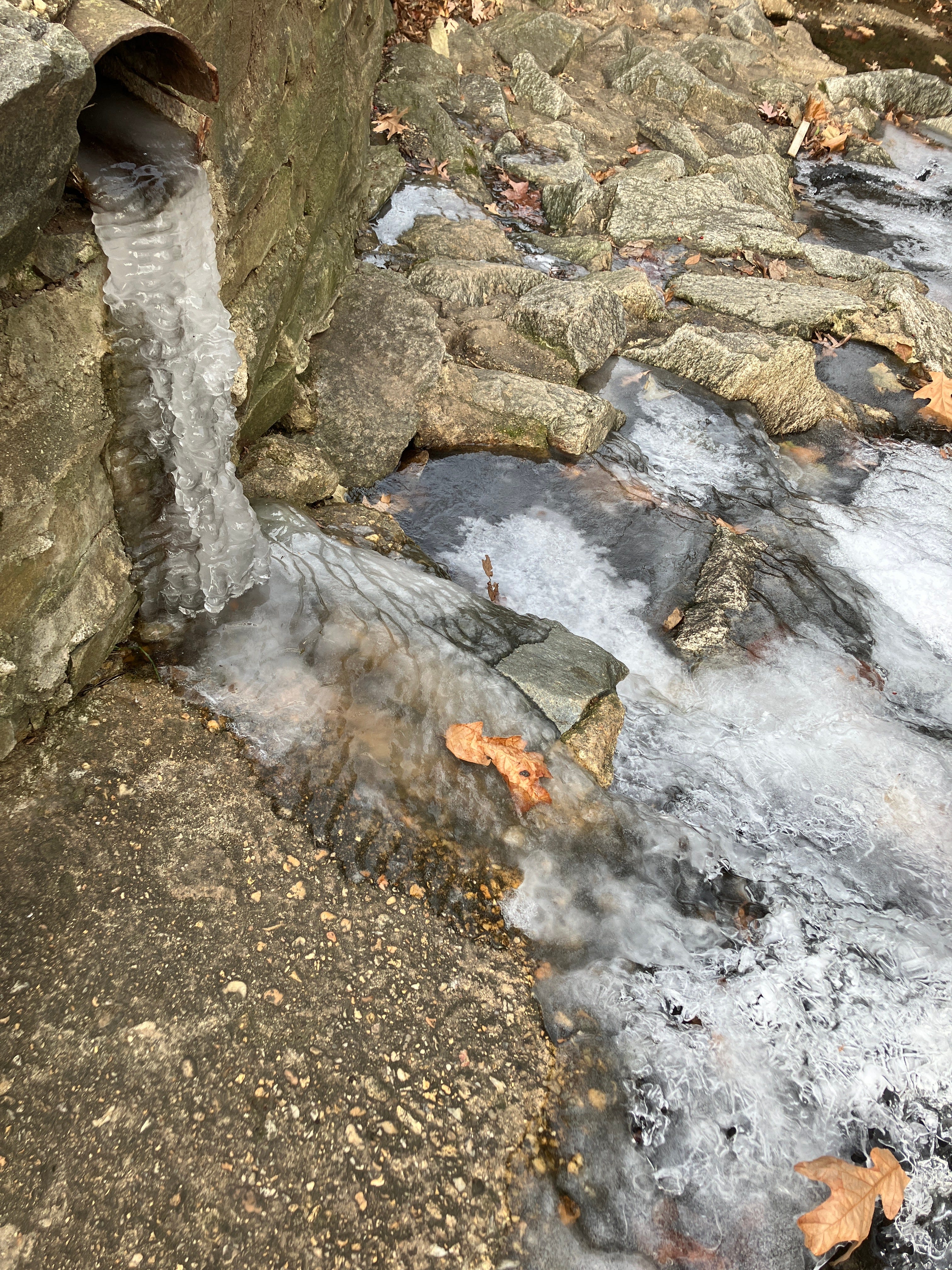
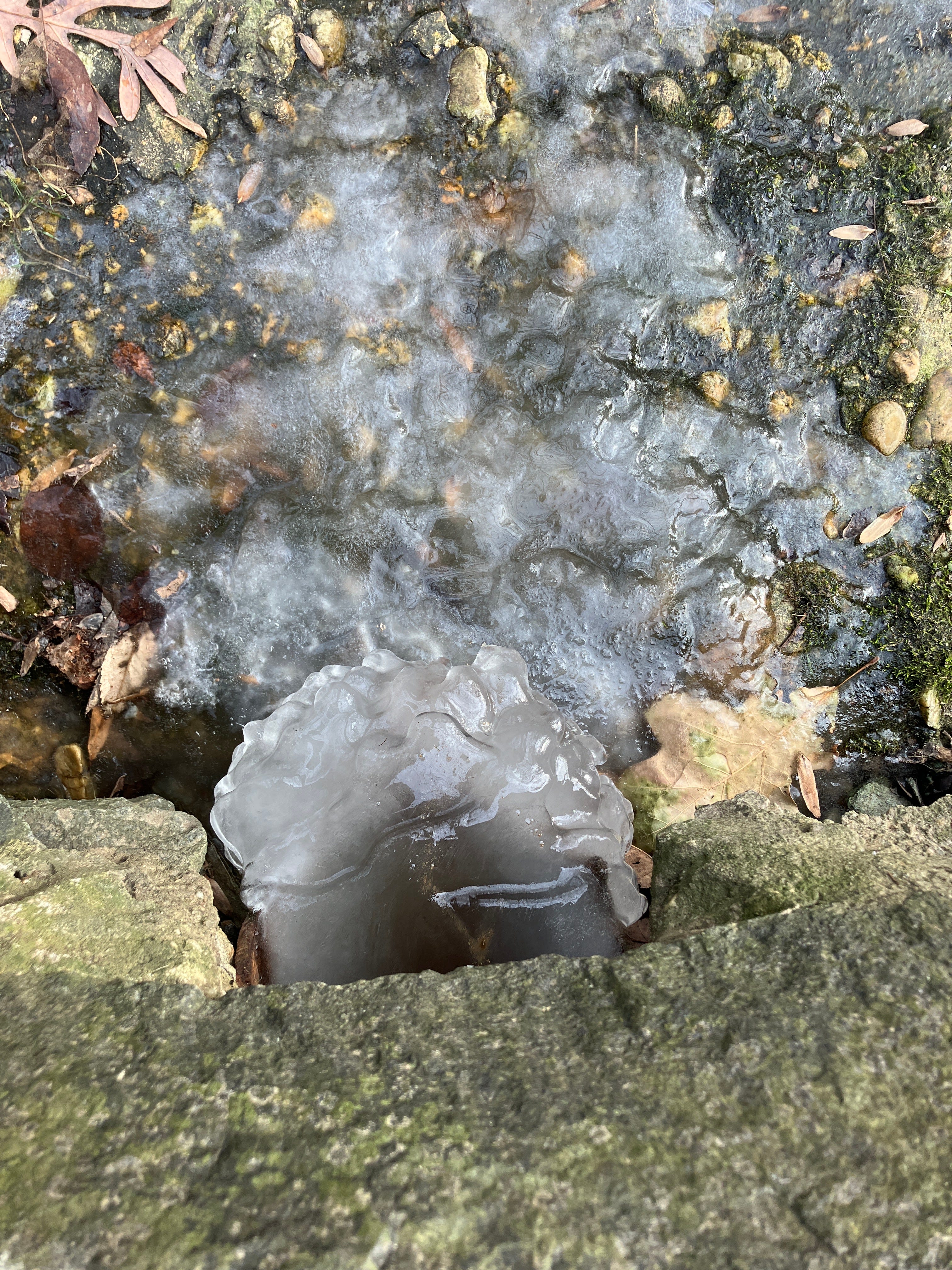
"Someone pushed along a little machine that sucked snow up from the ground and hoofed it out of a pipe, like a vacuum."
It had never occurred to me before today that the English would typically have no acquaintance with the snowblower.
Lovely piece!
Do you know the traditional American song Shenandoah? Here’s a great instrumental version
https://www.youtube.com/watch?v=vnEsR55srlk