

The overwhelming impression John Carey gave of himself in The Unexpected Professor, his memoir about his life as a professor of English at the University of Oxford, is of a man severely dedicated to books. Having Carey as your tutor was likened to being in the army. Once the term of studying English Literature was finished, intensive months of Milton and Pope, Carey and his students made their way through the purple and green Penguin Classics copies of Stendhal and Goethe.
Carey, who died on 11th December, was not a bloodless, regimented reader, but a very feeling one; he read with a sense of drill and regiment that he had learned in National Service, but also with a fully open, enquiring, and fascinated mind. On a summer holiday, preparing to teach the new twentieth century paper (Oxford had traditionally stopped with the Victorians), Carey read all of D.H. Lawrence on the beach. “Being on the beach,” he wrote, “makes you more aware of your body than usual, and it also makes it easier to read Lawrence without dismissing it all as nonsense.”
Carey always had a down-to-earth sense of himself as a reader. Working on Milton, he decided he needed to read some of the original classical works as Milton had read them (“Writing about Milton inevitably makes you feel inadequate”). So he got a Loeb edition of Plato and studied it while he shaved.
The razor plug was in the top bedroom, which, since the renovation, had a big west-facing window, so I could shave, digest Plato and enjoy a distant inspection of my stalwart ranks of vegetables all at once. I was worried about Plato, though. I’d read quite a bit of him in translation, and it seemed to me that his belief in absolute truth, beauty and goodness, and his notion that some kind of ideal perfection exists, which humanity always falls short of, were not only groundless but dangerous and damaging to human life.
Carey didn’t tell anyone that he thought Plato’s ideas were crackers. One morning he ran into Maurice Bowra, the distinguished professor of Greek, who had been kind to Carey and his wife when he was a young academic. He told Bowra he was reading Plato.
… his face lit up. ‘Ah! Wonderful stuff, wonderful stuff! he growled. ‘Of course, the philosophy’s nonsense’ — and with that he stomped up the steps and disappeared into Blackwells. I felt greatly relieved. It was just what I wanted to know.
Carey’s work on Milton was a large part of what got him appointed as Merton Professor—Oxford’s most distinguished professorship of English Literature. His CV was only a page long, but it included a translation of Milton’s Christian Doctrine, his annotated edition of Milton’s shorter poems, his book of lectures about Dickens (The Violent Effigy), a critical monograph about Milton, and his discovery of the Elizabethan poet Nicholas Hare. All of this work was done before he was forty.
Carey was always distinctive. His brisk attitude as a tutor was reflected in his critical attitudes. He was very much not a professor of the old school. Not only did he dislike the High Table attitudes of some of his Oxford colleagues, but he held himself to different standards. Of his predecessor as Merton professor, Helen Gardner, he said, she “delivered what were not so much lectures as reverential sermons on John Donne.” But he felt as a postgraduate that she was the only member of the faculty who knew anything about research. She knitted by the fire during their supervisions.
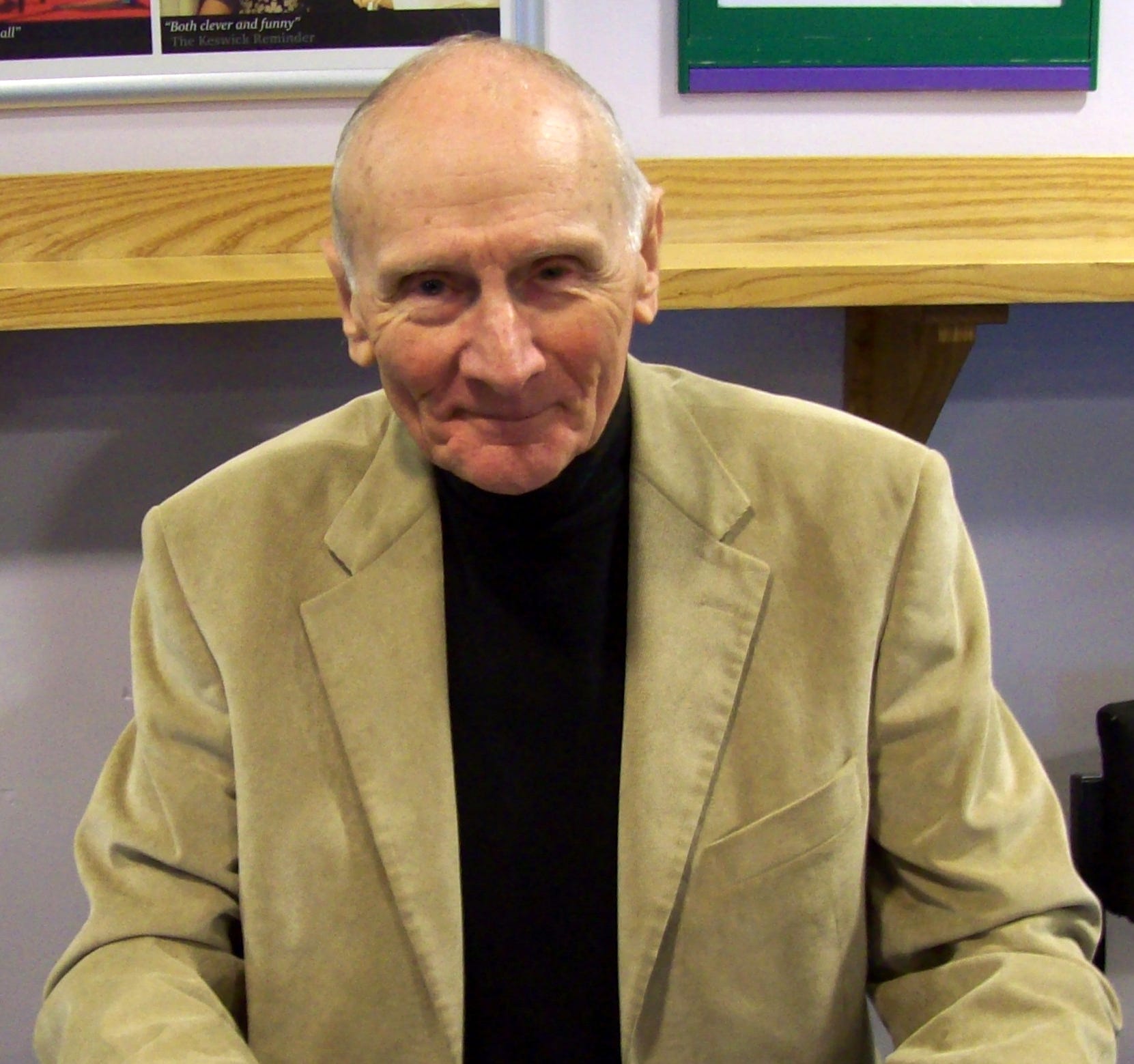
When Carey became a professor, he retained his sense of discipline, unlike, he implied, some of his colleagues.
Strictly, professors had no obligation to help with the administration of the faculty, and the two other English literature professors, John Bayley and Richard Ellmann, wisely kept clear of all such entanglements. I, less wisely, decided someone should take a lead and that it should be me. I did several stretches as chair of the English faculty board and of its Graduate Studies Committee, and tried to get the gaggle of assorted fellows and lecturers distributed throughout Oxford’s thirty-something independent colleges to behave like a coherent faculty. It was deeply resented.
One of Carey’s most significant reforms was to make Anglo-Saxon optional for undergraduates. So controversial were his changes that, when he retired, Oxford University Press declined to publish a book of dedicatory essays one of his colleagues tried to put together.
Carey’s deep sense of common sense meant that he was a great writer for the common reader. Alongside his duties as a professor, he wrote Sunday Times reviews, a biography of Thackeray, edited anthologies of science writing and reportage, and published an edition of Donne. He also wrote his best book, John Donne: Life, Mind and Art, a work of careful historicism, vivid criticism, and wonderful close readings. He said of Donne: “the world is his prey and he runs it down rapturously.” The same could be said of Carey and literature.
Indeed, his prey was sometimes hunted down quite mercilessly. In one review, which I shall remember forever, he wrote that G.K. Chesterton had a mind like the dawn sky and a body like a slag heap. Seamus Heaney never forgave a review in which Heaney’s poetry was likened to a thoroughbred horse—a Derby winner—and his contemporary Paul Muldoon’s poetry was likened to a pantomime horse.
Carey’s prey was sometimes academic. His inaugural lecture as Merton Professor argued that literary criticism had become the practice of turning literary art into “unreadable prose” through critical paraphrase. This was controversial enough for Mary Lascelles (author of a seminal study of Jane Austen, and a minor member of the Royal family—Tommy Lascelles was Private Secretary to George VI and Elizabeth II) to walk out of the lecture after a quarter of an hour.
It was also as Merton Professor that he wrote The Intellectuals and the Masses, which argued that Modernism was a contemptuous reaction to the emergence of mass culture. Hermione Lee, Goldsmith Professor at Oxford, later said his characterization of Virginia Woolf was sexist.
Carey’s character as a critic was shaped by his middle-class London childhood. He writes movingly in his memoir about war rationing—whenever there was an egg, his mother boiled it for his father.
He always insisted on making soldiers out of bread and marge and dipping one into the yolk for Rosemary and one for me. My mother would plead, ‘Don’t, Will, don’t. There’ll be none for you.’ But he did, and I never eat a boiled egg now without thinking of it.
So wherever he met grandeur in Oxford—whether in the form of “frosty” Mary Lascelles or in the “toff” students who didn’t do much work but who did attend sit-in protests—he recoiled from it. He was the antithesis of Brideshead Revisited. This gives his literary attitudes a very ordinary, honest feeling, so that he is capable of writing, like C.S. Lewis before him, brightly and directly about the merit of poets and poems, how dull or exciting they were, as well as about their other attributes.
Of his first experience studying Elizabethan literature, he wrote: “it was a blow to find how dull a lot of it was. Had the critics who glorified Good Queen Bess’s time ever actually tried reading Lyly’s Euphues or Sidney’s Arcadia or Sidney Lee’s two tomes of instantly forgettable Elizabethan sonnet sequences?” It was this attitude that underlay his study of modernism.
The intellectuals could not, of course, actually prevent the masses from attaining literacy. But they could prevent them reading literature by making it too difficult for them to understand — and this is what they did.
At a time when literary study was more and more inclined to “Theory”, Carey retained his independence. Barbara Everett once said, “some people are much better readers than others, whether of books or of reality, better in the sense of “truer”, more accurate and more revealing.” Carey was one of those readers. He knew that the only method is yourself, as Harold Bloom liked to say (about whom Carey once wrote that reading his Shakespeare book was “like chatting with an acquaintance and gradually realising he believes that death rays are issuing from his television screen”.)
The essential job of the critic is to tell the truth, and Carey’s combination of an austere but loving childhood, a personal identification with ordinary mass culture, a huge capacity for scholarship, and a natural and incisive prose style, meant that he became one of the most accomplished critics of the twentieth century, both in the academy and the newspapers.
I met him once, the year after I graduated, when he was giving a talk about William Golding. He had just written the first (and official) biography of Golding. Although he had been retired for several years, one got a real sense of what it must have been like to have been there for those original Dickens lectures. He was a tall, lean man, slightly too energetic to stand still while he lectured, talking fluently, frequently checking his watch, rocking slightly as he emphasized words in his distinctive accent, but never slurring or dropping a word in his excitement. The talk was clear and dense, vivid and full of information.
At the end, I got my book signed, and he asked me about myself. He knew my old tutors, of course, but he also remembered an old school teacher of mine, a man who had been his student some forty years ago. His face was warm with affection at the memory of this man who he had not seen since before I was born. They were soon in touch with each other, had lunch, and through this connection, Carey was able to discover new information about Golding. Even though the book was done, Carey remained obsessed with his subject. That, perhaps, was his great critical quality: persistent, obstinate, obsessive affection for his subject.
He was also a great gardener, primarily of vegetables. He loved them...the technical differences, of sowing time, depth & nature of their favourite soil, best time to harvest each one. I once edited a book of unlikely enthusiasms and John contributed an essay on veg growing, and was especially eloquent on that disgusting vegetable, the parsnip. It is a work of literary art, that piece, and almost persuaded me that I might enjoy eating a parsnip after all.
I'd add only that he was, too, a brilliant teacher. I had John as a tutor for a term, then for several years as a supervisor for my post-graduate thesis: meticulous, attentive, warmly encouraging while necessarily critical, he was wonderfully supportive - and, as we heard in his lectures or read in his books, gleefully hilarious when he wanted to be. I always looked forward to time spent with him.