

Helen DeWitt has turned down $175,000 because the foundation offering her the money—which is given out so that writers can “do what they do best”—would only award her the grant if she did lots of publicity. Obviously there has been “Helen DeWitt discourse” about whether she should or should not have gone to a literary festival, recorded podcasts, and so on. Of course she should not. The grant is supposed to enable her to write, not to undertake busy-work activities at the behest of a Prize Committee. She is a genius, not a content creator. The discourse here ought not to be about Helen DeWitt’s willingness to give up her time to promotional work, but about the failures of arts patronage.


Helen DeWitt is a genius, probably the best living novelist writing in English. It is well known that she has many unfinished manuscripts, that she has lived through periods of depression, and that she has experienced terrible financial insecurity. The publisher of The Last Samurai (a truly great book, which, if you have not read it, you should go and read now instead of reading me) went out of business. But even more recently she has experienced terrible delays and problems with other publishers.
DeWitt is an obvious—painfully obvious—candidate for patronage. As well as writing The Last Samurai, a large, innovative novel that immediately placed her as one of the great writers of her generation, she has written short stories that involved her coding in R and corresponding with Andrew Gelman. Some of her unpublished projects are trying to incorporate data visualisation (which she learned from Edward Tufte) into fiction. Who else has worked on such things? Is this not a unique and exciting experiment in literature, at a time when so many complain that everything has become stale and unprofitable?
DeWitt has been nominated by literary experts as the canonical novelist of our times. And yet, this is not the first time the funding institutions have let her down. MacArthur Fellowship Awards (known as the MacArthur Genius Grant) are given to people of high potential to encourage their work. Today, they are worth $800,000. Unlike Nobel Prizes, which have been shown in a recent study by Andrew Nepomuceno, Hilary Bayer, and John P. A. Ioannidis, to lead to reduced publications and citations, MacArthur Awards lead to increased productivity. This is exactly what DeWitt has needed for many years. It is hard to think of a writer who better meets the Foundation’s criteria of—
exceptional creativity, as demonstrated through a track record of significant achievement, and manifest promise for important future advances. Emphasis is placed on nominees for whom our support would relieve limitations that inhibit them from pursuing their most innovative ideas.
The problem is the selection process. The MacArthur invites selected experts to nominate candidates who are then assessed by a confidential Selection Committee. Importantly, committee members do not speak for their discipline. It is a collective judgement. This is presumably why DeWitt’s immense potential is obvious to everyone apart from the one institution best placed to enable her to increase her productivity.
What is needed now are new ways of funding writers, a return to the old model of patronage and taste, rather than committees and procedures.
Patronage used to be the norm. In the Renaissance, patrons were wealthy, powerful individuals: Popes, Dukes, Medicis. They commissioned sculpted tombs and Vatican wall paintings from Michelangelo, or The Last Supper from Leonardo. So profitable was this work that artists like Titian were said never to pick up their brush without a commission. So important were patrons that they often appeared in the pictures they commissioned. Isabella d’Este, the regent of Mantua, patronised artists like Raphael and Giorgione, and may have been the model for the Mona Lisa. (Another, perhaps more likely candidate, is Lisa del Giocondo, whose silk merchant husband commissioned the portrait.) Jan van Eyck’s Ghent altarpiece includes his patron Jodocus Vyd and his wife Lysbette Borluut next to John the Baptist and John the Evangelist.
Patronage markets made fifteenth-century artists far richer than their predecessors. The economist David Galenson has shown that even though it was taboo to talk about money, many artists became cannily commercial. This commerciality became a driving force of art. Far from being a purely idealised profession, after the Renaissance, artists chased gold. This newfound commerciality meant that over time art came to hold a very different relationship with patronage.
A similar story can be told about literature. In 1592 the London theatres closed because of an outbreak of plague. The young Shakespeare was still at the start of his career, not yet making much money. He had to switch, temporarily, from writing plays to writing poetry. And while there was a commercial market for poetry, it wasn’t very large. So he got a patron, the Earl of Southampton, to whom he dedicated Venus and Adonis and The Rape of Lucrece. Publishing poetry was far more respectable than stage writing and Ben Jonson, Shakespeare’s contemporary, always wrote poetry when he could get patronage, preferring it to the indignity of writing for the theatre. Jonson resented having to earn his living as a playwright because it was socially inferior and associated with immorality.
But there was a growing audience for theatres, caused, at least in part, by a Tudor version of “elite overproduction” after an expansion of the grammar schools, which provided a high-quality audience for writers. This meant that Shakespeare could make money in the theatre without relying on patrons. Unlike Jonson, many writers wanted to be free of the need to scrape and bow to aristocrats. “What hell it is,” wrote the poet Edmund Spenser, “to fawn, to crouch, to wait”. Their escape route to theatre was enabled by another kind of patronage. Theatre became increasingly respectable because of royal patronage. Performing at court legitimised actors, who were still technically vagabonds. The combination of growing commercial markets and innovative forms of patronage allowed for a flourishing literary scene, still regarded as a golden age of English literature.
A similar story is true of music. Colonial America had hardly any provision for the production of music. It was nineteenth century patronage that developed systems of education, venues, and audiences that composers needed to flourish. Andrew Carnegie built concert halls and Henry Lee Higginson financed an orchestra. Others funded composers to travel to Europe and train at the conservatoires.
Patronage has often been the basis of societies. In Ancient Rome, patronage was so pervasive that it didn’t just exist between individuals, but between whole tribes and kingdoms that were the clients of the Roman state. In eighteenth century Britain, patronage was widespread throughout political institutions. It was only in the 1880s that the USA passed the Pendleton Act which meant office positions were given out based on merit, ending the “spoils system” that had dominated until then. Similar reforms were made in Britain throughout the late nineteenth century after the “Northcote-Trevelyan” report.
In the eighteenth and nineteenth centuries, patronage became institutional, just as science had in the seventeenth century with the formation of Académie Française (1635), the German National Academy of Science (1652), the Royal Society (1660), and the Académie des Sciences (1666). This was the beginning of the age of codification of knowledge and institutionalisation of expertise. It was institutions like these that began to break the nepotism of the old academy by emphasising the credibility of your work, your experiments and research, rather than your lineage.
Similarly, instead of wealthy, powerful individuals, artists had to rely on artistic Academies. Turner and Constable had to present their work at the Royal Academy in London. In France, artists had to hang their pictures at the Salon. Although this gave artists much more access to consumer markets, there was strict institutional gatekeeping. Finding their work ignored and unappreciated, the Impressionists broke away from the French Academy and presented their work themselves, directly to the public. The critic Théodore Duret said “it is necessary that the public who laughs so loudly over the Impressionists should be even more astonished! — this painting sells.”
As the freedom of the market gave artists to challenge the authority of patrons, institutional or otherwise, a new sort of patron emerged: the intermediary. Artists of the twentieth century, like Picasso, looked to dealers and critics (like Duret) to promote their work, as well as collectors and curators. The patron was no longer commissioning as they had in the Renaissance: the artist was now more free to make what they wanted to make and sell it afterwards. Modern patrons like Peggy Guggenheim were collectors, not commissioners. Her uncle, Solomon R. Guggenheim, who commissioned Frank Lloyd Wright to build the famous Guggenheim museum in Manhattan, collected abstract art. It was when he worked in maintenance at that museum that Jackson Pollock met Peggy Guggenheim: she later gave him his first exhibition and a stipend. The artist was now free from the patron’s control while still able to collect their money. Patronage evolved into a method of supporting artists without directing them.
The same thing happened in American classical music. Betty Freeman who paid a stipend to John Cage or Isabella Stewart Gardner (of the famous Boston museum) who held many recitals in her home. These patrons were supporting artists, not instructing them. When the federal income tax was introduced in 1913, followed by tax exemptions in 1917 and again in 1935, wealthy individuals were incentivised to give away more of their money to artists. This led to the rise of Foundations, and so music patronage became more and more institutionalised. The same is true of literature, where institutions like the National Endowment of the Arts in the USA or the Arts Council in the UK distribute large amounts of money to artists. For those artists unable to go directly to the market, the age of the individual patronage has often given way to the age of the institutional patron.
State-granted funding is the acceptable form of patronage now — and to get money from the Arts Council or a similar body, you must go through an application process. Bureaucracy and transparency criteria all serve to make modern patronage acceptable. In the UK, the Arts Council is currently giving out £445 million each year to 985 organisations. According to a Warwick University analysis of OECD data, EU countries spend an average of 0.74% of GDP on culture. In January 2024, the National Endowment for the Arts in the US awarded 1,288 grants totaling $32,223,055.
To gain such a grant requires an application which goes through a bureaucratic process. Applying to the National Endowment for the Arts, for example, involves three rounds of review. First, a staff review to ensure the application is filled out correctly. Second, a review panel made up of experts and knowledgeable lay people assesses the application against review criteria. (There were 150 such panels this time.) Compiling the panels is complicated, involving far more than artistic knowledge. The NEA says, “To review the applications, we assemble different panels every year, each diverse with regard to geography, race and ethnicity, and artistic points of view.” Each panellist must give a rating to each application, like an elite version of Goodreads. The NEA staff then “reconcile” these decisions against available funds and a third round of review begins, this time at the National Council on the Arts, which uses the panel review to decide which projects to fund.
As well as showing that you as an artist are worthy of funding, and that your project is deserving, it must meet the criteria of “Artistic Merit”. Arts organisations must show: “The value and appropriateness of the project to the organisation’s mission, artistic field, artists, audience, community, and/or constituency.” To get funding as an individual poet, you must show that you have published a book of poems at least 48 pages long or have published 20 poems or pages of poetry in 5 or more journals or other publications which regularly publish poetry.
As the psychologist Adam Mastroianni says, “We apply for everything: scholarships, internships, jobs, promotions, apartments, loans, grants, clubs, conferences, prizes, and even dating apps.” Mastroianni argues that applications provide us with a narrow pool of people to pick from and that we don’t really know if we are doing better than we would by hiring at random. He suggests several alternative approaches, like allowing junior lawyers to challenge senior lawyers, for example, and if they win the challenge they move up a rank.
The advertising mogul David Ogilvy once did this, challenging his much more senior boss to a competitive presentation of their conflicting ideas to the whole company. Despite his inexperience (he had never written an advert at this point) Ogilvy’s huge knowledge of the history of advertising, the latest market research into consumers, and into the way “direct response” advertising worked (i.e. knowing which coupons were clipped out of magazines and posted back most often, allowing for A/B headline testing) meant that he easily beat his boss: and he went on to found one of the most successful agencies of all time, backed by that very same agency. Which was run by his brother.
Before he did that though, Ogilvy left advertising for many years and had three different jobs in the meantime. No-one would have hired Ogilvy to open that agency without knowing him. Old-fashioned individual patronage was his only hope. His application would have been a mess: French chef, Aga salesman, advertising executive (briefly), market researcher (in Hollywood), government intelligence worker, Amish farmer (yes, really). It was the fact of his brother’s knowledge of Ogilvy (both his strengths and weaknesses) that allowed the firm to make a bet on his talents. No application system would have made him so senior in such a new venture.
It was a question not of metrics and transparency but of taste and personal knowledge. Ogilvy’s brother had an eye for talent and the deep knowledge he needed to appoint David to the right job (research director, not creative director or CEO, that came later).
Guidelines are meant to create merit-based, transparent criteria for applications that treat all comers equally. But it is notable that, under these criteria, the young Robert Frost would probably have been ineligible for a poetry grant. There is no role in such systems for someone like Peggy Guggenheim to award stipends and offer support merely on the basis of individual judgement.
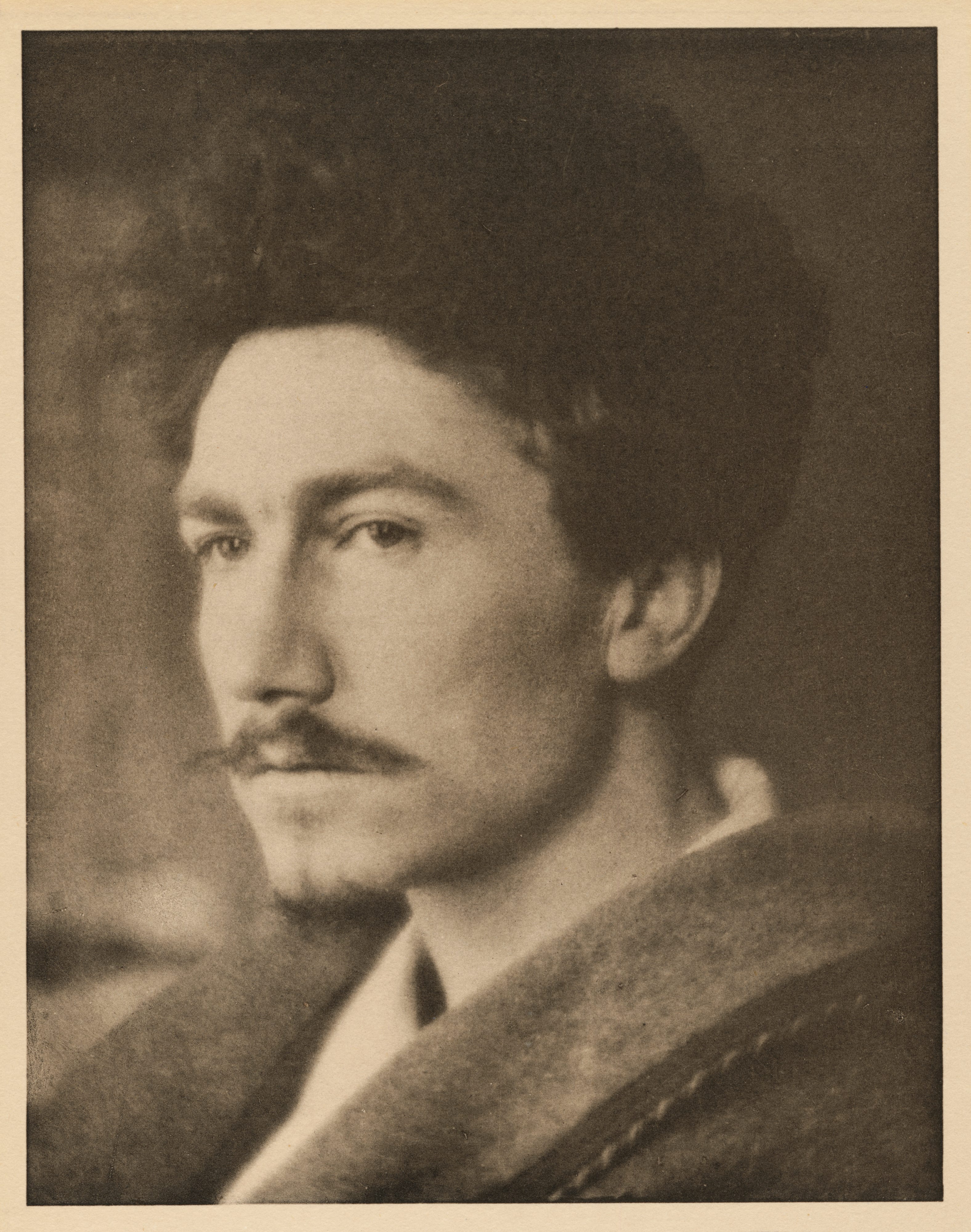
But taste is the basis of good patronage. This doesn’t mean good patronage was highly personal, but that it was much more reliant on individual, well-informed judgement. Ezra Pound and John Quinn provided the financial and publishing patronage that was essential to the emergence of modernist writers like T.S. Eliot and James Joyce. (Quinn was also crucial to the appreciation of modern art in America.) Ezra Pound was an effective patron because he was an exceptional editor and talent spotter: John Quinn took Pound’s advice about where to put his money, and thus became an effective promoter of the arts, not just a bankroller of his own interests or personal connections. There was, between them, a capacity to fund the most talented writers because of a shared sense of taste: not personal preference, but deep knowledge of the field. No-one knew more about modern poetry than Ezra Pound.
The difference is structural. Ezra Pound was a lone tastemaker. Committees almost never have good taste. It is well known, for example, that literary prizes like the Booker have often been awarded to a “compromise” choice because the leading contenders split the panel. The more people involved in the decision, the more likely it was that a fashionable book — rather than an excellent book — was awarded the considerable prize money. Indeed, a recent study which looked at “the Booker Prize, the Pulitzer Prize for Fiction, and the National Book Award for Fiction, over the time period 1963–2021” found that a book was more likely to win if it were longer, irrespective of other factors like gender and reader ratings. This is true whether the book is long in absolute terms or the longest book on the shortlist. When committees decide, you don’t get Ezra Pound funding T.S. Eliot, you get an obvious heuristic bias towards books that seem serious.
In a patronage system where people like Ezra Pound and Peggy Guggenheim funded artists of high potential, someone like Helen DeWitt would have found a patron years ago. As it is, the committee based-system of Awards and Foundations has persistently overlooked her, while awards have been given to writers whose work shows nothing like the same sort of potential.
This system exemplifies our bureaucratic, systematic, institutional times which has missed perhaps the greatest, most apparent opportunity to fund a literary genius this century.
David Ogilvy was fond of quoting Chesterton: "I've searched all the parks in all the cities and found no statues of committees."
Good to see you bring your ad-man background to the conversation, Henry—this is strictly a compliment—and, of course, a reference to David Galenson! Seriously, we could use more of your insights in debates about public funding for the arts, and the business of philanthropy.