

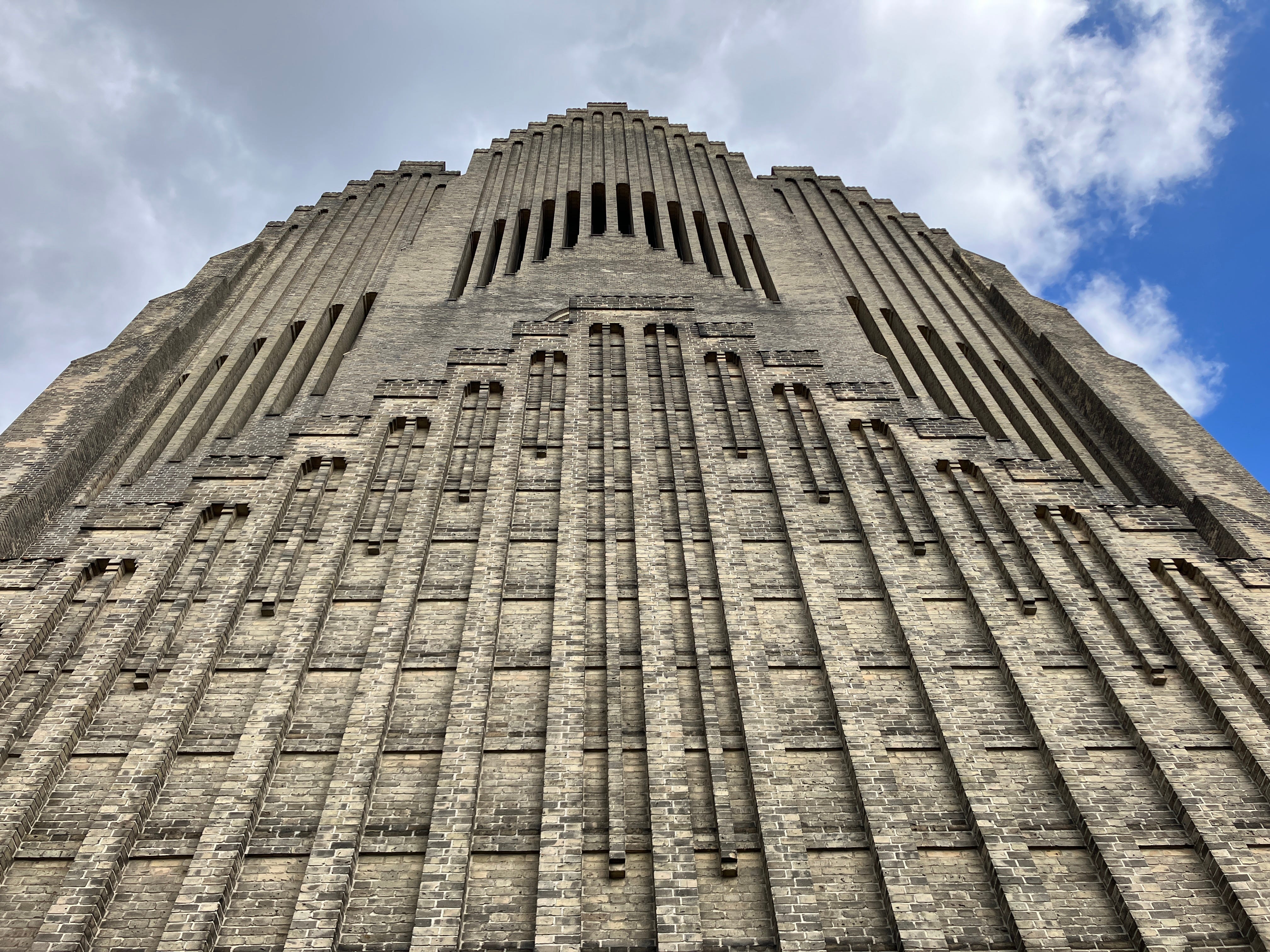
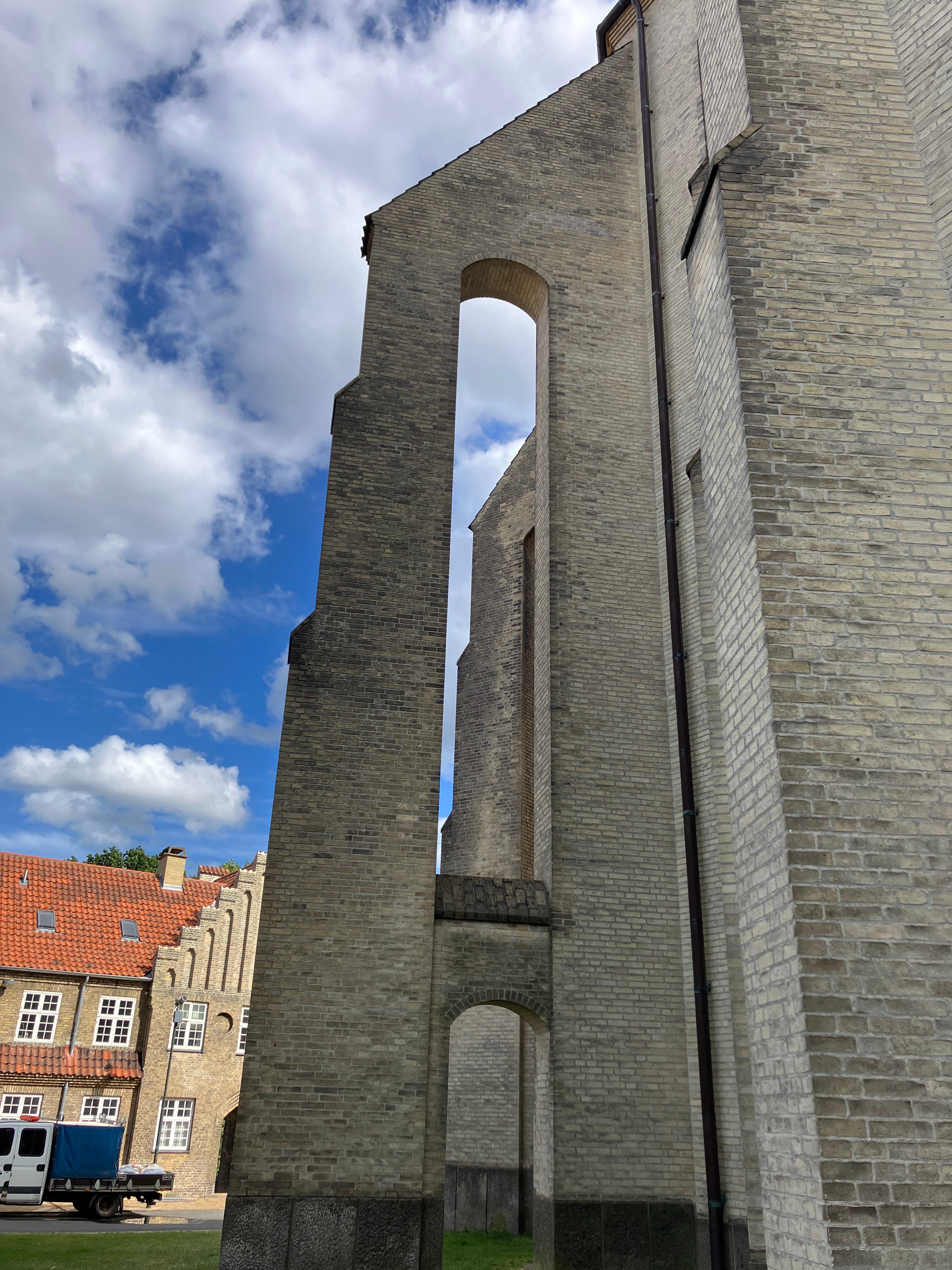
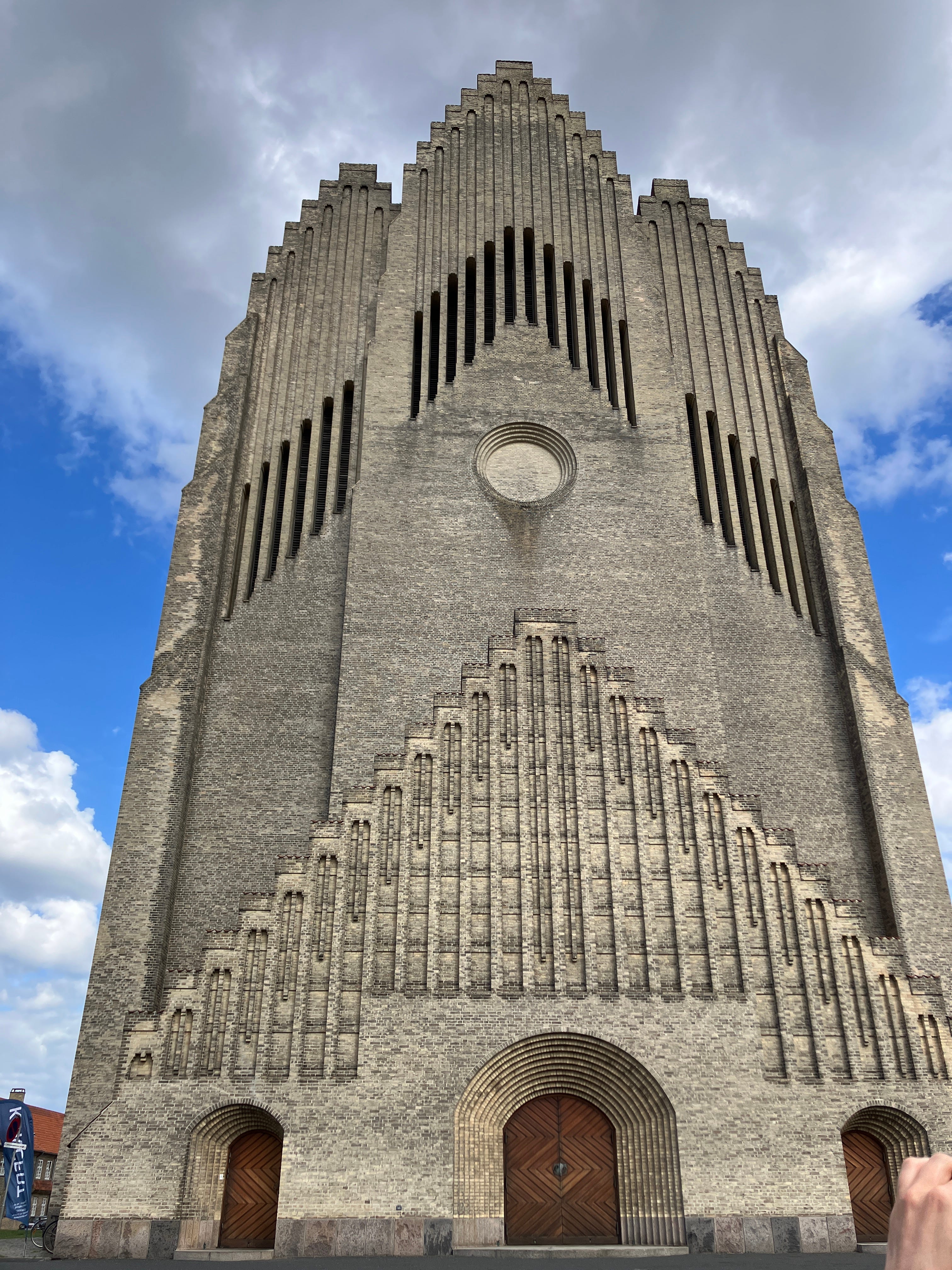
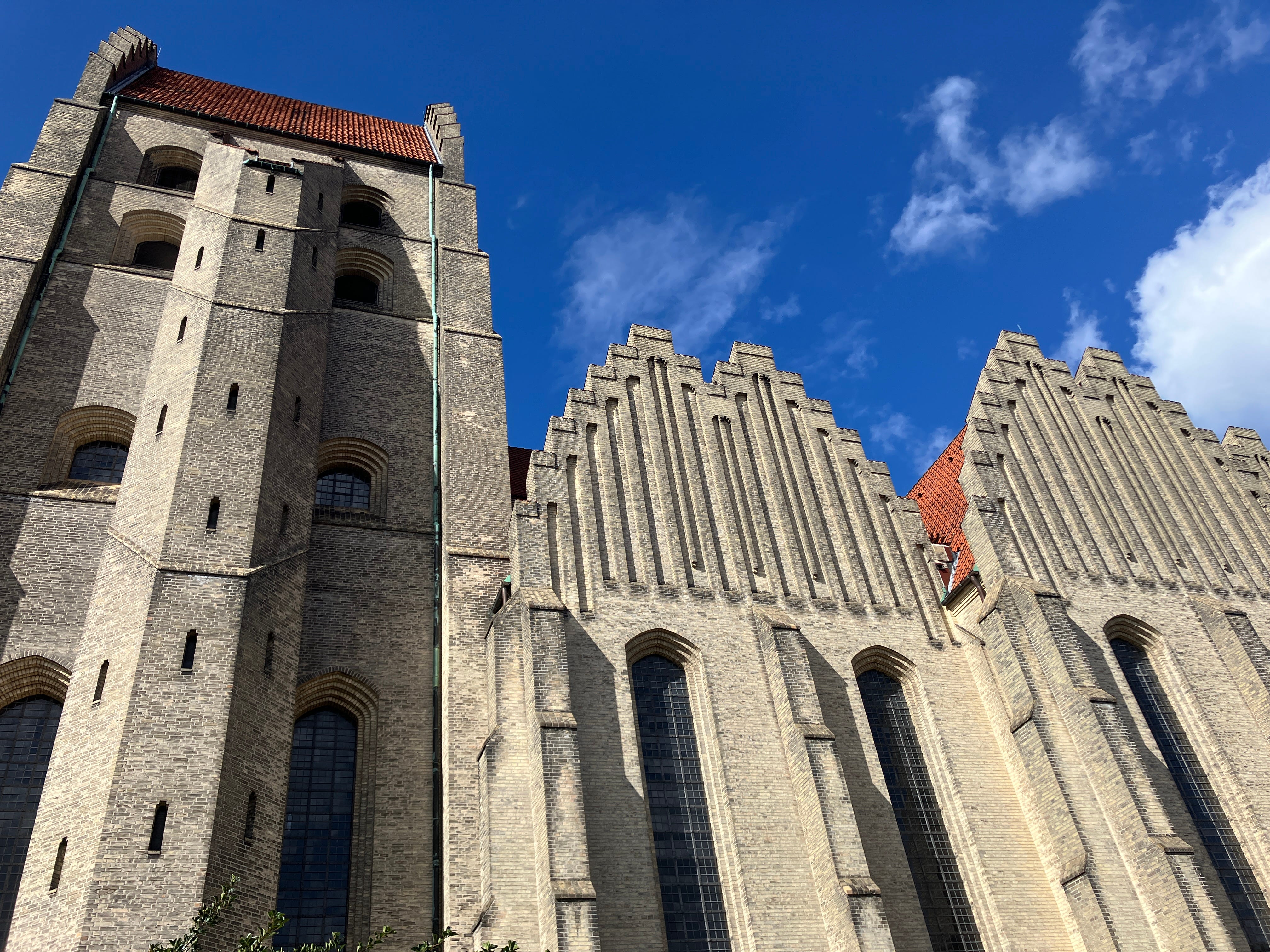
I just visited Grundtvig’s Church in Copenhagen. It is a really wonderful building. I have had relatively few architectural experiences that interesting. It is a style you might call “Gothic modernism”, with the features of the gothic in the style of the modern. Photographs cannot do it justice but here goes.
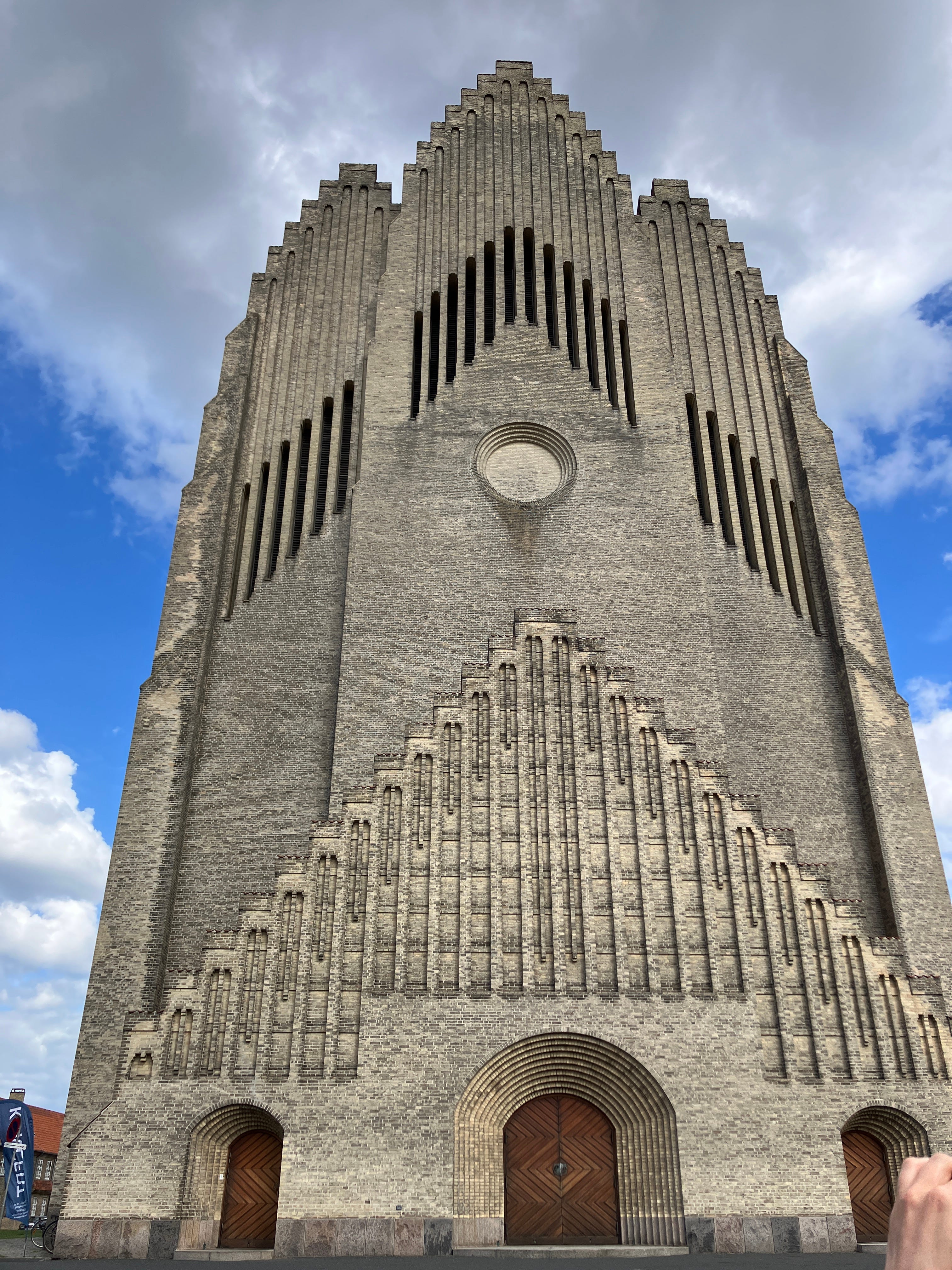
What makes this more attractive than most Modernism (especially of the International School variety) is the use of bricks. This is an expressionist building and retains a lot of the liveliness that modernism is felt to lack. This combination of new style and old form, of new ideas in old materials, is, I think, the secret to the future of aesthetics. We cannot go back to art deco or neo-classical or Queen Anne Style or whatever other period we find attractive. We cannot undo the modern. But we can make the new old and old new.
The church is set in the middle of a quadrangle of houses. Copenhagen is generally a lovely city for looking at Dutch gables and the stepped arches of the church are very nicely echoed around the courtyard.
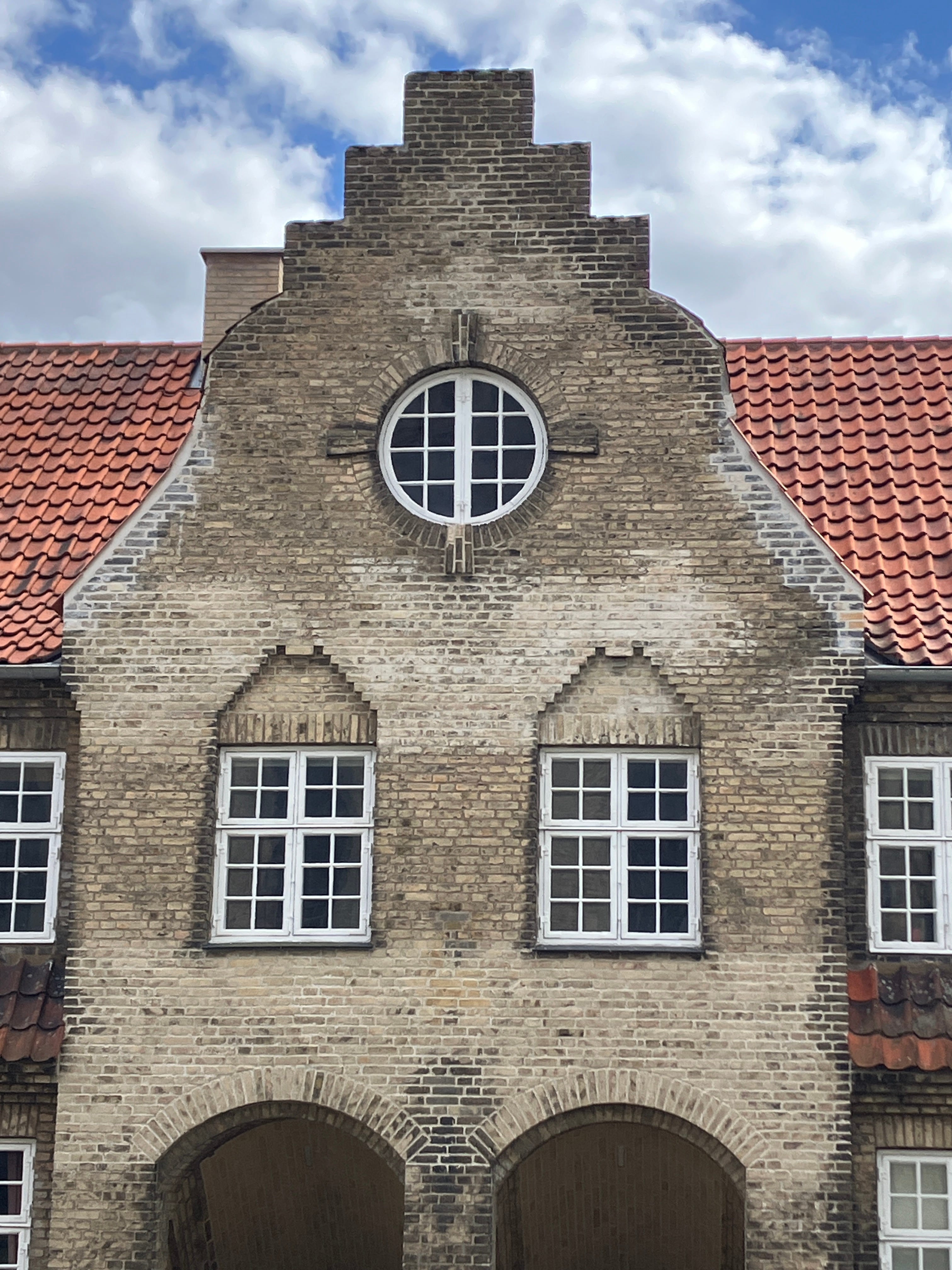
The circular window here not only parallels the arches but it links back to the bricked-in rose window on the west front of the church.
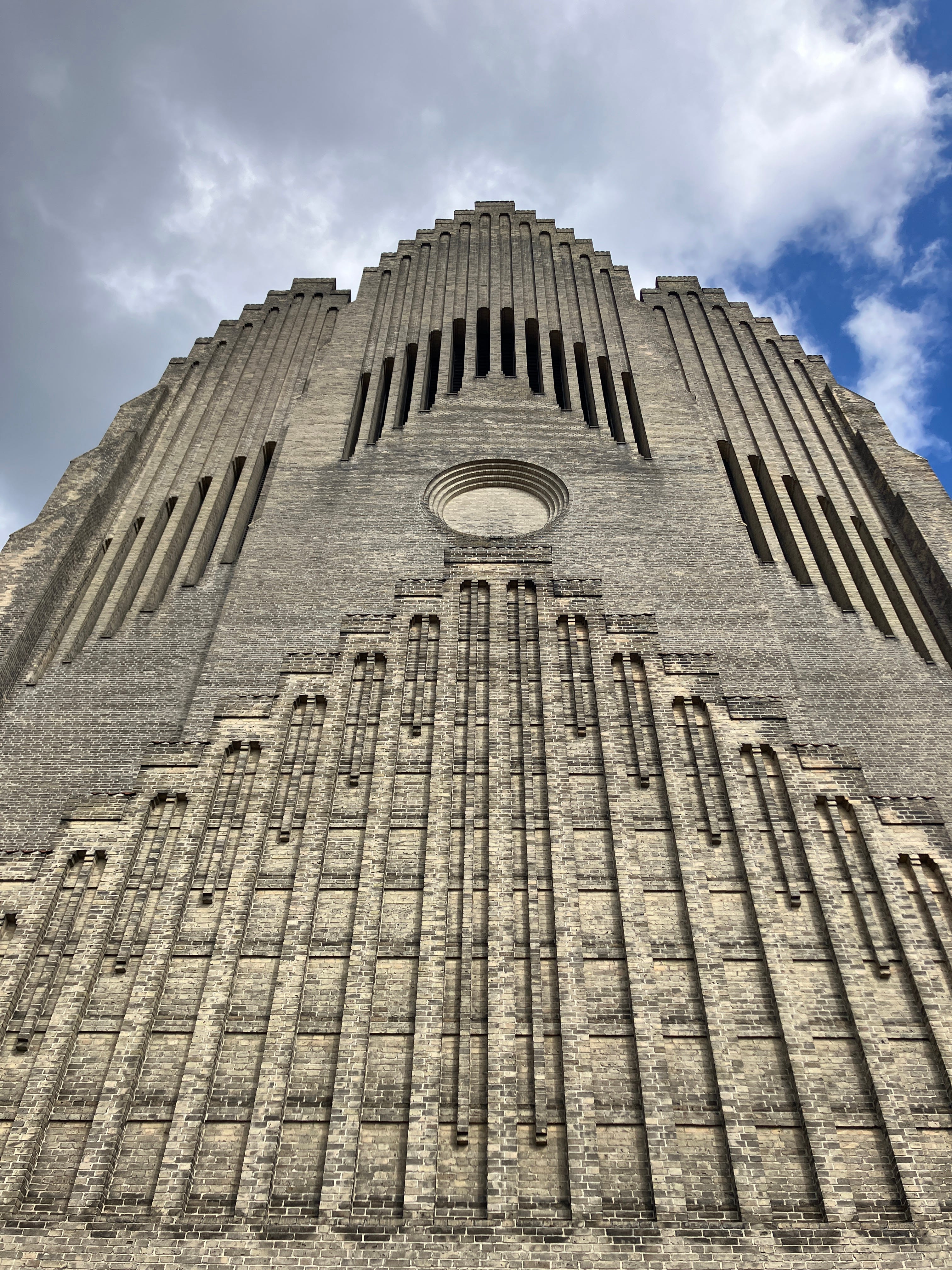
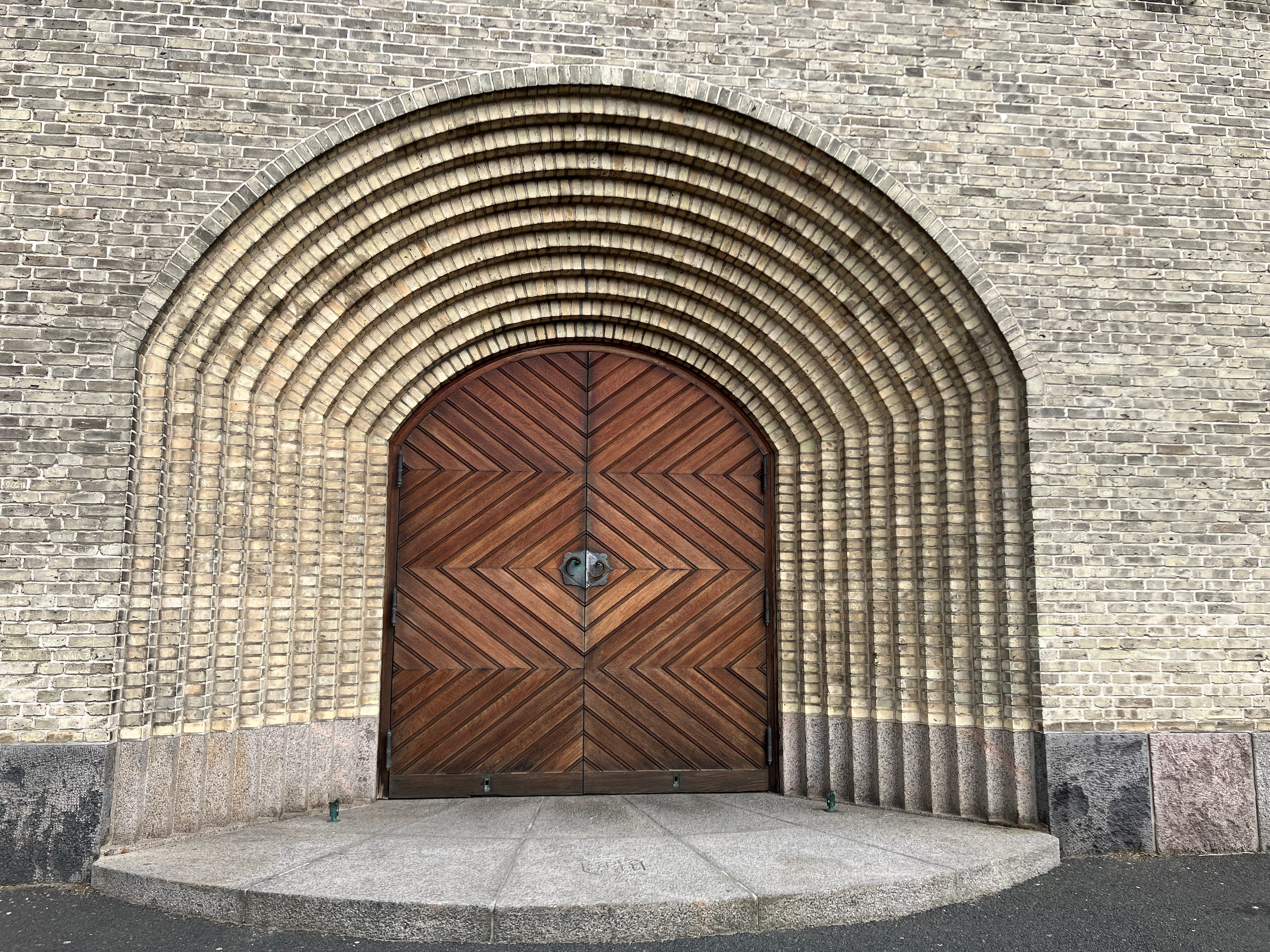
Which itself works with the concentric arches and the horn-spiral door handles. And see how the bricks of the arch resolve into the diagonals of the door. From the bottom to the top, this church is reaching upwards and outwards, and the bricks are part of that reaching. The material is not surface style: it is integral to the idea of the building.
Grundtvig’s Church reminds me of the Minster Building in London, which is modern gothic in polished granite. As I wrote for The Critic a few years ago,
Something must be done about the future. We cannot carry on as we are. We can’t keep everything and we can’t go back. Architecture has declined from the controversial to the ignorable. The modern box style that is now perpetrated everywhere like an unstoppable glitch is good for building nothing more than cheap hotels. Our skyscrapers are a pathetic exercise in using silly shapes. But rather than ask for revivals of styles past and wish away the modern, as if architecture were a fairytale and the past weren’t as mishmashed as the present, I contemplate the Minster Building, whose jagged gothic points arise in polished postmodern granite. It marries old and modern to make something strangely compelling; it is curiously in keeping with the madcap gabled gothic office round the corner on Eastcheap. Unlike the boxes, the Minster Building has style. Like St Mary Aldermary, those fantastic towers keep an almost musical presence in my imagination.
The idea of a building has to live in its materials and Minster’s granite is as enchanting as Aldermary’s white stone. (How much more sympathetic would we find the Barbican if it was faced in Portland stone?) What we find attractive in the buildings of the past is the proper unity between the idea of the building and its materials, whereas so much of modernism is dominated by the materials. It takes someone like Frank Lloyd Wright to use concrete with real imagination. Plenty of buildings that looked modern without looking modernist are good examples of this marriage of idea and material, like the Weston Library. It’s also why the extension to the National Gallery looks so splendid (Mies van der Rohe glass wall aside, yeugh).

The new aesthetics doesn’t have to be a new Bauhaus. It could be a new modernist gothic, a new way of putting the new-old idea into the right new-old material.
I had never seen this austerely handsome church before. You are exactly right how the individual bricks give the total shape a pleasing detail absent from most international modernist structures.
Hallgrimskirkja In Reykjavik is another spectacular example of modern gothic. https://maps.app.goo.gl/Ww41FFKqUZXJLqE58?g_st=ic