

No-one reads the exhibits. A panda sleeps like an abandoned toy, stocky and stout, proportioned like something from the movies—an ewok or a talking animal. The tiger paces, watching, by the water. Back and forth the same quarter circle, back and forth. An eagle looked right at us, proud as death. Elephants feed themselves from a dispenser. Their faeces look like large dark coconuts, left neatly at one end of the enclosure. In the Think Tank, named with mindless branding, (Does Size really matter? Brains. Think about it.) an orangutang makes a bed from two sheets, unfolding and laying them out once it has finished snacking, before pulling the top sheet over his head. Their towels are strewn across the floor, soggy, where the mice run, while the apes arrange their straw. In a small enclosure, a gorilla is slumped in a wide hammock, motionless.
This ought to be appalling; it is not. Perhaps I should not have gone to the aquarium. If wisdom is found in the oscillation between two views of the world, I am not wise but I am oscillating. The zoo was set-up to preserve endangered buffalo. Now there is a species of steppe horse revived from extinction, a type of wolf of which only twenty-five live free, a baby elephant who was rejected by its mother, and turtles who nestle next to alligators, unaware this is not their natural habitat. The last thing I saw was a very small turtle swimming ceaselessly against the glass.
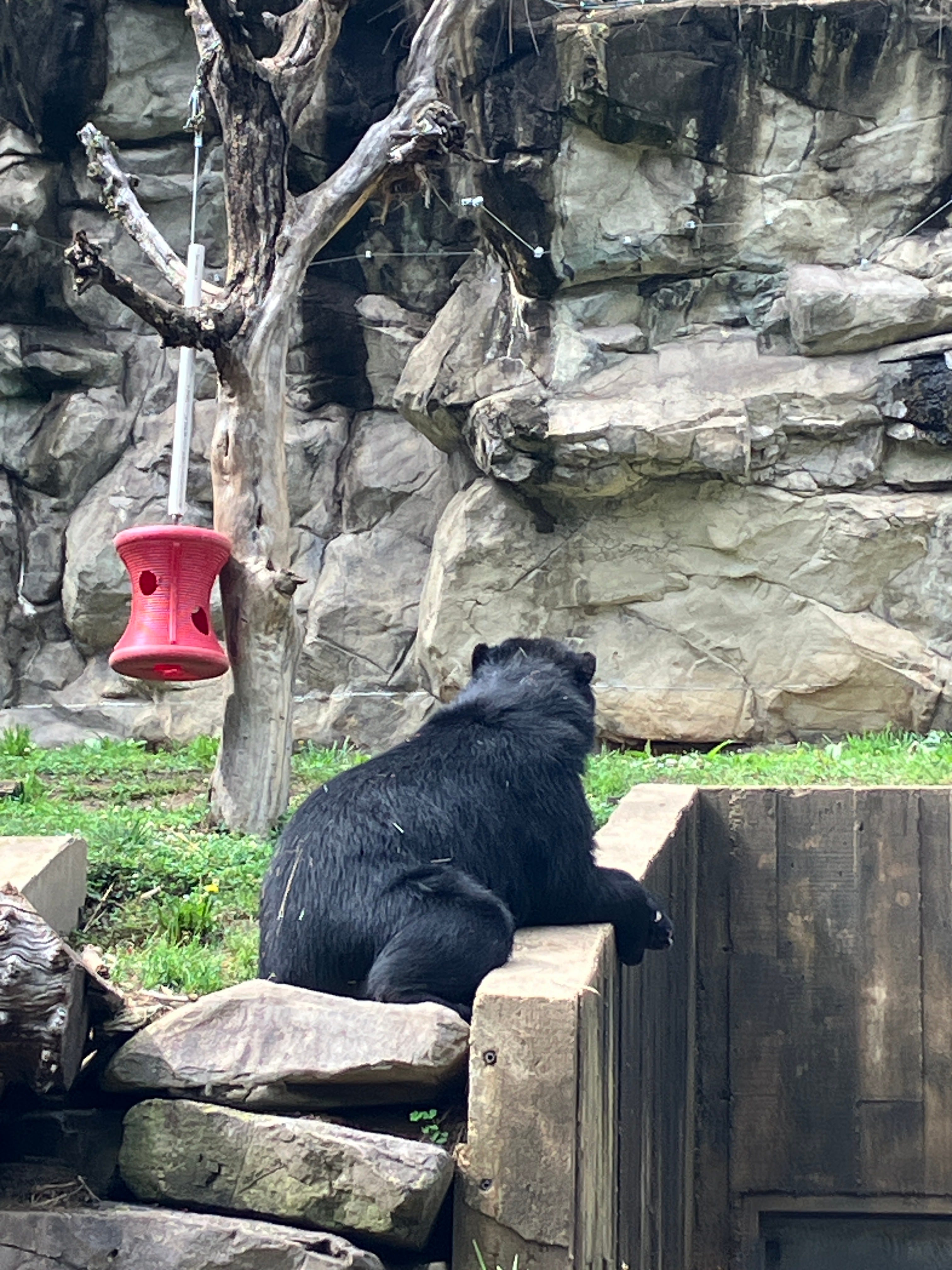
I empathize with your reaction. That said, [good] zoos can and do play an important role in long-term species and habitat conservation. And it's generally no longer the case that the animals housed in [good] zoos have been taken from the wild, unless they were injured, abandoned, etc. and are unable to survive there. I would love to take you to the Indianapolis Zoo.
Ooooof.
One has to take zoos on their own terms, or not take them.
Saddest here to me was the orangutan and the sheets.
Once at the Sun Diego Zoo I was at the rhinoceros enclosure, which consisted of a couple of fair sized ponds surrounded by paths and vegetation, and watched a mama rhino teaching her baby rhino … basically how to be a rhino. Baby followed mama into, then out of the first pond, then the second, then around and around and over again. I stayed there for probably half an hour just watching them. Unbelievably all by myself.
One time at the Seattle Zoo I was trying to make friends with a dromedary and discovered they spit. He was a good aim. I expect you would have liked him, Henry. I kinda did too.