

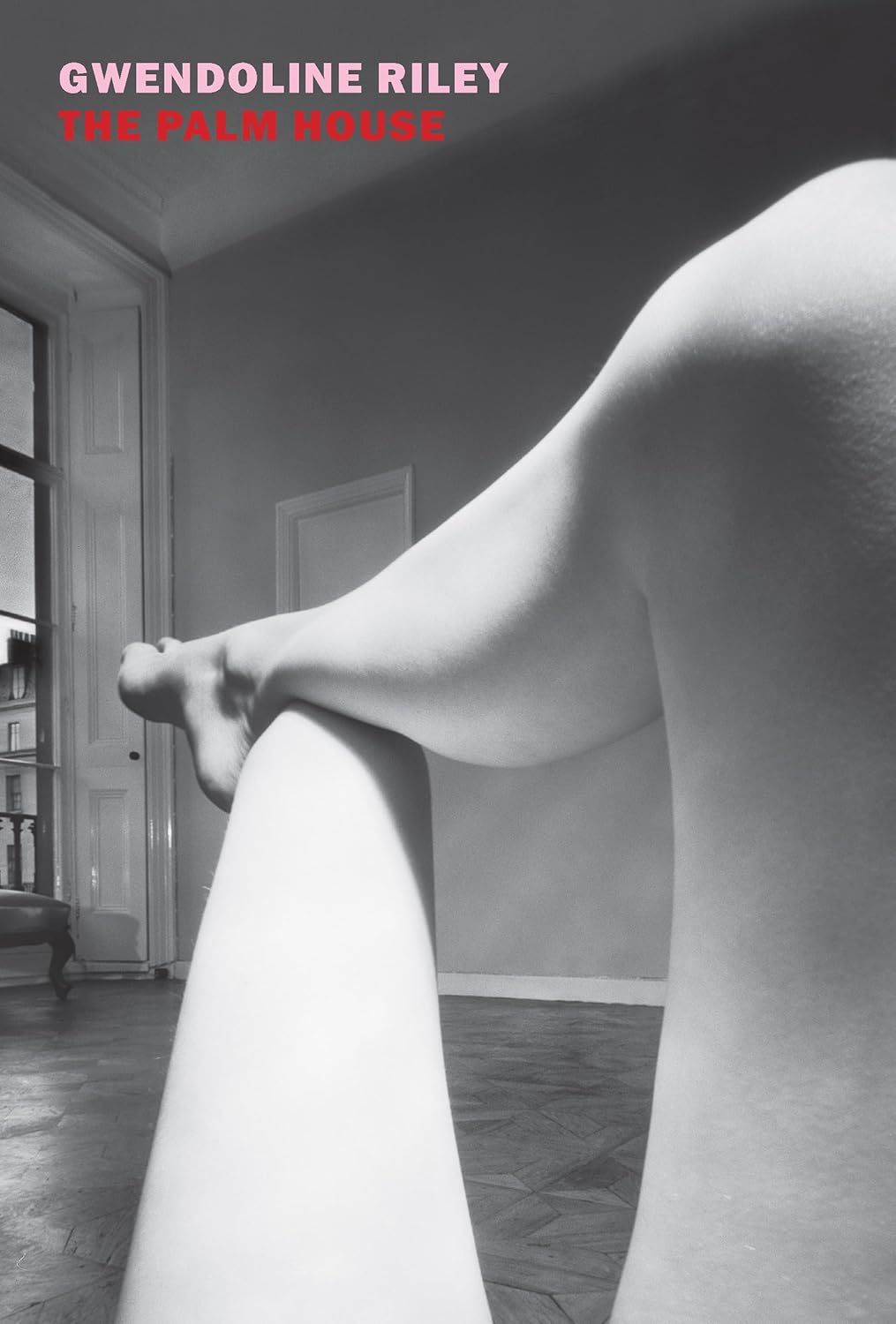
The Palm House
I read this in one sitting, out in the sun (it is short), and felt (perhaps for the first time?) that I was reading a modern British novelist who is working in the lineage of Penelope Fitzgerald. (Gwendoline Riley was born the year Fitzgerald’s first novel came out.) Naturally, many others have been weak or insufficient members of that lineage, but here is the real deal. Riley may not be quite what Fitzgerald was, and she is very much her own writer, which is part of what makes her a suitable inheritor, and to compare a page of her to a page of Fitzgerald may not yield any great insights, but the overall method—compression, obliquity, an edge of the surreal in the midst of the ordinary, a sense of nostalgia, something radical subdued, wickedness and suffering that go ignored, or worse, condoned—can be found in both writers. There is a shared sense of humour too, though Riley is more unbuttoned and more able to write vulgarity.
Their mother was still alive. At the funeral, when the priest said, ‘Stephen was the oldest of the Kennaugh boys,’ she shouted out, ‘And the best! And the best!’
At the wake, Owen tried valiantly to reminisce.
‘He did love to pull the rug out,’ he said, frowning. Liz was holding his hand.
‘We went round his a couple of years back. “My turn to host,” he says. Was expecting a bit of a spread – he’d built it up, you know. He served us grilled kidneys. So, OK, I gave them a try. Don’t want to look narrow-minded. When we’d all nearly finished he started smacking his lips at us. “Well done!” he says. “Well done! Can you taste the urine?”’
Of course there is a century of this sort of writing in the English novel, covering writers like R.K. Narayan, Elizabeth Bowen, Ronald Firbank, Evelyn Waugh, Barbara Pym, Jane Gardam, Ivy Compton-Burnett, and others, but there is something Fitzgeraldian in the mutedness of Riley’s hints and suggestions. (The ending of section one is very Gardam too…) Like Fitzgerald, Riley knows what to put in and what to leave out. It reminded me most of Human Voices. Mostly they share an ability to write about people who, in Fitzgerald’s words, “seem to have been born defeated or, even, profoundly lost.” In The Palm House those people don’t lose the day, though, despite not quite winning it either. A combination of incisiveness and steadfast marginality all means that when Riley is most Pymishly funny she is also quite dark. Here is part of a scene where the narrator’s mother has told a Spanish waiter who recognised her that her ex-partner is dead, when in fact he merely left her for another woman.
Lately, I often ask my mother how to say things in Spanish — in lieu of conversation, I suppose. She has all the vocab, now. It’s fun, too. In Spanish she speaks as if summoning dark forces; the language seems to entail for her an element of torque.
‘Soy vegana,’ she might say, warningly. ‘Y trabajo en una revista de cine!’
‘He escrito una novela!’ she said, recently, as if laying a curse.
That night, I sat in the armchair by the window with my bowl in my lap.
‘What did Sally say?’ I said.
‘Oh, I don’t know. Just thought it was funny . . .’
‘Está muerto,’ she said, again, and then in a deep voice — her Tarzan-Tonto voice — she said, ‘He dead.’
I pictured her on the island.
I pictured her in her sunglasses, on a dusty terrace.
I will have to find a way to get hold of Riley’s several other books here in the USA without getting a letter from my bank manager. A warning: the first three pages or so are not as interesting as the rest: persevere.
More on Penelope Fitzgerald here
How Penelope Fitzgerald became a late blooming novelist.
Several early readers of Second Act: What Late Bloomers Can Tell You About Success have told me they wanted to hear more about the novelist Penelope Fitzgerald. Fitzgerald is one of my favourite writers. I have loved her novels and biographies ever since I first discovered
The Heart of American Poetry
Based on A Poet’s Glossary, a book I always enjoyed opening, I impulse-purchased this new critical work by Edward Hirsch. But it is not a book I will finish, though I will keep dipping. The attempt to link poetry to the state of America is far too blunt, the readings are often too anecdotal, and thus the page count is far beyond the actual interest, though the book is not without interest and if some compressed version of this was available in online essays, I would read it. In general, this might be a worthwhile book for someone new to the topic, but it feels old-fashioned to me. If the topic at hand is so important (as I agree with Hirsch that it is) some other way of discussing it must be found. No easy task, and perhaps an unfair criticism, but that is where we are.
The Modern Element
Adam Kirsch’s 2008 book about modern poetry is much more lively, gets to the point, and has Kirsch’s own strongly-held views to sustain it. It is less about “who we are now” or whatever, but has a lot more to say about the poets and the nature of poetry. Kirsch is against “poetry’s neurotic obsession with the modern”. He thinks the “poetics of authenticity” which prevailed after the war, and which finished the job Romanticism started and led to the removal of formal qualities, “has thoroughly failed” and has prevented poets from writing major works. He wishes us to return to the pragmatic tradition of Johnson, Aristotle, Horace, and Arnold. A very worthwhile book.
Two of my Gwendoline Riley's (First Love and My Phantoms) are NYRB versions - I assume these must still be readily available in the states?
I did say… on our podcast… so pleased we agree (again)!