
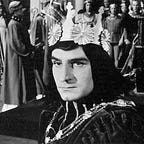

The short podcast recording is an overview of what I said about Richard III at the recent book club meeting. I discuss some of the main techniques in the play, some of the essential elements that make it so entertaining, and give a little context for it as part of Shakespeare’s career and development. I will experiment with recording more of these for paid subscribers who cannot come to the zoom meetings (and may record the meetings to post here). If you have questions about Richard III, put them in the comments.
I have been meaning to start a close-reading series for a while. There are some debates about what close-reading is and whether it is good. I have mixed views on both topics! But I often find that readers can be led into a false impression of the meaning of a piece of literature, or are missing many of its enjoyable pleasures, by not reading closely enough.
Literature often works by creating an overall impression through the arrangement of tropes, figures, images, words, ironies, and so on, and it is by paying attention to these things, and their patterns, that we can test our ideas about a piece of writing. If you ever wonder how do they do it?, close reading can provide some sort of answer.
I was taught to produce commentaries at university, rather than close readings, and perhaps that is the best word for what I am up to here. Maybe I’ll write separately on this idea.
I have previously written or recorded commentaries or close readings of ‘The Whitsun Weddings’, ‘An Arundel Tomb’, ‘Fire and Ice’, ‘You’re’, Housman and Dickinson, and ‘Those Winter Sundays’.
What matters for now is that we start to read Shakespeare by looking at some of the fine-workings, or the mechanisms, of his writing. We are interested in what effects he creates and how he creates them.
The text is the opening speech from Richard III. Read it, think about it, and under the paywall I will give my own commentary, to draw out some of the essential elements.
Now is the winter of our discontent
Made glorious summer by this sun of York;
And all the clouds that lour'd upon our house
In the deep bosom of the ocean buried.
Now are our brows bound with victorious wreaths;
Our bruised arms hung up for monuments;
Our stern alarums changed to merry meetings,
Our dreadful marches to delightful measures.
Grim-visaged war hath smooth'd his wrinkled front;
And now, instead of mounting barbed steeds
To fright the souls of fearful adversaries,
He capers nimbly in a lady's chamber
To the lascivious pleasing of a lute.
But I, that am not shaped for sportive tricks,
Nor made to court an amorous looking-glass;
I, that am rudely stamp'd, and want love's majesty
To strut before a wanton ambling nymph;
I, that am curtail'd of this fair proportion,
Cheated of feature by dissembling nature,
Deformed, unfinish'd, sent before my time
Into this breathing world, scarce half made up,
And that so lamely and unfashionable
That dogs bark at me as I halt by them;
Why, I, in this weak piping time of peace,
Have no delight to pass away the time,
Unless to spy my shadow in the sun
And descant on mine own deformity:
And therefore, since I cannot prove a lover,
To entertain these fair well-spoken days,
I am determined to prove a villain
And hate the idle pleasures of these days.
Plots have I laid, inductions dangerous,
By drunken prophecies, libels and dreams,
To set my brother Clarence and the king
In deadly hate the one against the other:
And if King Edward be as true and just
As I am subtle, false and treacherous,
This day should Clarence closely be mew'd up,
About a prophecy, which says that 'G'
Of Edward's heirs the murderer shall be.
Dive, thoughts, down to my soul: here
Clarence comes.
The first thing to note is the technique of parallelism.
Now is the winter of our discontent
Made glorious summer by this sun of York;
And all the clouds that lour’d upon our house
In the deep bosom of the ocean buried.
Richard works through contrasts: winter/summer; discontent/glorious; clouds/ocean. Notice, too, that he inverts the meaning of “bosom”, a word that usually has loving connotations, to mean a place of burial. There is a hint of his coming malice. As the speech goes on, we will discover that all of this is ironic (and in performance that might be clear from the start). Richard does not love the glorious summer: he enjoyed the winter of discontent. So the parallels will work to establish a very dramatic flip.
We are aware of this because of the first line break: attuned to the natural rhythm of the pentameter we take the first line at face value, and are surprised by the turn to optimism as the line turns. Now is a strong opening word: a play of action! But it also attunes us to the idea that when all the focus is on now, we lack stability. This will be the hallmark of Richard’s villain: his making and his unmaking. (Notice, too, the three-way pun on sun: it means the sun in the seasonal metaphor, the son of the house of York, and is a common image for the king. Richard loves the instability of puns, the charming duplicity of language.)
Now are our brows bound with victorious wreaths;
Our bruised arms hung up for monuments;
Our stern alarums changed to merry meetings,
Our dreadful marches to delightful measures.
Another set of contrasts: wreaths not helmets, armour as trophies, the cries of war turned to pleasantries and dances. So far, so cheerful, but audiences would remember his line from The Third Part of Henry VI, “Why, I can smile, and murder whiles I smile.” (Hamlet: “O villain, villain, smiling damned villain.”)
A second use of “Now” is significant. It reminds me of the bitterness of Sonnet 90.1 “Now while the world is bent my deeds to cross,/ Join with the spite of fortune, make me bow.” And Iago: “Even now, now, very now, an old black ram is tupping your white ewe.”
One thing the villains know best is the urgency of time, a word that reverberates throughout this play, and which is the main theme of the history cycle. Anne laments “The untimely fall of virtuous Lancaster” in a line that strikes the keynote—the untimely fall of virtue. Everyone is obsessed with the past. Richard is obsessed with the now, with the advantage he can rip from the present lull. They are all, soon, forced into his whirlwind of the now.
The citizens discuss this acceptingly.
Third Citizen
Untimely storms make men expect a dearth.
All may be well; but, if God sort it so,
’Tis more than we deserve, or I expect.
Second Citizen
Truly, the souls of men are full of dread:
Ye cannot reason almost with a man
That looks not heavily and full of fear.
Third Citizen
Before the times of change, still is it so:
By a divine instinct men’s minds mistrust
Ensuing dangers; as by proof, we see
The waters swell before a boisterous storm.
But leave it all to God. Whither away?
Richard knows that now is the time he must strike. He has the villain’s capacity to recognise that, “There is a tide in the affairs of men/Which, taken at the flood, leads on to fortune.”
The word merry might also catch our eye. The merry spirit can have a dark side, or can become a point of scorn. Shylock calls his bond with Antonio a “merry bond.” When Celia tells Rosalind to be merry, she replies, “I show more mirth than I am mistress of, and would you yet I were merrier?” Later on, Rosalind says, “I had rather have a fool to make me merry than experience to make me sad.” Antipholus says his fool lightens his humour with a merry jest, but when he is convinced the fool has stolen his gold, he says,
Now, as I am a Christian, answer me
In what safe place you have bestow’d my money,
Or I shall break that merry sconce of yours
Hamlet: “What should a man do but be merry? For look you how cheerfully my mother looks, and my father died within’s two hours.” Merriment can be joyful, but it can also be a falsity, a thing to be admonished, a source of sin. Falstaff: “If to be old and merry be a sin, then many an old host that I know is damned.”
Richard hates merriment. This is an important marker. He becomes increasingly scornful at this point. There is a tone shift.
Grim-visaged war hath smooth’d his wrinkled front;
And now, instead of mounting barbed steeds
To fright the souls of fearful adversaries,
He capers nimbly in a lady’s chamber
To the lascivious pleasing of a lute.
Alliteration reinforces his sense of honour and pride in war (smooth’d, steeds, souls; front, fright, fearful) and is then used to undermine the sybaritic peace (capers, chamber; lady, lascivious, lute). “Nimbly”, meaning quickly, lightly, reinforces the contrast from before of dreadful marches changed to delightful measures. Richard hates the feminisation of society. Nimbly is the sort of word used to described birds (“So nymlie and trimlie, thir birds thay flew me by.” quoted in OED).
Lascivious is a damning word. “I knew the young Count to be a dangerous and lasciuious boy,” it is said of Bertram in All’s Well that Ends Well. This balances out of the “grim-visage” of war, which means angry or fierce.
But I, that am not shaped for sportive tricks,
Nor made to court an amorous looking-glass;
I, that am rudely stamp'd, and want love's majesty
To strut before a wanton ambling nymph;
I, that am curtail'd of this fair proportion,
Cheated of feature by dissembling nature,
Deformed, unfinish'd, sent before my time
Into this breathing world, scarce half made up,
And that so lamely and unfashionable
That dogs bark at me as I halt by them;
Why, I, in this weak piping time of peace,
Have no delight to pass away the time,
Unless to spy my shadow in the sun
And descant on mine own deformity:
And therefore, since I cannot prove a lover,
To entertain these fair well-spoken days,
I am determined to prove a villain
And hate the idle pleasures of these days.
There are ten first-person pronouns here (I, me, mine), which draws the determinism/free-will contrast. Richard is shaped, made, stamped, curtailed, cheated, deformed, unfinished, lame, unfashionable. Fate has damned him. Rudely stamped means unskilfully made, like a bad coin. Nature has dissembled: cheated. He calls for our sympathy with rhetorical skill before harking back to his complaint, now fully in the open: “Why, I, in this weak piping time of peace,/ Have no delight to pass away the time.” This will be echoed in Coriolanus, when the servant says, “This peace is nothing, but to rust iron, increase tailors, and breed ballad-makers.”
Bitterness expresses itself in double meanings. Tricks can be innocent. “The trick To make my Lady laugh.” (Love’s Labour’s Lost) Or skilful. “A juggling trick.” (Troilus) They can also be foolish or stupid. “That were a tricke indeed!” (Merry Wives). And they can be cheats, ruses, wiles. Greene: “the tricke of a foe.” The amorous looking glass becomes an object of narcissism. The nymph becomes unruly, possibly cruel. (Lear: “As flies are to th' wanton boys, are we to th' Gods, They bite us for their sport.”) To descant is to sing harmoniously: but Richard cannot join the weak piping time, he cannot participate in the pleasures of the lute music, he cannot dance the delightful measures. He is locked out.
And so he is “determined” to prove a villain. He harnesses the determinism that has forced him to be scorned even by dogs, and turns it to volition, like Edmund in King Lear.
Plots have I laid, inductions dangerous,
By drunken prophecies, libels and dreams,
To set my brother Clarence and the king
In deadly hate the one against the other:
And if King Edward be as true and just
As I am subtle, false and treacherous,
This day should Clarence closely be mew'd up,
About a prophecy, which says that 'G'
Of Edward's heirs the murderer shall be.
Dive, thoughts, down to my soul: here
Clarence comes.
The pace has been accelerating throughout, but now the lines clip quickly along, enhanced by more alliteration, and some rhymes (just, treacherous; G, be). The explicit aim of his villainy is a parallel (“In deadly hate the one against the other”) and the opening image of the clouds being buried in the bosom of the ocean is returned to, in a moment of chilling villainy: “Dive, thoughts, down to my soul.”
The whole speech is one of duplicity: wicked puns, hidden meanings: but the attitude is complicit. We are engaged in this duplicity because we know what Richard will do. He is conspiratorial. He winds us in. “Thus like the formal Vice, Iniquity, I moralize two meanings in one word.” (The whole commentary could be about his relationship to the morality play character of Vice…)
There is a fascination unique to evil, which Richard’s speech uses to captivate the audience, to make them excitingly aware that poor Clarence unknowingly comes to death.
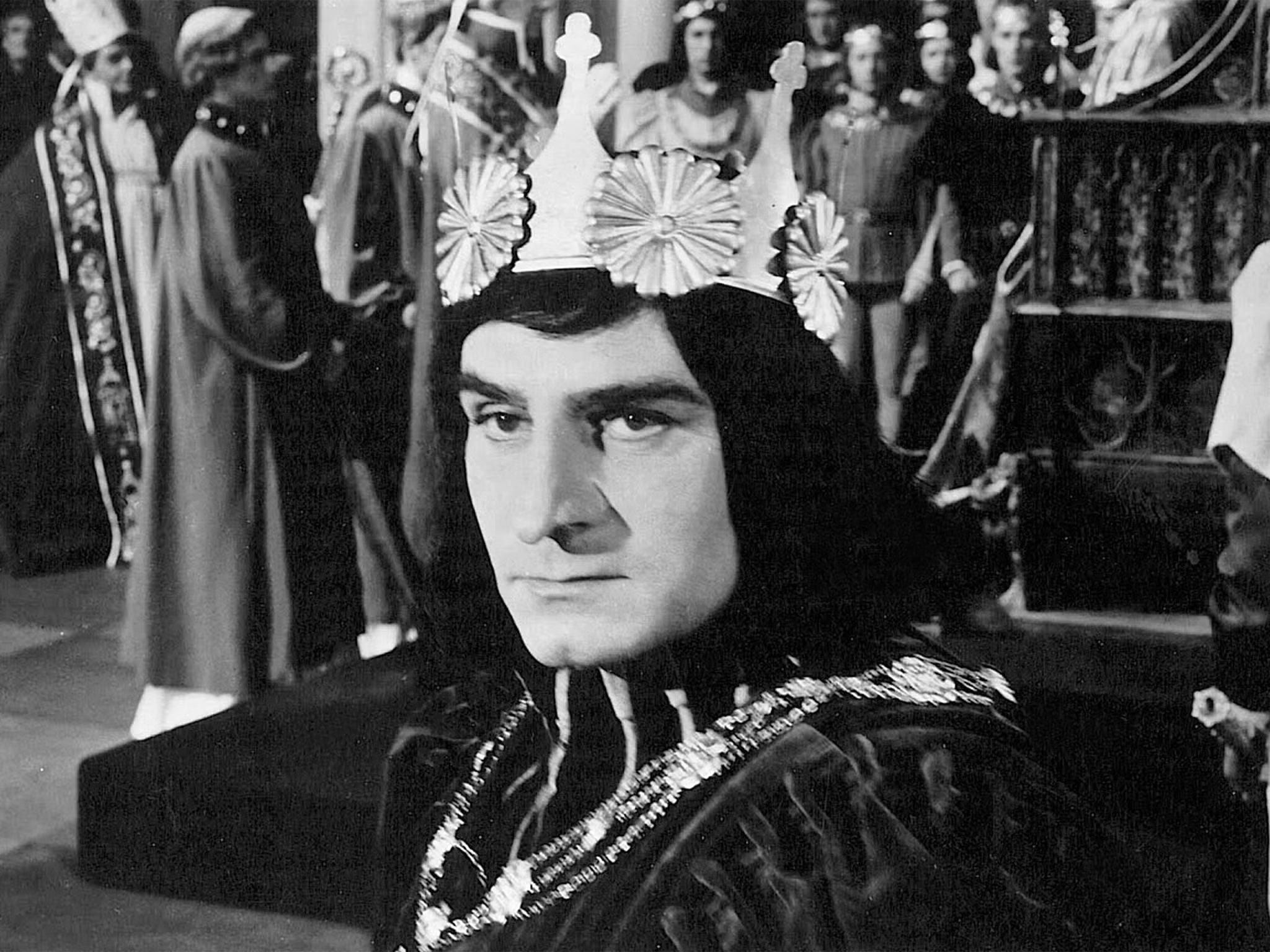
Then hate me when thou wilt, if ever, now,
Now while the world is bent my deeds to cross,
Join with the spite of fortune, make me bow,
And do not drop in for an after-loss:
Ah do not, when my heart hath ’scaped this sorrow,
Come in the rearward of a conquered woe,
Give not a windy night a rainy morrow,
To linger out a purposed overthrow.
If thou wilt leave me, do not leave me last,
When other petty griefs have done their spite,
But in the onset come, so shall I taste
At first the very worst of fortune’s might.
And other strains of woe, which now seem woe,
Compared with loss of thee, will not seem so.


