

Tomorrow, at 6p.m. UK time, I am talking to Stephen Greenblatt and Adam Philips about Shakespeare and second chances. Tickets here.
If I include everything I have read, watched, or seen this will become a tedious exercise. You don’t, surely, need my notes on The Quest for Corvo (good but overrated) or The Real Sebastian Knight (virtuoso, not my favourite). Nor will it be news to you that Daisy Miller, Washington Square, or The Portrait of a Lady are Really Quite Good. If I write about the movies I have seen, that will be in a separate post, but again, I’m not the one you want for that. So this is a selection of the things that moved me most strongly, for better or for worse, or that seem most notable (however un-notable I might have found them.)
Breakthroughs of 2024
Lots of speculatively good or interesting news that ought to be better known.
The Lion, the Witch, and the Wonder
I have read almost everything Katherine Rundell has written, and so I did not hear anything very new in these lectures. Nor do I think it is either correct or very advisable to compare children’s literature to vodka. (It would also do her the power of good to never say the word galvanic again.) As time goes by, Rundell becomes, to my ears, more openly left-wing, despite the fact that her own books are classic words of establishment values, as one would expect from a diplomat’s daughter who is a fellow of All Souls. The idea that you can resist capitalism by reading E Nesbit is not just a bit loony, but a sign that she has wondered too far away from her area of expertise.
Still, I remain a fan, I recommend her books to many people, and I think she is one of the better children’s writers of the last few decades. Rooftoppers is my favourite. My children love The Explorers. If you are less familiar with her ideas than I am, you will enjoy these lectures, and I’m glad to see her promoting the value of great children’s literature. One or two people have said recently her John Donne book was overpraised. I say no!
Wild Duck
Ibsen bores me. Too neatly structured. Too didactic. Too “capitalism and greed killed this innocent girl!” (What was that recent Ibsen adaptation that became All About Brexit? Dreary!) But, I did very much like seeing Wild Duck performed in Norwegian, which gives a much better sense of the whole mood of the play, however much the play itself is like George Bernard Shaw without any of the redeeming charm. Something temperamental gets lost when one culture performs the work of another and I am very glad to have seen this production. They come to London once a year, I think, so make sure you go next time if you can. Meanwhile, I am sticking to Chekhov, not Ibsen. Now that’s a true writer.
Van Gogh, National Gallery
I do not love Van Gogh. Not at all. But there are many splendid pictures in this exhibition. The early portraits, his use of blue, and the asylum gardens in blossom were my favourites. My children enjoyed it, too. It was difficult for my son to walk away from Starry Night. “I can’t just leave this!” My daughter took me to see several pictures she enjoyed, including the Cyprus Tree. I hear it’s sold out, but if you can get tickets maybe you should. On the other hand, we have ‘Monet in London’ and ‘Renaissance Drawings’ both showing in London, both of which promise to be better. I am also desperate to see Constable. A.N. Wilson reviewed Gogh and Constable recently (and I think he’s right).
Yoshida: Three Generations of Japanese Printmaking
One of the exhibitions I have enjoyed most in recent years. The traditional prints were wonderful, but so were the modernist works. Another very child friendly exhibit. The catalogue is excellent, with really nice printings of all the paintings, and I have been enjoying looking at it.
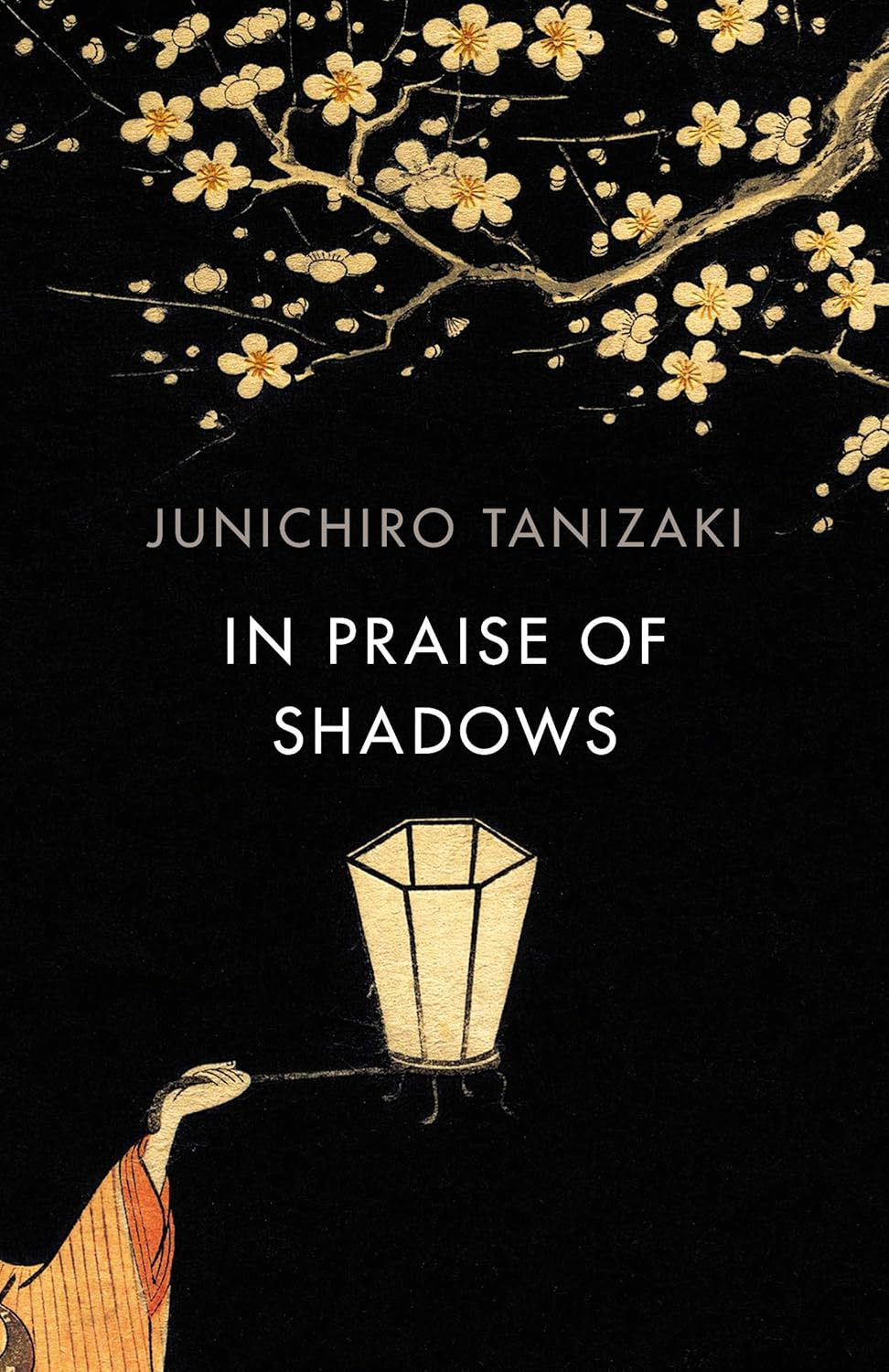
In Praise of Shadows: Vintage Design Edition
I read this after the Yoshida exhibition and LOVED it. This edition has wonderful pictures. I have been watching a lot of classic movies recently and found this to be a useful compliment to that endeavour. Perhaps the best book I have read recently.
Paper Boat. New and Selected Poems of Margaret Atwood
I flicked and skipped through this volume and found very little of interest. I very much like Atwood’s poem about Raymond Chandler, but that wasn’t included. What I really need is a slim Selected Poems. This is too big for me to find the really good stuff. One for the fans.
Exciting Times
I read half of this and thought it was fine but basically Rooney-lite, which isn’t what I’m looking for in new novels. I didn’t enjoy Swing Time either because it was Rooney-esque ventriloquism.
Mad About Shakespeare
A memoir by Shakespeare scholar Jonathan Bate, which tells the story of his time as a school and university student, reading Shakespeare. One thing you will marvel at is the quality of his teachers in the old grammar school system. Another is the fluency he has with recalling Shakespeare quotes. I found this book smooth and easy to read, full of good quotations (including from Samuel Johnson), and quite moving when Bate wrote about his personal life, including accounts of deaths and suicides. One of the better books of its sort. As my wife said, though, why not call it Mad About The Bard? If you are new to Bate, start with Soul of the Age or his Very Short Introduction.
Chaucer. A European Life
This is just splendid, both as a loving biography of Chaucer and as an explanation of his times. Full of detail about the workings of households, Ricardian politics, what Chaucer learned abroad, how he did and did not conform to the genres he worked in and the source material he borrowed from, and never too heavy or dull. I am still vague on some of the ins-and-outs of the political players, but Turner is never less than clear on the rather complicated manoeuvres. Chaucer is not often directly political, though, and you will come away with a good understanding of how he related to his environment, his canniness, and his ability to keep his head. A really splendid book. I also enjoyed Turner’s biography of The Wife of Bath. I interviewed Marion Turner recently and she was excellent.
Orbital.
I will try again, but I tried twice and found this too slow and boring to read.
Liberalism Against Itself.
I would perhaps have found this book more compelling if it acknowledged the major assumptions it was making. The idea of an ethical state is simply taken for granted. (My friend Rebecca Lowe would, I think, say this is a normative account of liberalism masquerading as a historical story.) The idea that Isaiah Berlin betrayed himself because he did not have believe in institutions to enact his ideals is a weak criticism! The argument here is that liberalism became a reductive philosophy of individual rights during the Cold War and this is why “everything is bad now”, i.e. if Berlin and a few others hadn’t become atomistic individualists we wouldn’t have Trump and Brexit, and until we can find our way back to a fuller account of liberalism, we’ll be stuck with these problems. This would be a lame op-ed and isn’t much more convincing here. When the ethical state, the decline of welfare, and so on is just obvious to you, then this is the book you write.
Any philosophical account that takes a political issues as its unexamined premise is going to be a narrow and ultimately slightly frustrated project. Progressivism is assumed to be the work of the state, rather than the great engines of capitalism that have produced so much of the freedom we enjoy spiritually, emotionally, politically, and materially. Surely the essence of liberalism is the appreciation of both of these things?
The idea that Berlin isn’t an advocate of “creative and empowered free action” seems wrong to me. Read his J.S. Mill essay! Mill’s calls for the perfection of the individual and the development of the soul were quite compatible without many of the left-leaning politics inherent in Moyn’s book and his thesis is overstated in the cause of a political argument. Still, an interesting and provocative book.
The Future Future
I didn’t feel compelled to finish this in the end (I’m reading a lot for other projects: perhaps I will try again), but I have never read another book quite like it. A contribution to the long golden age of historical fiction that has been happening for my entire lifetime.
The Monsters of Rookhaven
A little too much “Adams Family” influence was at work in this recent children’s book, but I raced through the whole thing in an evening and enjoyed every page. Full of good things if that’s what you like.
Phantases, The Princess and the Goblin
Splendid, splendid, splendid. I was delighted to hear that Zena Hitz enjoyed MacDonald as a child. Alas, my children show no interest in The Princess, but I shall be reading the others in the series. Phantases is essential if you are interested in the history of fantasy.
A Thousand Times More Fair
R Meager recommended this to me and it’s excellent. Justice in Shakespeare discussed by an academic lawyer who was a Shakespeare obsessive in his youth (and still is). Perfect. Lots of it is about modern politics, but unlike many other attempts to link the now with the the plays, his account of the plays is really quite good. A book you enjoy and learn from! I especially liked the chapters on Henry IV and Merchant of Venice. More books like this please.
Nine Lives. Inner Minds on the Spectrum.
An excellent book—if it’s what you are looking for, go get it. The profiles I read were splendid. It’s just what people need to show them that autistic people are not what they expect them to be. I wasn’t desperate to finish it though, perhaps because I am at saturation point with this topic. I used not to say openly when I was writing about someone who I thought was neurodivergent—like the blessed Queen Mary—but perhaps I will be more direct about this in future. Anyway, if you know someone who is interested in autism, or who has the wrong idea about the rage of autistic experiences, this is a good book for them.
The Golden Ass
I read the Robert Graves translation, in those lovely old purple covers, and it took me a long time because this book is just so much fun. I told my family the story about the man who stands watch over the corpse and it gave them real shivers. If you haven’t read it, do yourself a favour. Fun on every page.
All praise to you for mentioning Tanizaki, the weirdest of characters but a must read.
The golden ass is so good! So fertile and incentive. There is an audiobook from Naxos that I highly recommend too. https://www.naxos.com/CatalogueDetail/?id=NA0272