

There is much discussion at the moment of the glory that was Greece, which has largely passed me by, but I thought of it as we drove to Richmond, Virginia, and I saw a small strip mall that called itself a plaza and then, rather charmingly, the Mount Olympus Farm. (Indeed, there are plazas everywhere.) It is sometimes thought of as quaint that the Americans have small towns called Athens and Troy, but the long reach of Western Civilization does not come only from books. The road showed us small homes, old tractors, sturdy churches, all the various accoutrements of semi-rural American life, as well as the very modern aspects, like the hundreds upon hundreds of shopping trolleys lined up outside a warehouse. It all looks so charming in the late afternoon sun that lights the tall trees with its long autumnal slant. There is an American quality of beauty whereby a small patch of glorious landscape can sustain low-slung un-pretty buildings, large lorry cabs, gardens with old trucks, without losing its charm. Bricks and rust and parking lots and machinery all go some way to defining the landscape here, like the telephone wires that run above English fields.
In Richmond we walked past the neon-lit get-married-now Lucky in Love wedding chapel, which is across the road from a tattoo parlor called Regretful Heart offering laser removal. Tall bright office buildings can be seen from wherever you walk. It is oddly quiet. The theatre seems empty but the lights outside keep changing. In the morning we walked a three-mile loop. It was all so quiet. We saw very few people, including the runners and cyclists. Breakfast is hardly available. Almost all of the architectural interest can be found by looking up and catching certain views, such as a cornice framed by trees, as if rising up from another place entirely.
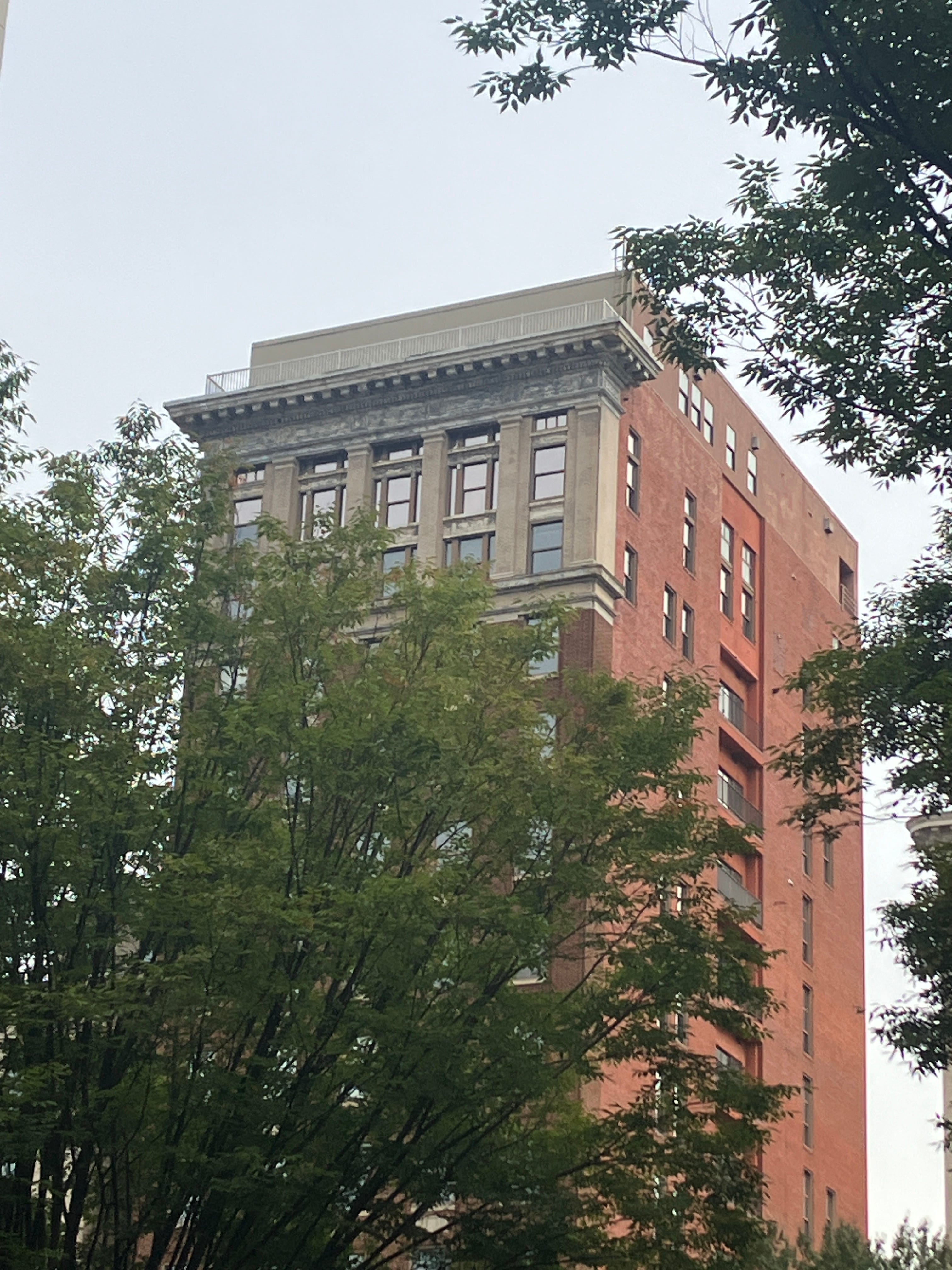
Or a row of windows that give the illusion of another place entirely.
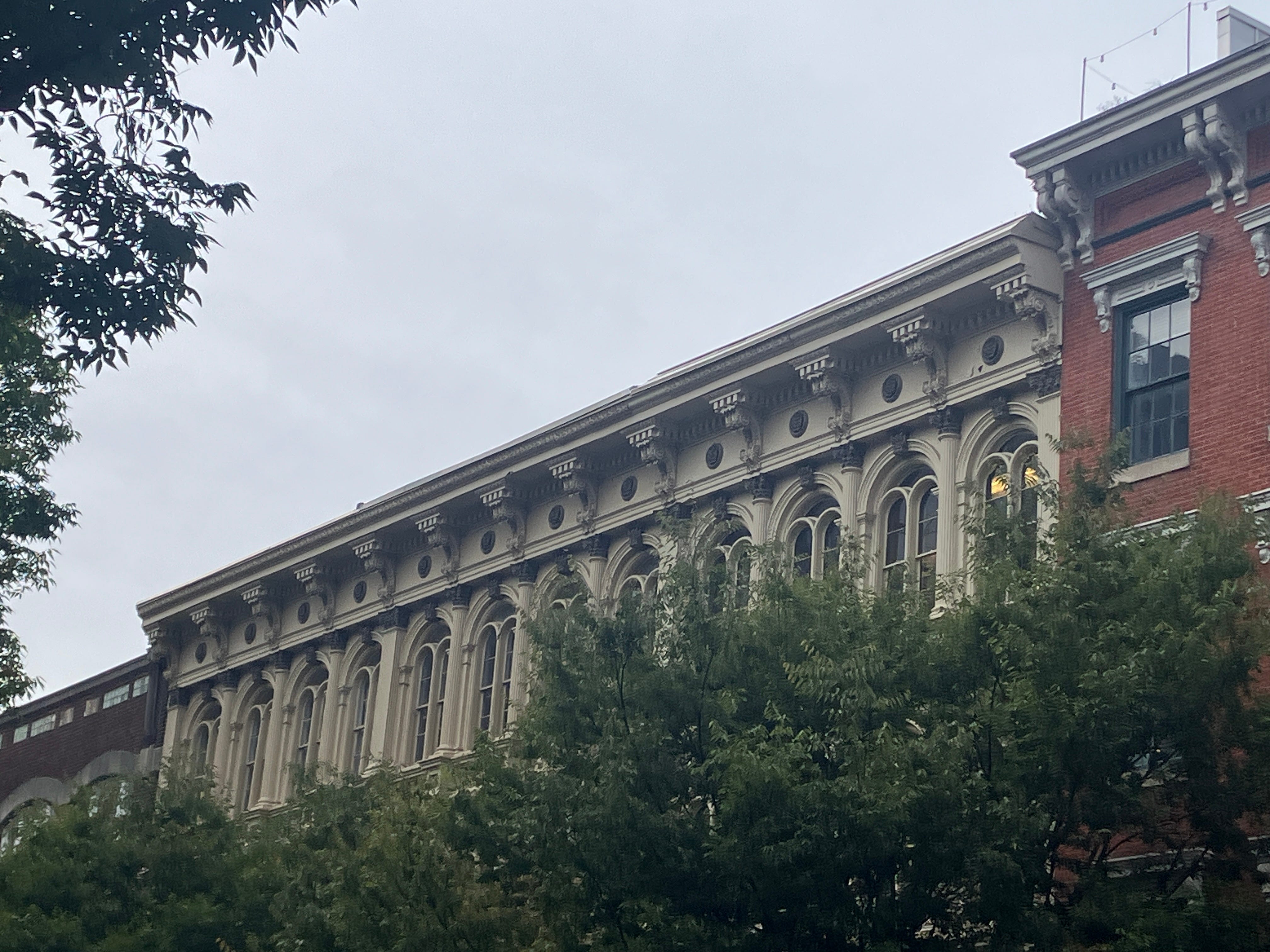
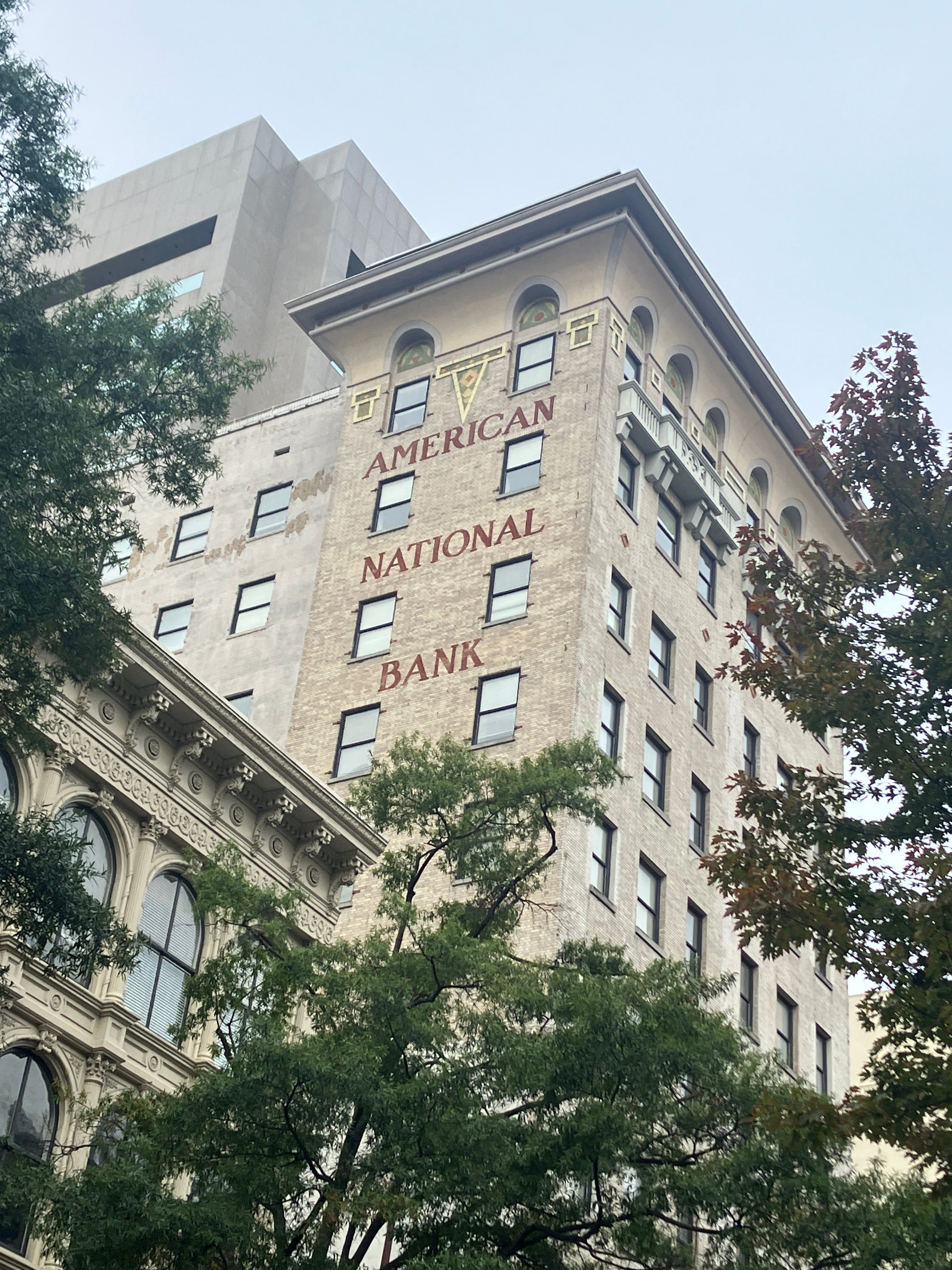
There are enjoyable remnants of another time, the American National Bank
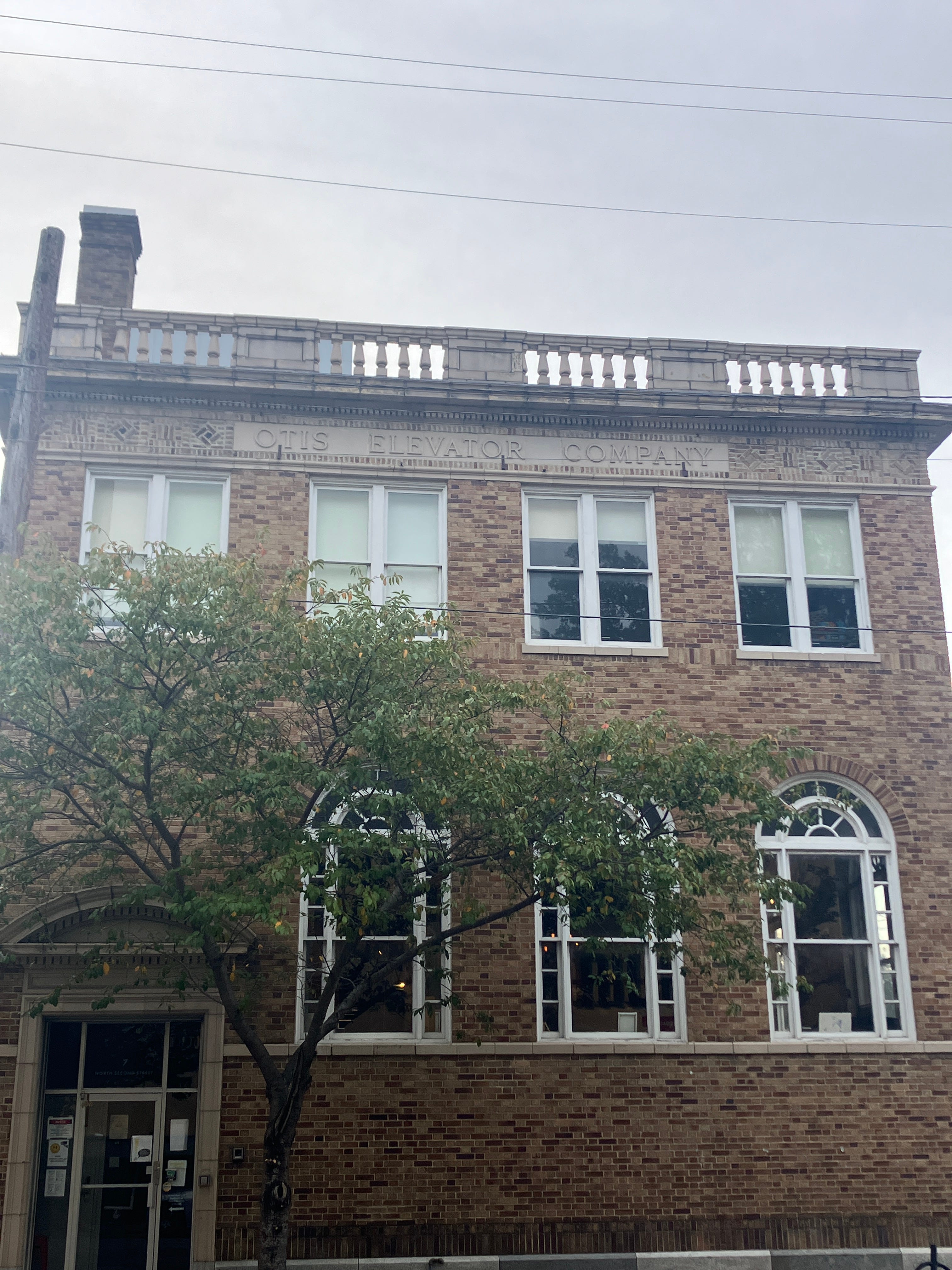
Or the marvelous Otis Elevator Company, founded by the man who invented the safety brake that kept elevators safe if the rope-hoist failed, and now the leading manufacturers of elevators, escalators, and walkways, that dull and often ignored clutch of technologies that are fundamental to modern life. The viable height of an elevator shaft is the viable height of a building. There are ways of living and working, aesthetic styles, skylines, office layouts and hierarchies, that all came into being because of the elevator. And here is one of the lovely old buildings of that important company. (If, like me, you find this topic suitably fascinating, the book you want is Lifted: A Cultural History of the Elevator by Andreas Bernard.)
Some of the most interesting sights were the old railway lines, on which trains still run. It is one of those cities where you often hear the distant sound of a freight train horn. Likewise, the rusted pipe-ways of long ago industry and the old commercial buildings on the canal.
We drove to Williamsburg, Yorktown, and Jamestown. At Shorty’s Diner, they promise pancakes that hang off the plate and they do not disappoint. They even have a good old-fashioned advertising rhyme. It’s Not Fancy, It’s Not Fat Free, It’s Just the Way it Used to Be! Just the way it used to be is the heart of a certain idea of America, of course, a certain idea of the West, and what is inherited, what is preserved. Naturally, I ordered the “sampler plate”—eggs, bacon, Virginia ham, home fried potatoes, and a pancake on the side—for a real taste of Virginia. Our waitress started working there when she was still at school, she is now a mother, looking to get her real-estate license. Shorty’s was buzzing, the air full of conversation, and the walls full of memorabilia. And they open early.
As we drove and drove, we passed old houses with polished-up cars out front from another generation, making a scene which could be used as a movie set. We saw houses abandoned and collapsing, awnings left to peel for decades, men sitting on benches and porches, looking absent, watching the day pass away. We frequently saw cars older than we are on the roads. We saw the grass growing up around trucks, a letterbox in the shape of a dachshund, vehicles with tarpaulin held in the window. All this was of more interest than Colonial Williamsburg, where most of the buildings seemed to be replicas and the shops sold the same sort of things you get in any mall. Perhaps we have simply visited too many historical buildings in England. But the real history seemed to be in the nearby small towns, where you can see things that look not just old, or in an old style, but decaying, flaking, preserved or abandoned,—life in the process of history, not just in its style.
At Yorktown, I was amazed that at such a crucial place—the fields where the Revolution was finally won!—nothing much was made of it all in the town itself. There is a bookshop, a sushi place, and you can get ice-cream. On the beach, a woman read a novel, a man slept in a deck chair, and some children rolled in the sand. There is a little beach-front hotel. Clinging to one of the pillars holding up a wooden walkway over the water we saw a blue crab that must have been ten inches claw-to-claw. But the house where the final surrender was negotiated sits quietly atop it all, in a field, and is, having been shot-up and stripped for firewood during the Civil War, now a restoration.
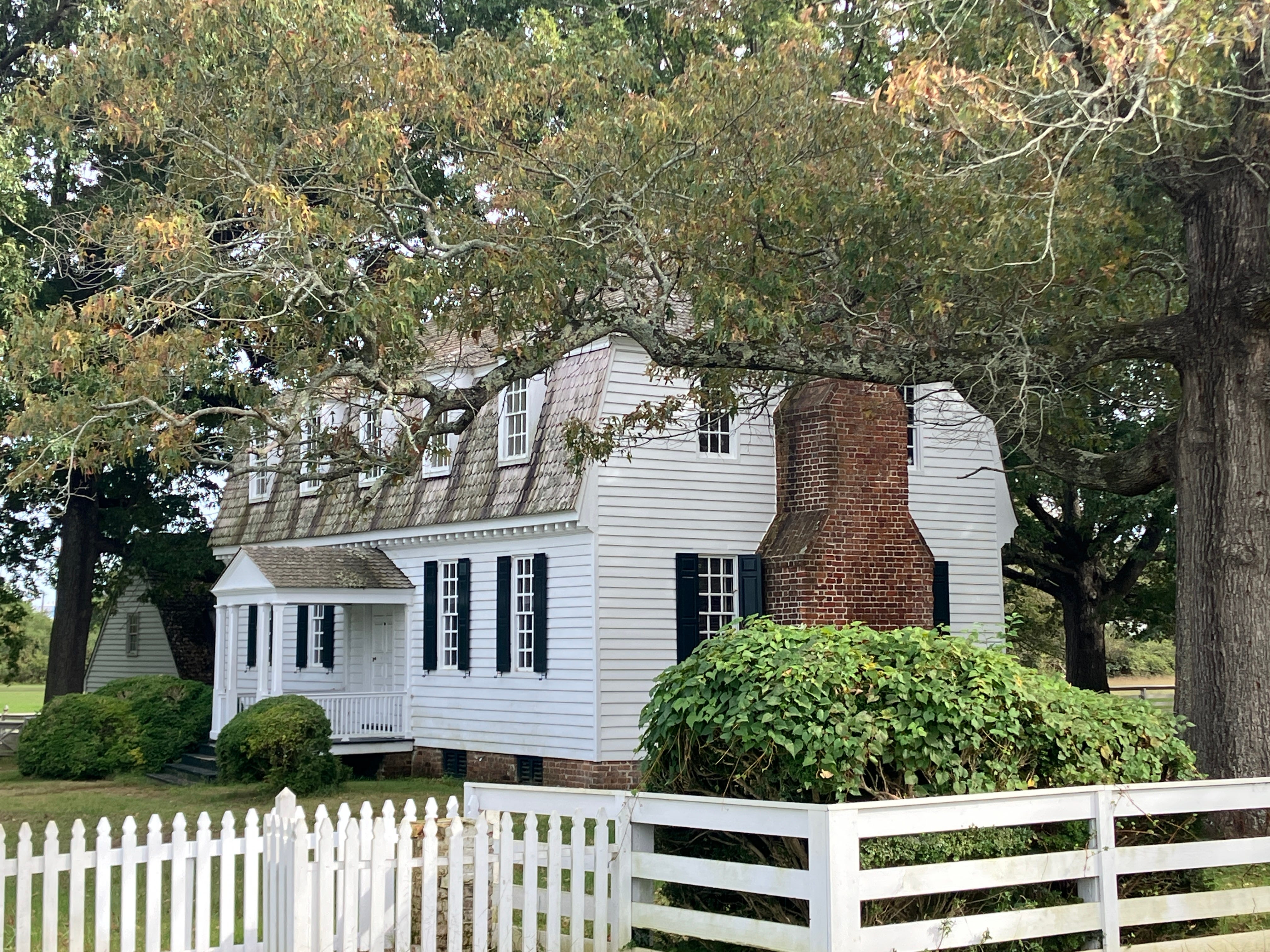
Beside it the graveyard where at least one soldier lies. How empty it was up there. The tomb of one owner’s wife has cracked. On the tomb of a man who was shot during the battle is this lovely poem.
Ah cruel ball, so sudden to disarm
And tare my tender husband from my Arms
How can I grieve too much what time shall end
By mourning for so good and kind a friend
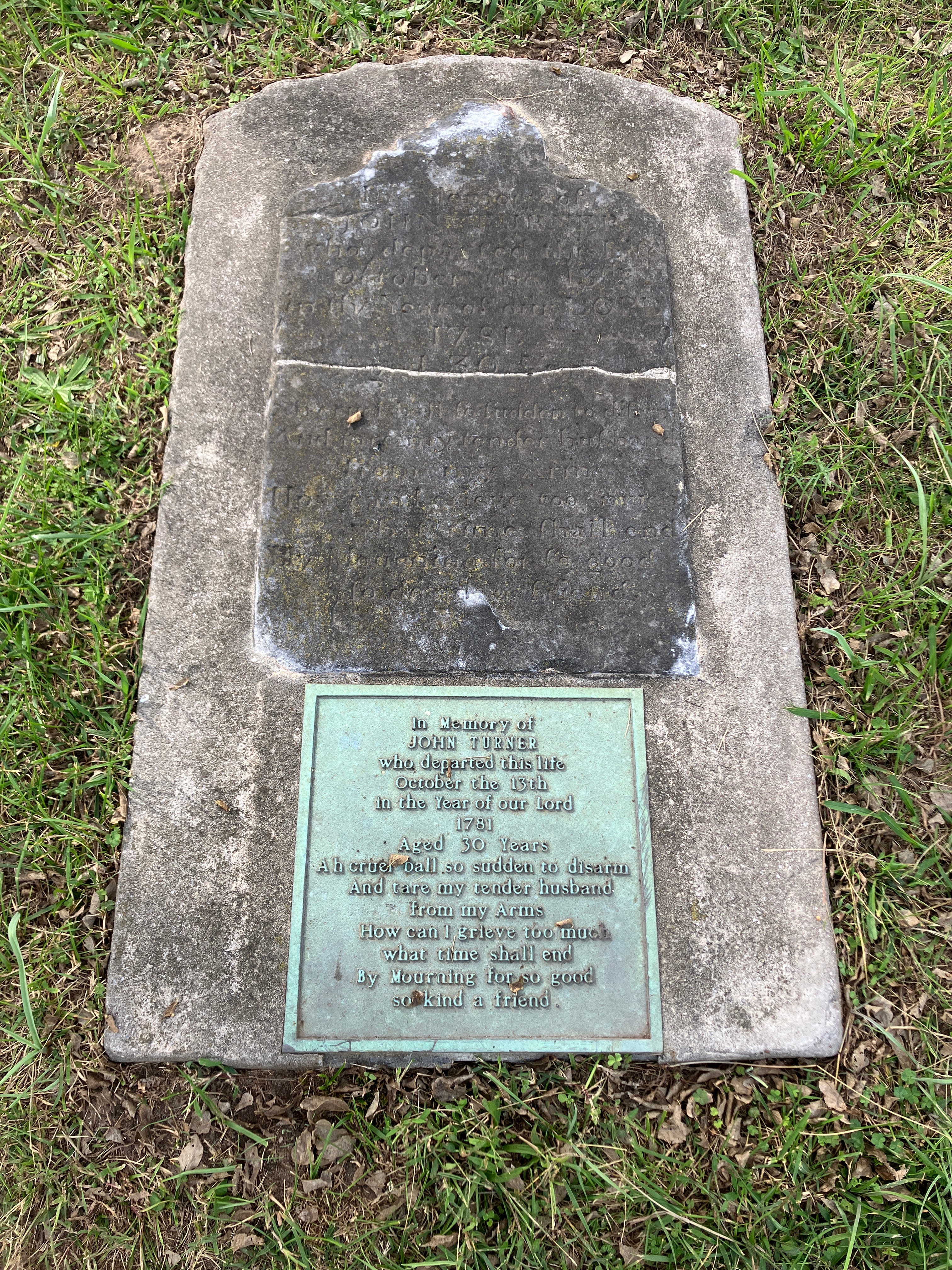
Simple enough, but no less touching for that, and with a nice poignant pun in disarm, and how well that is followed through in the rhyme with Arms. The way that time shall end refers to their reuniting in Heaven, while echoing his earthly death, makes the final rhyme of friend the more affecting, recalling us to the marriage service, the mutual society, help, and comfort that the one ought to have of the other.
Most revelatory to me was Jamestown. We arrived too late to see the artifacts (but O! tourist inclinations!) Simply driving there, crossing to the island where the isthmus once was, seeing the long flat landscape by the water, knowing how remote it must have been. What curiosity that gives the imagination! All around the deep woods, where we saw a large-eyed deer who carried on as if we weren’t there, one was conscious of the great absent expanse beyond.
We stopped at the Fresh Market. I still marvel at the great accomplishments of the American supermarket. There are tubs with every kind of nut either plain or roasted and salted, tubs of every type of nut covered in every type of chocolate, each with its own sunk scoop. There are hams and loins and steaks, salads and fish and breads, all stocked and stacked and fresh. You can get tubs of chickpea salad, Neapolitan meatballs, honey curried chicken. For $10 you can eat far better than in any Pret or cafe in London. The old ladies of the locality are all here making their selections. Outside it looks undifferentiated from all the rest of the shops lined up in those semi-dismal plazas, but inside it is a palace of luxuries and delights.
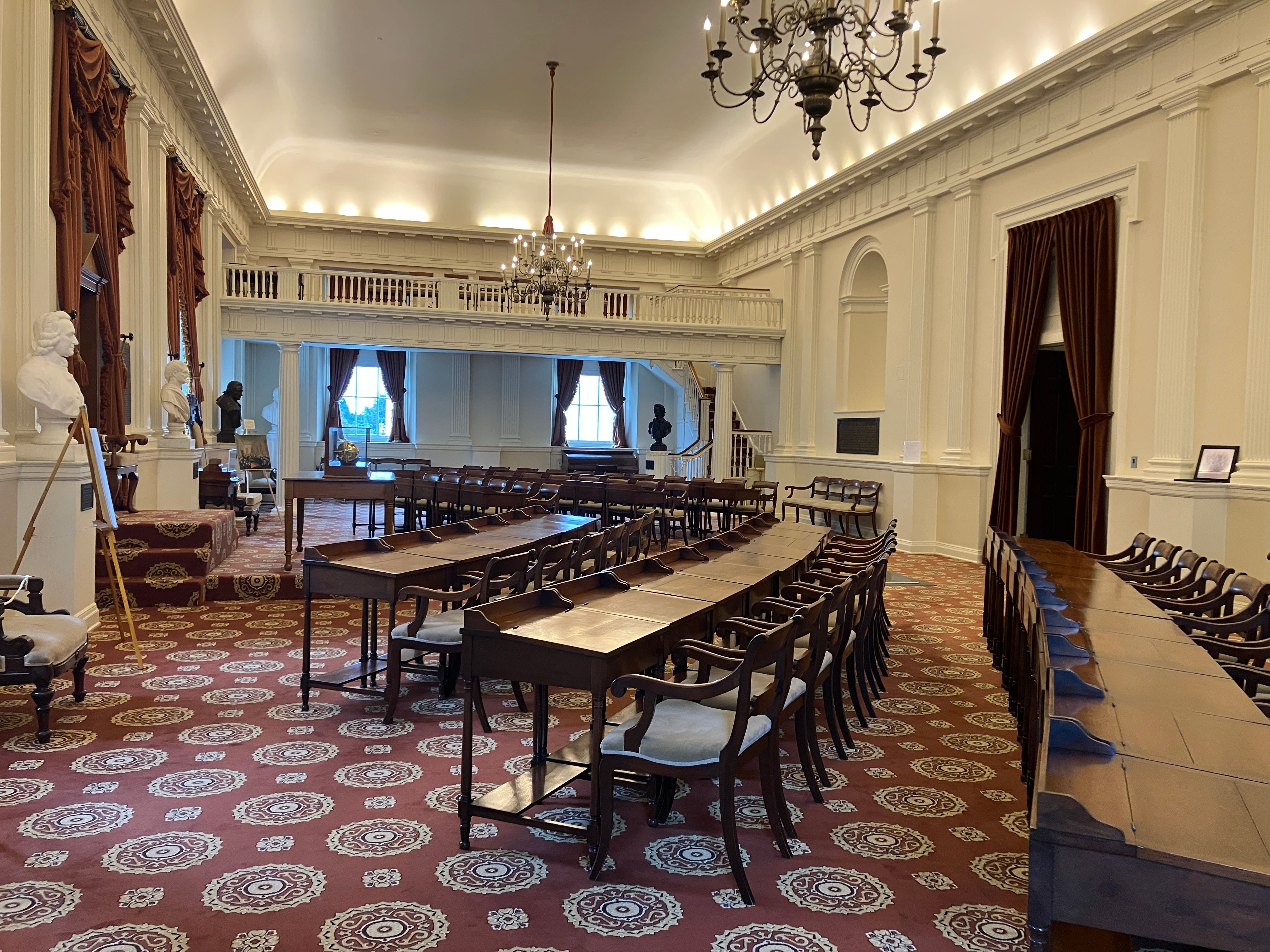
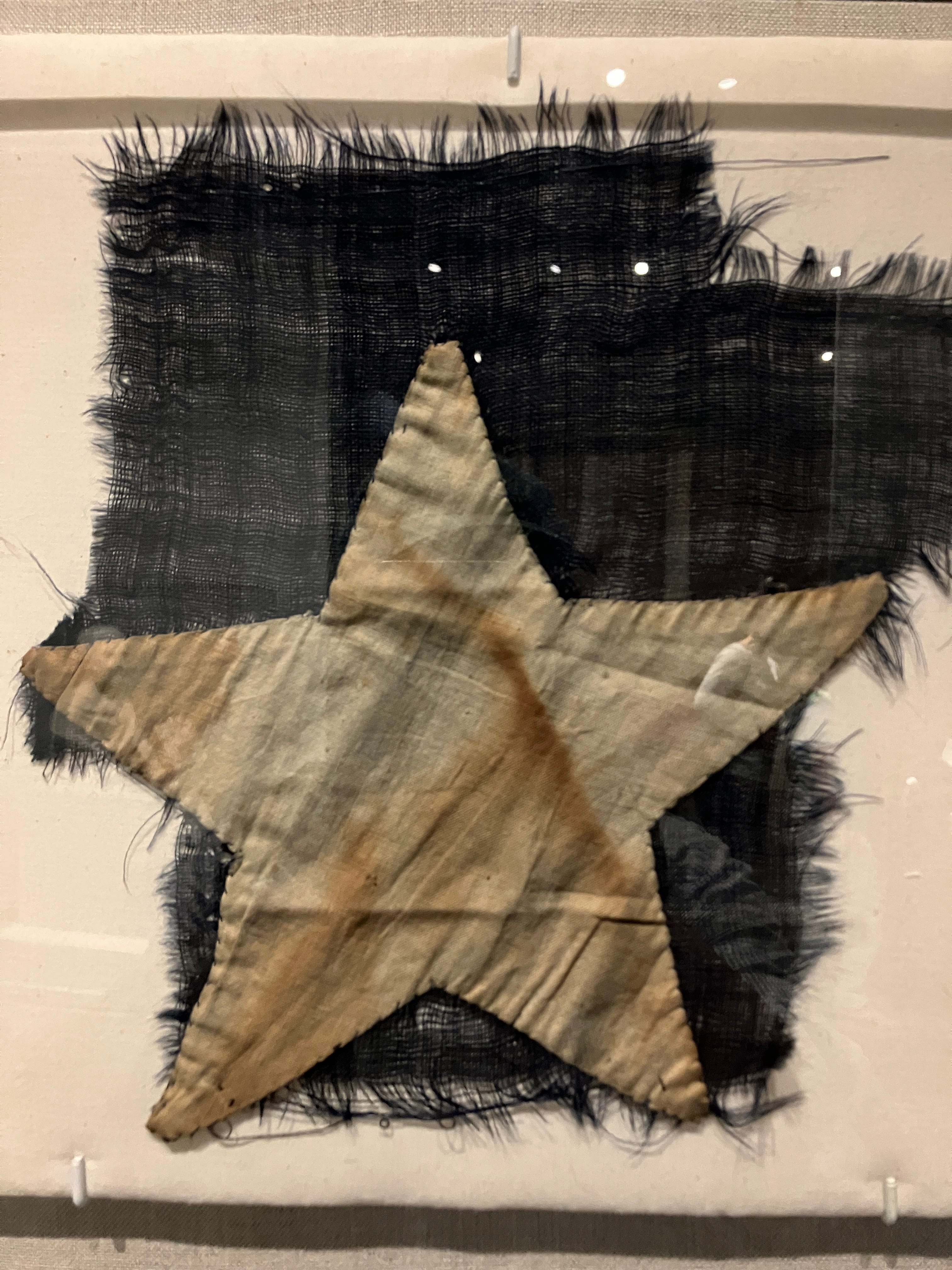
We began the next day at the Capitol—after pancakes and biscuits with sausage gravy, which is so good it must be a sin—and it was mighty strange to stand in the room where Virginia voted to secede. From there we went to the Virginia Museum of Fine Arts, which has many good things, including some lovely Vuillards. It was chilling to stand outside the Confederate White House, which is almost inconspicuous among hospital and high-rise buildings. It was almost dreadful to read that Jefferson Davis’s children used to play happily there. Worst of all was to learn that one of the children died after falling from a balcony. At the American Civil War Museum (first rate, well worth a visit) I got a fright when I reached the end and saw a Klan robe. This history is very thingy: manacles, revolvers, pocket watches, notebooks, field glasses, sabres, caps, boots, bone-carved knives made by prisoners, a cryptographic wheel that looks like a large coin. But the Klan robe was by far the most shocking item. It is strange how one can walk calmly past walls and walls of weapons only to be halted by a piece of cloth. Upstairs they have a piece of the flag that was taken down and ripped apart at the Virginia Capitol when secession was voted. Ripped apart! The remaining fragment is of one star.
Later on we stopped at the Poe House, which we learned was nothing much to do with Poe. And we drove round the church where Patrick Henry proclaimed liberty or death. The Richmond suburbs are especially rewarding to drive around, full of grand and weird houses.
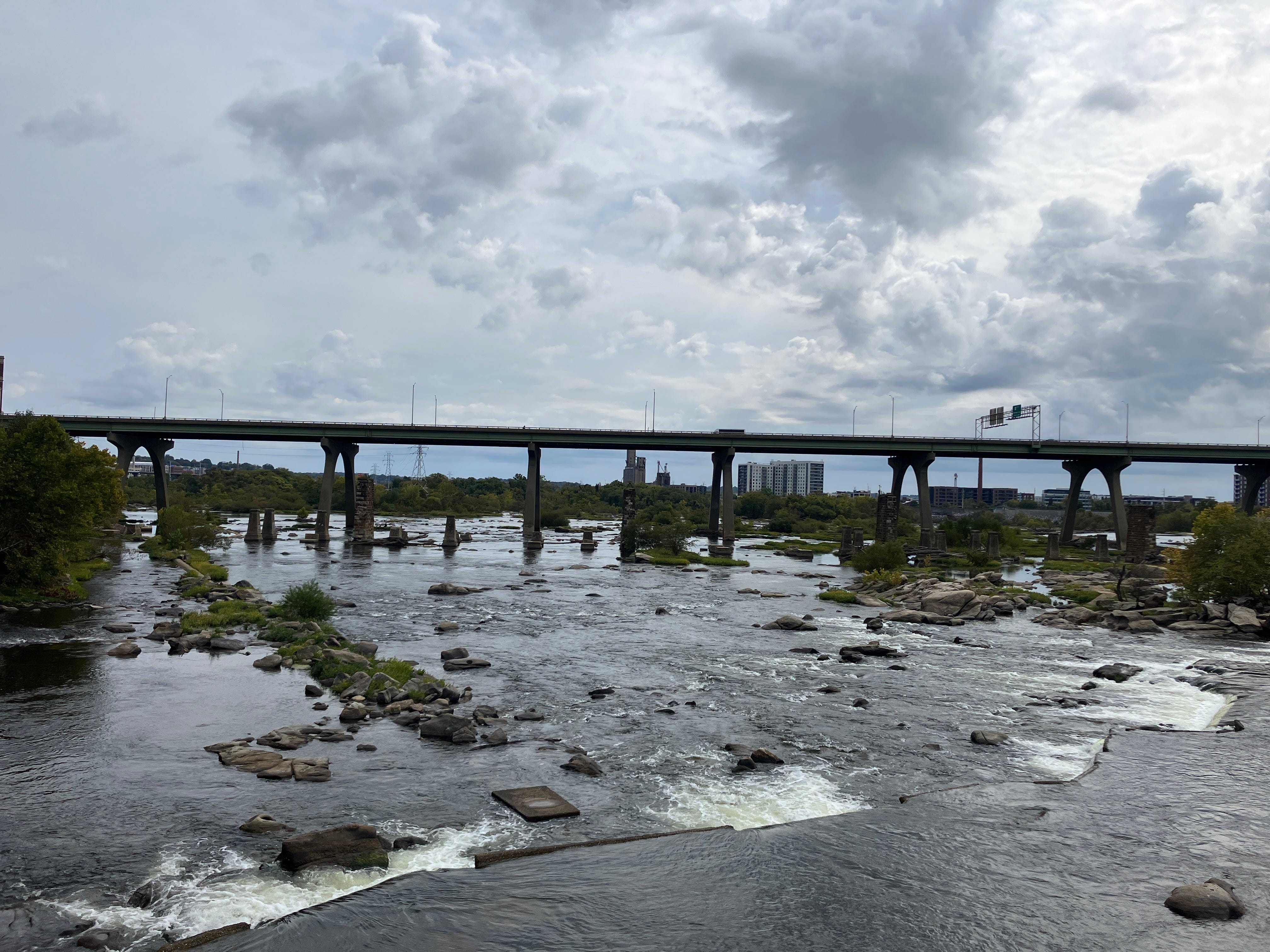
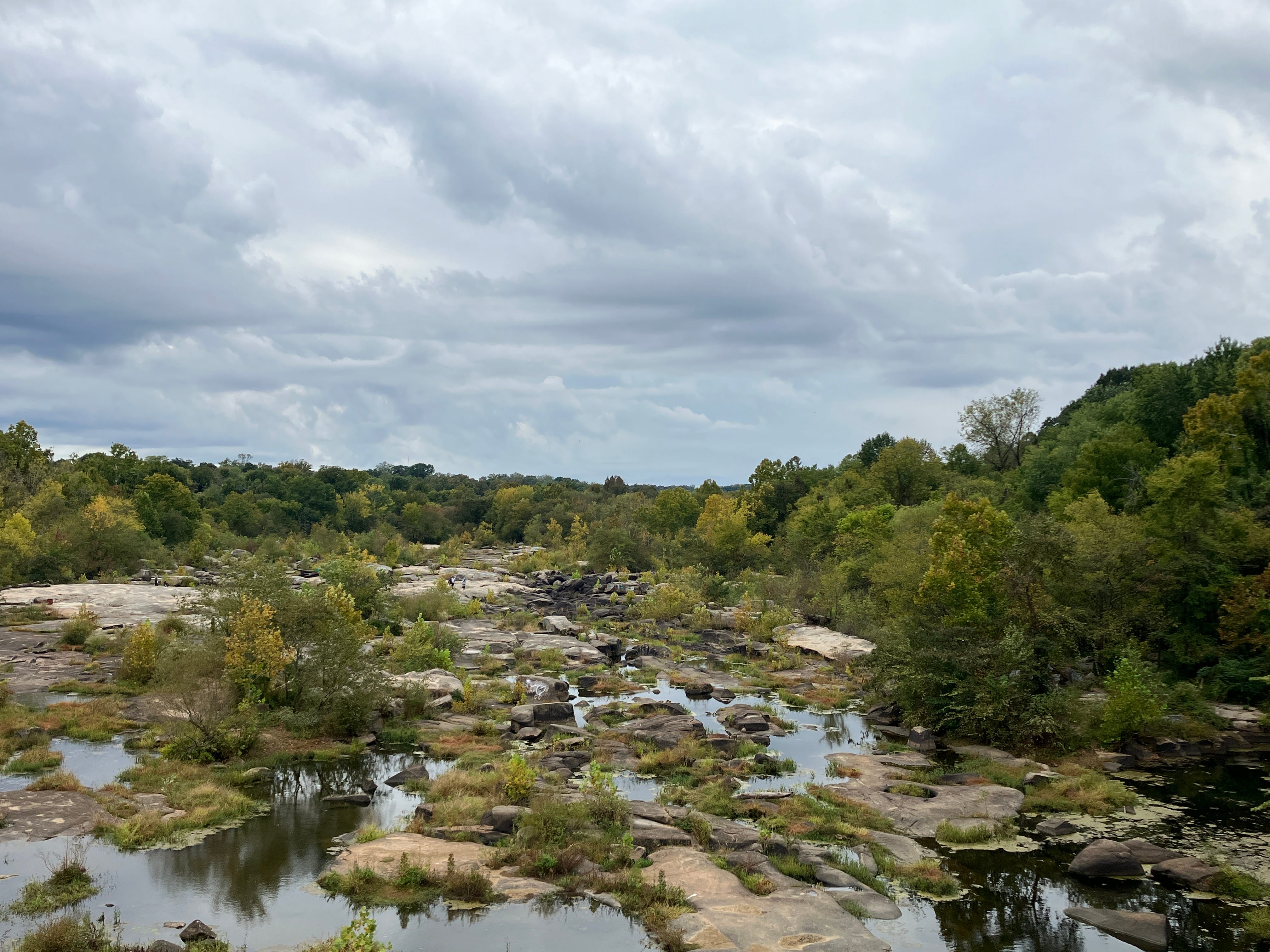
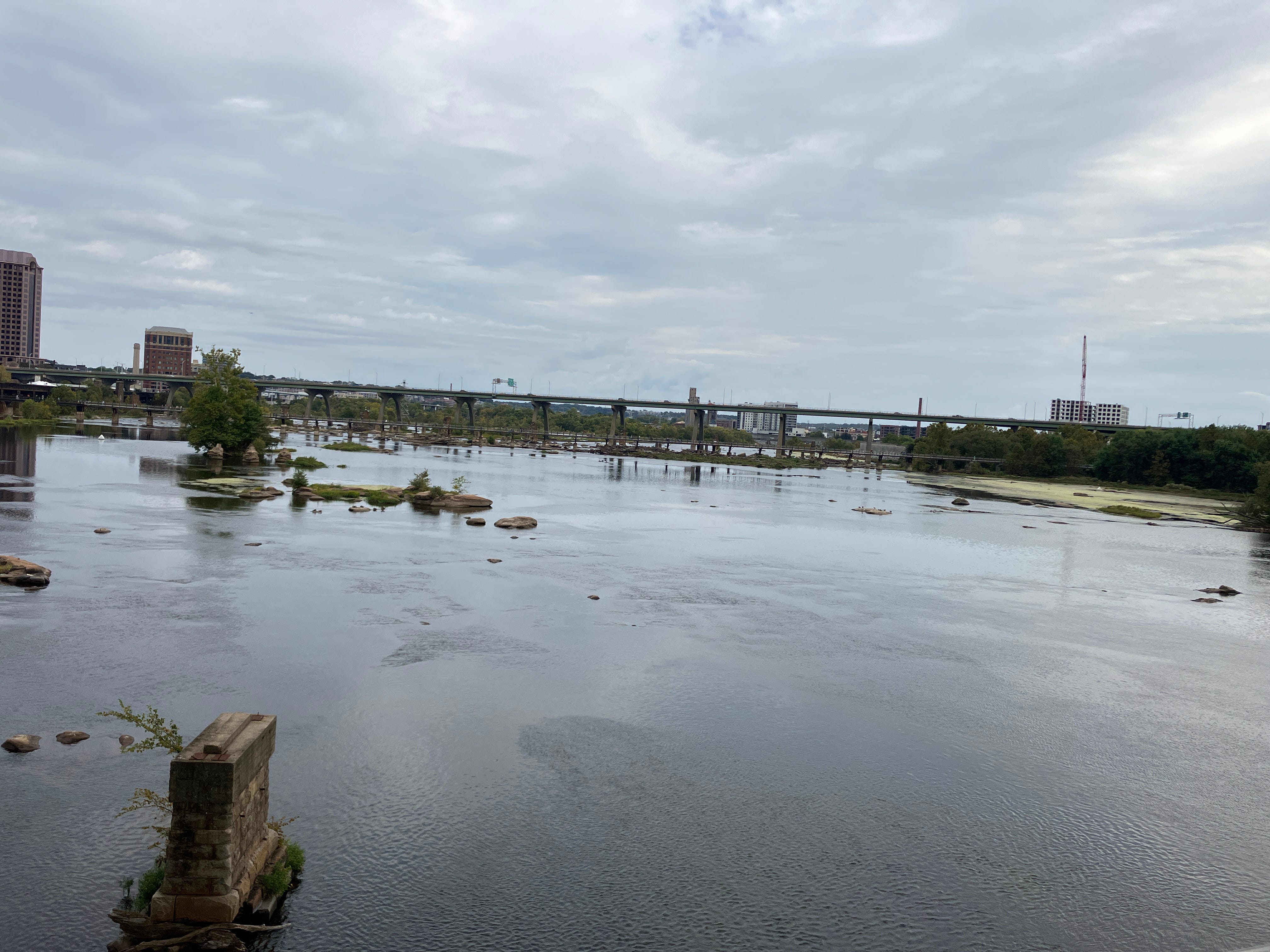
The best was that afternoon, when we wanted to cross the river on a footbridge to get to Belle Isle, a place of historic industry and a Civil War prison and before that a place of Native American fishing. To get to the bridge, we had to go through a folk festival. Suddenly here were all the people of Richmond, walking, and talking, and watching folk dances from international cultures. I saw a woman in a T-shirt that read EVERYONE WATCHES WOMEN’S SPORTS. How the Americans love slogans. SOME COLLEGE read another T-shirt. The T. Tyler Potterfield Memorial Bridge is by far the most impressive part of Richmond and the breadth and grandeur of the river surpass the rest of the city. It is not quite a kingdom by the sea, but the river has the greatness of Virginian beauty: mighty, wide, still and calm, despite the rapids, because the water was low—but full of potential for thunder and flood. The natural sublime here always has a sense of respite. You can see the pillars of the old bridge that the Confederates destroyed as they made their retreat in 1865. Lincoln arrived two days later. By then the Davis children had fled with their family. Ten days after that, Lincoln was shot.
Downtown Richmond is unfortunately a shell of its former self, I'm not surprised to hear it was so quiet. On your next visit be sure to check out the Fan, it's spectacular and full of life. The other notable historic neighborhood is Church Hill, whose riverside views gave the city its name from their close resemblance to Richmond upon Thames.
On the railroad front, the city is home to North America's only triple railroad crossing. Richmond also boasted America's first streetcar network, which was installed by Frank Sprague, who later founded an elevator company which he eventually sold to Otis.
Fascinaring! Robert Harpur, who had an interest in the classics, had a similar influence in New York.
While Harpur worked as a clerk in the office of the New York State Surveyor General, and Secretary of the Land Board, he assigned numerous classical names to locations.
Many central New York cities are named after places and figures of the Greco-Roman world, including Rome, Syracuse, Ithaca, Troy, Homer, Cicero, and Ovid. This is largely due to the influence of Harpur, who assigned many of the best known names. (https://en.wikipedia.org/wiki/Robert_Harpur)