

What we find and most value in Trilling — and it is my argument with respect to Denis Donoghue, Frank Kermode, and George Steiner as well — is a criticism characterized by a willingness to reside in contradictions, to review and to take responsibility for conveying a host of viewpoints, not all of which the critic finds congenial, but which nevertheless enhance the critic’s own best sense that final determinations should be kept in abeyance as long as possible. It is a criticism that practises the principle of negative capability, not because it has given up the hope, in deconstructive fashion, that determinations are themselves unreachable, but because it believes that the finest determinations will be those that take into account as many avenues of discussion as possible.
That’s from Uncommon Readers: Denis Donoghue, Frank Kermode, George Steiner, and the Tradition of the Common Reader by Christopher J. Knight.
I, too, admire Trilling, but I am, as I wrote last week about Perry’s lecture, a little skeptical of placing too much emphasis on the role of negative capability in criticism, but the way Trilling is summarized here sees pluralism as a route to a determination, rather than an end state, which is what I found in Perry. You see this with Shakespeare too. The claim that his work is impartial between ideas is too naive.
Literature is not an ethereal plural state, impartial between ideas and feelings and states of being, but part of the contingent mess of life in which we are forced to choose; if literature were not, somehow, part of that choosing, we would not care about it so deeply.
And yet, I wish to resist the ideological tenor of much modern criticism, the congenital inability not to be political. Here is Trilling on Austen—
Jane Austen’s irony is only secondarily a matter of tone. Primarily it is a method of comprehension. It perceives the world through an awareness of its contradictions, paradoxes, and anomalies. It is by no means detached.
By no means detached! Take that as a motto! For the “pure” aesthetes, this means politics must be accepted; and for the politically committed, it is a call to reach this more difficult balance.
Trilling is valued not because he can be identified with either a subject or an ideological position, but because he assumes it his responsibility to be welcoming to a variety of positions and because he appears patient even with those whose insistence verges upon an affront. It is what leads Dickstein to write that 'Trilling's distinctive style is rarely noticed by commentators who try to give his work a strongly ideological character. When they cut through his rhetoric to the Archimedian point of his belief or commitment, they are cutting away nearly everything we are likely to value about him — not his certitudes, which were few, but his way of arriving at them; not his ideology, but the undulations of mind that ran counter to the fixities of ideology' (Double Agent, 78-9).
Shortly after this passage, Knight writes about the subjects of his study—Denis Donoghue, Frank Kermode, George Steiner, who all wrote for publications like the LRB and the NYRB, as well as having academic specialisms. They were part of the tradition going back to Addison, Johnson, and Hazlitt: critics who cared for the common reader.
Like Arnold and Trilling before them, they too put their faith ‘in the common pleasure of a free disinterested play of mind,’ and stand opposed to the cloistering of knowledge in dogmatism and a sectarian language. This Arnoldian faith ‘that the mind may be made the source of great pleasure’ is, one suspects, what first drew them to the study of literature, for each considers literature, especially as it bespeaks, in Steiner's words, 'the boundless possibilities of the imagined' (RP, 11), the source of some of the mind's greatest pleasures.
Good stuff, but let’s expel Matthew Arnold. As a critic, Arnold is a crashing bore who makes very little sense. I spent three days in the British Library last year reading Matthew Arnold slowly and carefully. It was hell. Does anyone know what “sweetness and light” means? Anyway, I digress.
Knight, quoting Kermode, usefully classes impartiality as a means of delaying judgements.
The desire to make determinations, to make stands, to declare ourselves one sort of person or critic rather than another is difficult to suppress. Yet art and most certainly literature are constantly warning us of the dangers of premature judgment. As Kermode notes, 'While we seek our intimations of latent order we may omit to notice that our text has a manifest gratuitousness, a playfulness — we might add a blindness, a deafness, a forgetfulness — that tells against our scheme'
Nothing is worse for a work of criticism that the rush to judgement, the thrill of making a stand. It is exciting at the time, and rises like fresh bread dough, but it soon goes stale, leaving us where we started, only having lost the time we gave to the rush of judgement, and having allowed ourselves, perhaps, to have been delighted by error.
The truly liberal spirit of criticism is the freedom from cant, the art of not interpreting before expositing. As Johnson said,
The task of an author is, either to teach what is not known, or to recommend known truths by his manner of adorning them; either to let new light in upon the mind, and open new scenes to the prospect, or to vary the dress and situation of common objects, so as to give them fresh grace and more powerful attractions, to spread such flowers over the regions through which the intellect has already made its progress, as may tempt it to return, and take a second view of things hastily passed over, or negligently regarded.
These ideas, expressed so succinctly by Johnson, occur throughout criticism. Shklovsky is the most well-known proponent of “giving a fresh grace” to common objects, which he called defamiliarization. Johnson would have smiled at that. Shklovsky is a critic of unusual power, and, after all, as Johnson said in another Rambler essay: men more often require to be reminded than informed. (This line gets better the more you quote it.) It is that requirement—and the need to let new light in upon the mind—which keeps criticism relevant in every generation, and keeps impartiality-as-a-means-of-deferring-judgement the central method of criticism.
Criticism requires the practice of a free mind—not a mind free from determinations or principles,—but one that is free from pre-determination, extra-literary commitments, while it practices criticism, so that the truth(s) of the work itself can be the subject of our awareness, and not a means by which we work some other ideological task. If it often seems to us that modern critics are unable to remain impartial for long enough to live up to this ideal—one can in fact play a drinking game with the word “Gaza” in the London Review of Books, (and in unlikely articles), just as mention of Trump, Marx, capitalism, and the three horsemen of critical theory (gender, class, and race), are never far away in many literary magazines—we should remember that it was ever thus. Who do you think Johnson was complaining about?
What remains of criticism when the dust of time has gone with the wind is not the best expression of our modern views. That is too close to the Arnoldian touchstone—the using of approved standards as tests for future works. No, the ones who survive are the ones who respect the common reader’s own search for the truth enough to neither disown the presence of politics in their writing, but nor to make it too overwhelming a commitment.
If the critic works in service of the writing and the reader, then what matters far more than our own preoccupations is the vastness of knowledge.
But, more advanced, behold with strange surprise
New distant scenes of endless science rise!
So pleased at first the towering Alps we try,
Mount o’er the vales, and seem to tread the sky,
The eternal snows appear already past,
And the first clouds and mountains seem the last:
But, those attained, we tremble to survey
The growing labours of the lengthened way,
The increasing prospect tires our wandering eyes,
Hills peep o’er hills, and Alps on Alps arise!
It is this pursuit of that knowledge that makes criticism truly liberal: impartial in the cause of finding out. We are doomed to choose, but we are also trapped in our temperaments. The only method, as Bloom said, is the self, but the critical self will, in the Johnsonian spirit, keep up the struggle to learn from the light of other minds.
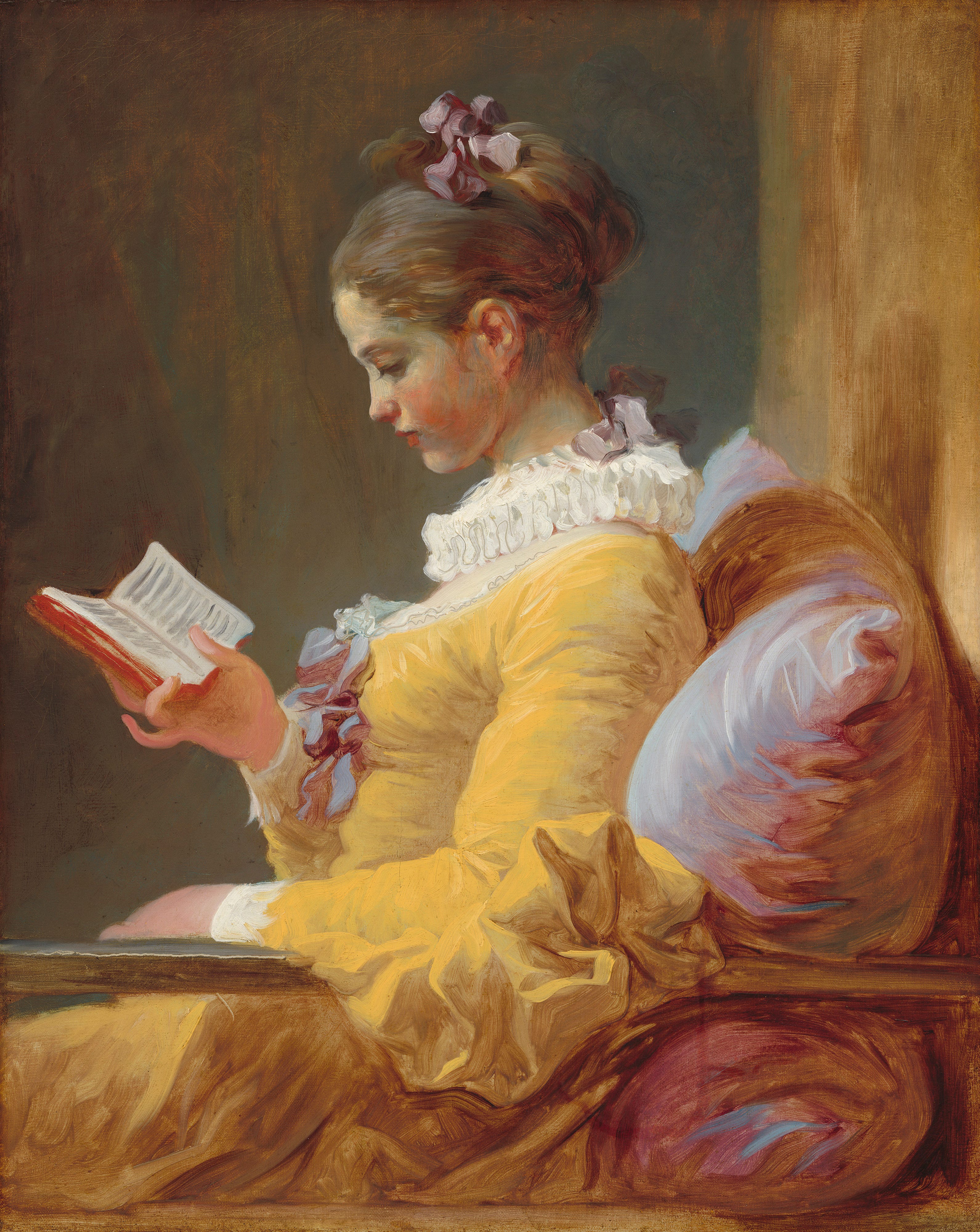
I like a critic who can think broadly about the nature of criticism.
An open mind is a magnificent achievement, a magical power. Even if only for moments at a time.