

My son is still small enough that, when I put him to bed, I can hear, briefly as I hug him, his heartbeat. It is a beautiful but also a baleful moment. Frank Kermode said, in The Sense of an Ending, that although the clock goes tick, tick, we hear tick, tock; bounded, as we are, in this little life, by a birth and a death, we hear the inevitable everywhere, giving to all things a beginning and an ending. And so the haunting tick, tock echoes in our lives, as it does in my son’s heartbeat.
It echoes through literature, too. It is the ageing Captain Hook, not the ever youthful Peter Pan, who is rendered insensible with fear at the approaching sound of the crocodile’s clock. Barrie’s finest stroke of genius was to have Peter himself make the ticking noise, unconsciously imitating the crocodile, as children do, which sends Hook crawling along the deck, only to plead to be hidden from Fate. ““Hide me!” he cried hoarsely.” And all the while, insouciant, loveable, innocent Peter keeps on ticking.
In a sublime moment, Barrie mentions that Peter “had seen the crocodile pass by without noticing anything peculiar about it, but by and by he remembered that it had not been ticking. At first he thought this eerie, but soon concluded rightly that the clock had run down.” It is terribly funny to read this after Hook has been crawling helplessly along the deck of the Jolly Roger, but it also makes that scene, for the reading parent, far more poignant. It means nothing to Peter that the clock has run down; it is all in the joke; but to the reading parent, faced with their own children and the tick, tick of their little heartbeats, it means all too much.
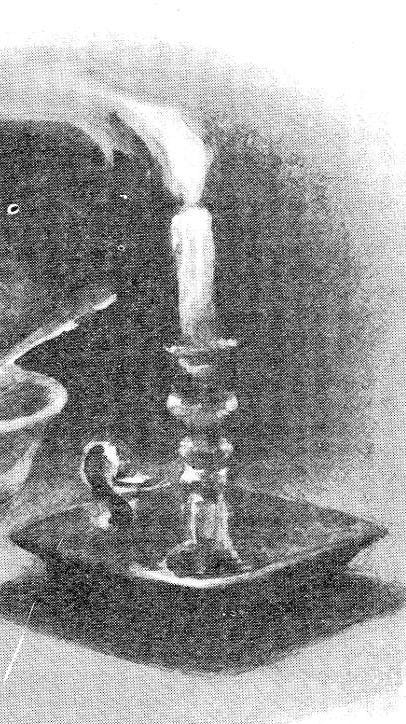
To the poets, time and death are as commonplace as toast and tea. “I have seen the eternal Footman hold my coat, and snicker”, wrote T.S. Eliot, four years after Peter Pan, in The Love Song of J. Alfred Prufrock. In that poem, we hear echoes of Marvell, who wrote one of the most famous lines of English poetry about the swift passage of time—“for always at my back I hear/time’s winged chariot hurrying near”. A few years later Noel Coward had hints of Shakespearean “golden lads and girls” in the lyrics to ‘The Party’s Over Now’: “The candles gutter,/ the starlight leaves the sky;/ It’s time for little girls and boys to hurry home to bed,/ For there’s a new day waiting just ahead.”
Those lyrics are from 1932. Perhaps I am fanciful in hearing an echo of T.S.E. in them. Compare T.S.E.’s 1911 ‘Rhapsody on a Windy Night’, a poem about the night before the new day waiting just ahead:
Twelve o’clock.
Along the reaches of the street
Held in a lunar synthesis,
Whispering lunar incantations
with Coward’s
Life is sweet,
But time is fleet
beneath the magic of the moon.
Dancing time
May seem sublime,
But it is ended all too soon.
In ‘Rhapsody’, the street-lamp sputters and mutters, but does not gutter:
Half-past one,
The street-lamp sputtered,
The street-lamp muttered,
The street-lamp said, “Regard that woman
Who hesitates toward you in the light of the door
Which opens on her like a grin…
There is a gutter, but of a different sort.
Half-past two,
The street-lamp said,
“Remark the cat which flattens itself in the gutter,
Slips out its tongue
And devours a morsel of rancid butter.”
Coward took a dim view of this sort of thing. He wrote in his diary in December 1955, about “Verbal diarrhoea” in “many American writers” and complained that:
Every now and then, after a tortuous sentence fairly shimmering with emotion, they suddenly introduce a vulgarism, a slang phrase, such as ‘phoney’ or ‘That’s okay by me’. This, I am sure, is a subconscious desire to prove that in spite of their impressive learning they are in fact ‘regular guys’ like you or me. On a higher level Mr T. S. Eliot is an enthusiastic employer of this trick. He will give you a lyric passage filled with moonshine and romantic symbolism and then suddenly say ‘garbage’ or ‘manure’. A tiresome habit to my mind, because it is coy and pretentious, almost arch. It also betrays insecurity.
It seems as if he turned T.S.E.’s “trick” into a simple lyric. T.S.E.’s cat-in-the-gutter-with-rancid-butter might be a vulgar litotes after the moonshine of the street lamps, but it was much further reduced in Cats, in which the song ‘Memory’ reduced Eliot to:
Every streetlamp seems to beat
A fatalistic warning
Someone mutters and the streetlamp gutters
This comparison shows Coward’s appropriation of Eliot to be much more luminous. Coward’s confident cliche—“The candles gutter”—has become Webber’s vague big-medley atmospheric-montage common to Cats’ genre expectations: is the muttering somehow incantatory, guttering the lamp itself, or are these merely the necessary montage elements? Coward used an image of death that was common-enough to daily life, and has a particular implication not only of a certain sort of marvellous party, lit by candle light, but of a dying culture: thanks to the 1879 invention of electric light bulbs, the candle itself was merely ornamental. Not like Scrooge, who walked through his dark, dark house “trimming his candle as he went… Darkness is cheap, and Scrooge liked it.” Eliot wrote about the old gas lamps that were being replaced with electric. (Though today there are still 1,300 gas-lamps in London: they have not guttered quite yet.) Eliot may have been a moonshine-magician who liked to slip between registers, whereas Coward placed a daily idiom illuminatingly in his lyric sequence, but they both put old words in new lights: Webber’s contextless mash-up tarnishes their brightness. The cliche that was once so alive for Coward now seems as if the light has gone out of it.
Coward’s Shakespearean borrowing was, as so often with him, quite apt. Shakespeare’s characters are often haunted Hook-like by the clock: “the clock upbraids me”, says Olivia in Twelfth Night; in his prison cell, Richard II laments, “I wasted time, and now doth time waste me.” The first recorded use of that phrase “wasting time” occurs in a poem by Geoffrey Chaucer. The Chaucer scholar Marion Turner says this was a new idea in Chaucer’s age. “As with so much of our culture, the crucible of change is the medieval period.” The fourteenth century was when the first public clocks appeared in town squares. The Church’s cyclical conception of time was now competing with the merchant’s linear conception of time. What seems normal to us, was new to Chaucer. Turner sees this as a cultural development: “Not every culture thinks that time is money.”1
But it wasn’t then that the tick, tick started ticking, of course. The idea of time running out is nothing new to Chaucer. Psalm 106 has the line: “They ascend even to the heavens, and they descend even to the abyss. Their soul will waste away in distress.” (This is translated from the Latin Vulgate, by Ronald L. Conte Jr., in which “tabescebat” means “waste”.) The word waste—as this example points to—could mean many non-financial things: the running down of a store of goods, the burning down of a candle, foolish inanity.
In the Gospel of John (9:4) is the great phrase, “I must work the works of him that sent me, while it is day: the night cometh, when no man can work.” Samuel Johnson had the words the night cometh, when no man can work engraved on his watch (tick, tock). When he was suffering badly from consumption in 1854, J.S. Mill wrote in his diary that he was thinking much about the shortness of life (tick, tock), and quoted the same phrase. In the Latin Vulgate Chaucer read, the line reads: “Me oportet operari opera eius, qui misit me, donec dies est: venit nox, quando nemo potest operari.” How terrible that “nemo”. Nemo, said Mr. Tulkinghorn, is Latin for no-one.2
(Nemo: one thinks, inevitably, of Bleak House, a novel in which the clock is often referenced as in so many detective novels. For Esther “The clock ticked, the fire clicked”—an image Dickens repeats at Chesney Wold. Later on Mr. Guppy and Mr. Jobling “find Krook still sleeping like one o’clock, that is to say, breathing stertorously with his chin upon his breast and quite insensible to any external sounds or even to gentle shaking.” Krook, of course, will burn down like a candle in his own way…)
In the Parliament of Fowls, Chaucer’s poem in which the phrase “gonne hir tymes waste” appears, Scipo is instructed about the universe by his grandfather:
Then Scipio prayed he would tell him all
The way to come into that heavenly bliss;
And he said: ‘Know yourself first immortal,
Be sure to work busily, wisely in this
World for the common good, you’ll not miss
The path that leads swift to that place dear,
That full of bliss is, and of souls clear. (trans. A. S. Kline)
Be sure to work busily is a nice plain English phrase that captures the same sense of John 9:4, but lacks the terrible nemo. Johnson encouraged work, as in Rambler 71 (20th November 1750), where he writes “life trifled away in preparations to do what never can be done, if it be left unattempted till all the requisites which imagination can suggest are gathered together.” It is better to work busily. But, as Johnson said more than once, “The natural flights of the human mind are not from pleasure to pleasure, but from hope to hope.” He needed those words carved on his watch.
Johnson argued against the hedonists too, the ones who would have you gather ye rosebuds while ye may. He thought “pleasures are more safely postponed than virtues, and that greater loss is suffered by missing an opportunity of doing good, than an hour of giddy frolick and noisy merriment.”
How can we redeem our time? In As You Like It, pastoral innocence creates the ultimate leisure: there is no clock in the forest. But, without the clock, there is no real love.
Rosalind. I pray you, what is’t o’clock?
Orlando. You should ask me what time o’ day; there’s no clock in the forest.
Rosalind. Then there is no true lover in the forest, else sighing every minute and groaning every hour would detect the lazy foot of Time as well as a clock.
We feel this paradox, too, in Strether’s extraordinary ironic speech in The Ambassadors about the need to live.
It’s not too late for you, on any side, and you don’t strike me as in danger of missing the train; besides which people can be in general pretty well trusted, of course—with the clock of their freedom ticking as loud as it seems to do here—to keep an eye on the fleeting hour. All the same don’t forget that you’re young—blessedly young; be glad of it on the contrary and live up to it. Live all you can; it’s a mistake not to.
The clock of freedom, of hedonism, ticks loudly indeed. From the fleet and magic time of youth, our thoughts fly to Johnson’s safer pleasures of work. Strether entered the forest too late and he found that the clock continued to tick: he felt the lover’s pressure of time at his back, and he failed anyway.
It is easy to console ourselves, as we listen to the tick, tock of children’s heartbeats, with all that they will become, all the work they shall do, the good they will be in the world. Our minds fly naturally to our hopes for the future. But the night cometh, quando nemo potest operari. “Ten, struck the church clock, straight to bed went he,” says the narrator of Browning’s ‘How it Strikes a Contemporary’, of the old poet who lived “Thro’ a whole campaign of the world’s life and death.”
We will not know our children when they are old, just as we will never know them as babies again. They are always wasting away in front of us, and we in front of them, and we have to try not to think about it. We have to let them play at life, ticking away innocently like Peter Pan, unaware that there is anything eerie about the fact that the clock is running down. The tock is for us.
Turner. 2023. On Not Wasting Time. New Chaucer Studies: Pedagogy and Profession 4.2: 138–46. https://escholarship.org/uc/ncs_pedagogyandprofession/| ISSN: 2766-1768.
(I must work the works of him who sent me, while it is day: the night is coming, when no one is able to work.)
What a beautiful and interesting text at the same "time". Thank you.
Brilliant. As someone who lost my three children in a terrible way, I found this very poignant. And I love Eliot.