

We had our first taste of pecan pie. Good lord. Do the Americans know how lucky they are to live with these everyday indulgences? Pecan pie is part of the ordinary sublime of American life. It knocks English apple crumble into a cocked hat. Apple crumble can be superb, with a crunchy topping, preferably with the sort of spice mix one associates with Christmas, mince pies, and mulled wine (and a pinch of cumin to go with the cinnamon), and perhaps some pear to balance the apple and squares of dark chocolate, but it is still the old world’s idea of a good time.
Pecan pie, served hot, à la mode, in a diner that looks older than my grandmother—that’s luxury, that’s life in the movies, that’s America. Apple crumble is for weekends, Sunday lunch, something you make at home. Whoever heard of a restaurant serving apple crumble like the ladies of the village used to make it? By contrast, pecan pie is for everyone, every day, whenever you feel like it. No Englishman ever asked a friend if they wanted to go for a serving of crumble the way Americans go out for coffee and a slice of pie.
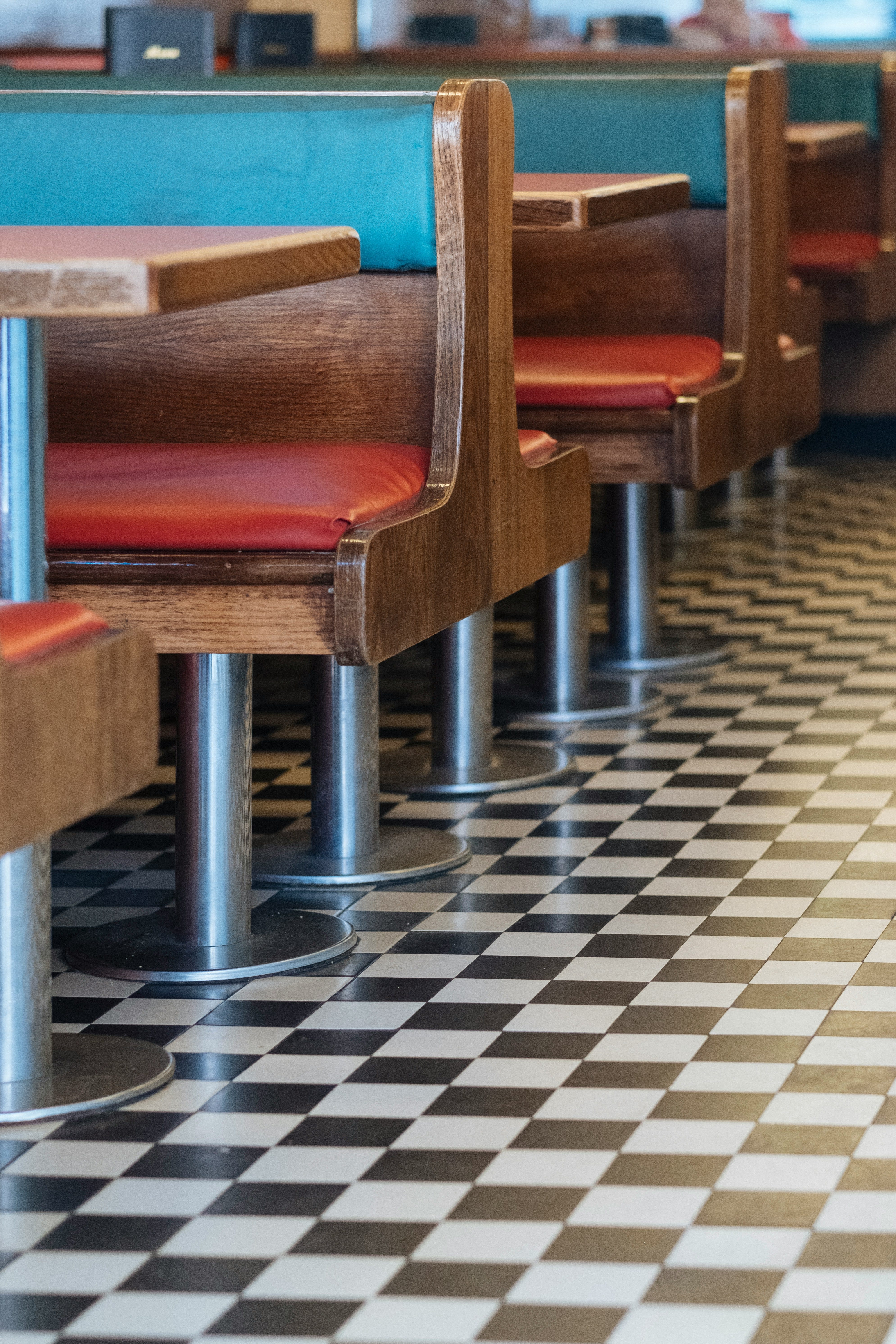
We were in a diner in Bethesda, complete with the original fixtures and fittings, surrounded by people eating country fried steak, chicken tenders, and pancakes for lunch, with a jukebox at the table that no longer plays, and those Maxwell House coffee pots that are found in the old diners that have seen generations come and go. The wooden booths are reminiscent of the origins of fast food and diners: the railway carriage restaurant. They are reminiscent, too, of church pews. All along 16th Street NW, which you drive out of DC to get up to this corner of Maryland, there are the sort of churches that made America: large, level, open, well-lit, from the Protestant tradition where everyone is on a level. Diners are still, just about, America’s secular churches. Every man is a success in a diner: equal among eaters.
When I went to New York for work, and regretted the lack of time to do anything real, I got up early, went to a quiet diner run by a wizened old man on Second Avenue, and read the New York Times with my refill. In Boston, more than a decade ago, we walked through the ice-cold air to find the diner we were recommended. Police officers were eating muffins and everyone had those characteristic blue-and-white coffee cups. In Wisconsin, I travelled from Milwaukee to Madison to Taliesin, and whenever I could, I went to a diner. Whatever else we remember of America, we will always remember the Gettysburg Family Restaurant.
If there is a “real America” (though why Manhattan and the DMV are not always considered to be the “real America” is beyond me: if these are not the heart of a certain idea of America, with their (what?) twenty-million people, I cannot think what is), you will find it in these diners. Blue jeans, tattoos, happy children, friendly-busy waiters and waitresses, laminated menus, eggs any way you like ’em, a waffle on the side, families out for lunch, locals, road trippers, everything all day, the dignity of a booth no matter how little you have to spend, coffee you don’t have to wait for, period crockery, the hum of conversation and the clang of the kitchen, paying the cashier at the register, blueberry pie, peanut soup, maple bacon, the good old American hamburger, side salads, fried cheese, baked chicken, any combination you want, daily specials, and everything just like mother used to make it. America the way we remember her, the way we imagine her, the way she still sometimes can be.
And hot pecan pie, à la mode: a small plate of delight for anyone with $4.
I get a big kick when you wax poetic about the USA, it does come across that you genuinely love this place. I am trying to channel that love back to myself, as the last 10 years, and especially the past couple, have caused me to fall decidedly out of love with it. Trying to get back to a place where I am just riding this out and appreciating what is still good and great about America.
This year is the centennial anniversary of Route 66. I highly recommend a cross country road trip along the Mother Road. There are many wonderful diners along the way and celebratory activities through August.
https://route66centennial.org