

These are my notes from last night’s subscriber session about Hopkins. There’s a video of part of the session with my slides giving background of Hopkins and doing a close-reading of ‘The Windhover’. You can download the slides and my notes are below the fold as well. There is more about the influence on Heaney and Bishop in the video and slides than in these notes.
There’s also a subscribers’ only comment thread—head over there to share your thoughts, questions, and comments, and keep the discussion going. And tell us what you’ve been thinking, reading, or researching since the session…
The next book club is 14th May 19.00 UK time where we will be discussing David Copperfield and thinking about the intersection of fiction and autobiography. Subscribe now if you want to join us and you’ll get access to the Hopkins’ materials as well. Leave requests for future book club books in the comments so people can respond and upvote them.
Contents

Photo by Vincent van Zalinge on Unsplash
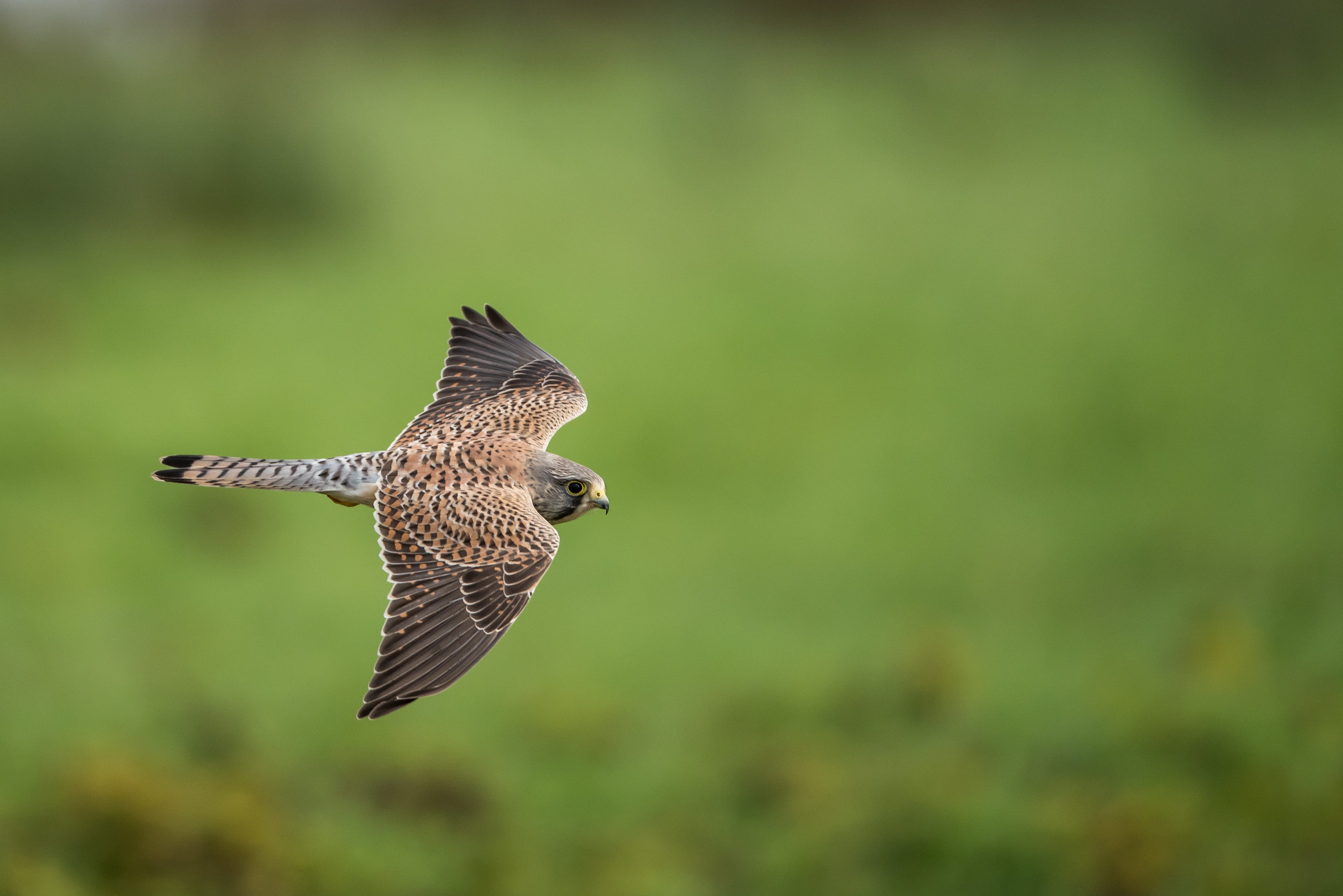
Brief background on Hopkins
Mid-Victorian, middle-class, Anglican family with artistic interests. Hopkins first wanted to be a painter and obeyed Ruskin’s injunction to pay close attention to nature. At Oxford he wrote journals where he developed his poetic ideas and language. Oxford was also where he became Catholic, to his family’s disappointment.
Following Wordsworth, he walked the Swiss mountains, before becoming a Jesuit, which involved a series of dedicated spiritual exercises. For eight years, Hopkins wrote no poetry. When he did write again, it was very much as a Jesuit. This short article gives a good explanation of the way the Jesuit spiritual exercises are seen in Hopkins’ verse.

‘The Windhover’ was written in 1877, when Hopkins was in his mid-thirites and weary of labourious theological study. This is how Norman White describes the poetic burst Hopkins experienced in the spring of that year (my emphasis).
In spring 1877, although he found 'going over moral theology over and over again and in a hurry is the most wearisome work' and was so tired that he was 'good for nothing' (Hopkins, Further Letters, 143), he rejoiced in the first primroses, and wrote 'The Starlight Night' and 'God's Grandeur' for his mother's birthday. These started the great series of lyrical sonnets, which include 'The Lantern out of Doors', 'As Kingfishers Catch Fire', 'The Sea and the Skylark', 'Spring', 'The Caged Skylark', 'In the Valley of the Elwy', 'The Windhover' (his favourite poem of that year), 'Pied Beauty', and 'Hurrahing in Harvest’.
Many of these poems from 1877 celebrate Hopkins's joyful observations of nature. Sometimes he is at his poetic best, as in the octave of 'The Windhover', where the medley of sound-devices, the personal excitement of the narrator, and the imitation of the bird's intense hovering are simultaneously perfect…
Inscape, instress, sprung rhythm
To read Hopkins, you must be familiar with three ideas: inscape, instress, and sprung rhythm. These are the definitions from A Poet’s Glossary by Edward Hirsch.
Inscape. The “individually-distinctive” form, the complex of characteristics that gives each thing its uniqueness, its oneness.
Instress. The natural force, the energy of being, ultimately divine, which holds all things together.
Sprung rhythm. Sprung rhythm counts by scanning accents not syllables… Hopkins objected to the way that in most post-Renaissance English poetry a stressed syllable is accompanied by a uniform number of unstressed ones.
Close reading of ‘The Windhover’
I caught this morning morning’s minion, king-
dom of daylight’s dauphin, dapple-dawn-drawn Falcon, in his riding
Of the rolling level underneath him steady air, and striding
High there, how he rung upon the rein of a wimpling wing
In his ecstasy! then off, off forth on swing,
As a skate's heel sweeps smooth on a bow-bend: the hurl and gliding
Rebuffed the big wind. My heart in hiding
Stirred for a bird, — the achieve of, the mastery of the thing!Brute beauty and valour and act, oh, air, pride, plume, here
Buckle! AND the fire that breaks from thee then, a billion
Times told lovelier, more dangerous, O my chevalier!No wonder of it: shéer plód makes plough down sillion
Shine, and blue-bleak embers, ah my dear,
Fall, gall themselves, and gash gold-vermilion.
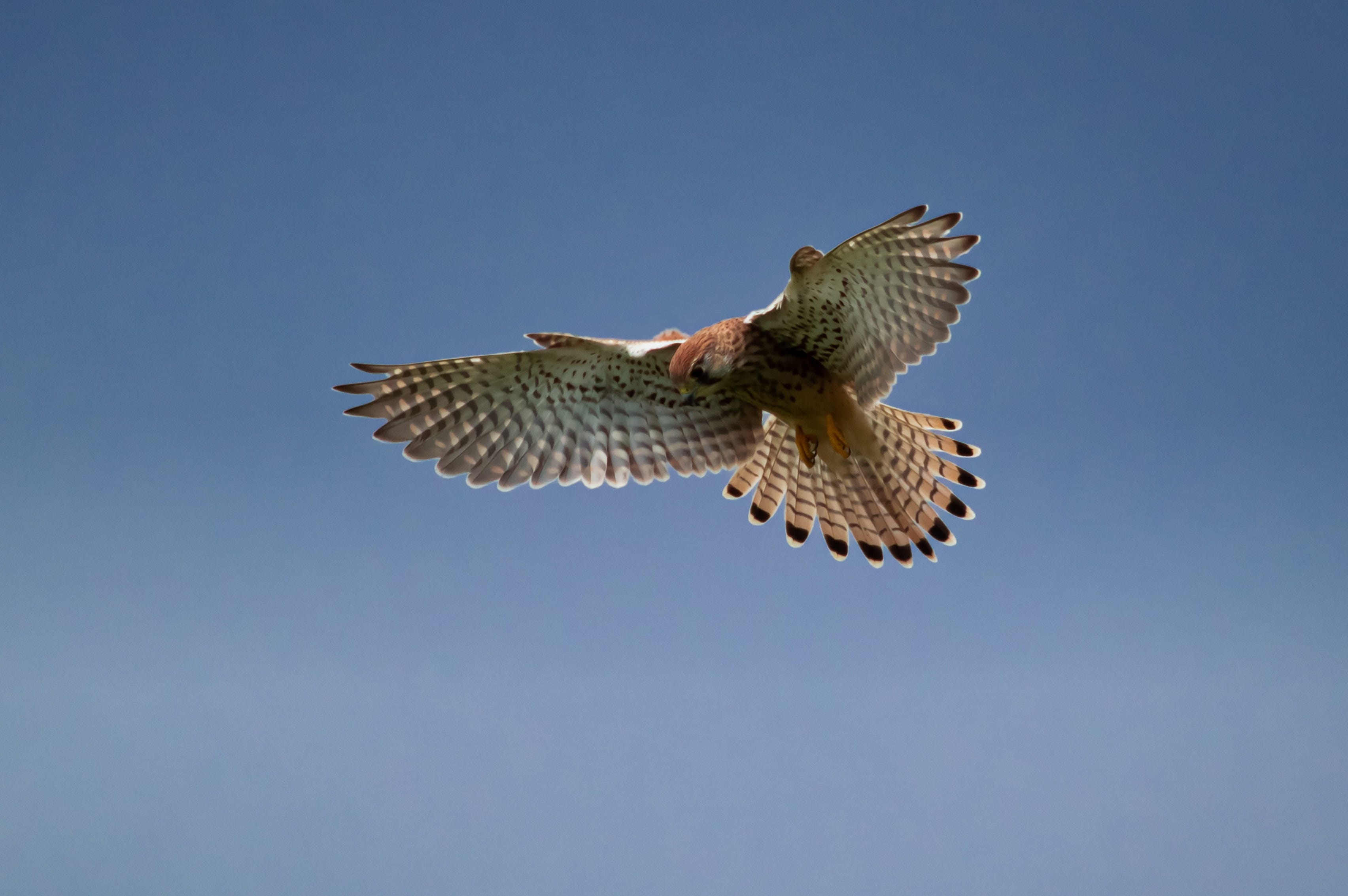
An inscape sonnet
The first thing to note is that this is a sonnet. Fourteen lines, split into octave and sestet. Sonnets are praise poems that interrogate and question a situation. Between the octave and sestet is traditionally a volta, literally a turn. A change in the argument or perspective. In this sonnet, the octet describes the bird: the first four lines talk about him being suspended in motion, the second four about him gliding. After the turn, Hopkins is more philosophical. The description becomes a response to what happened and a realisation that the instress which animates the windhover, animates the rest of the world.
Hopkins’ descriptions are not just literal exactitude. They constitute metaphor: metaphor means “carrying beyond” and so Hopkins is trying to describe things in a way that carries beyond the literal to reveal the inscape. Hopkins believed poets were able to discover the intrinsic qualities of the world, the inner nature of things, and express them through poetry. Everything in the world has an inscape, a distinct identity, and everything selves, or enacts that identity, humans most of all. People are able to discover the inscape of other parts of the world and thus discover what animates it, which is called instress—the divine energy that animates matter. Things are holy by being individual because God made them in that way and so being a poet is a way of becoming closer to God.
So this sonnet aims to describe the essence, the intrinsic nature of the bird and in doing so pay homage to its uniqueness and thus to God.
Commentary and glossary
I caught this morning morning’s minion, king-
dom of daylight’s dauphin, dapple-dawn-drawn Falcon, in his riding
Of the rolling level underneath him steady air, and striding
High there, how he rung upon the rein of a wimpling wing
In his ecstasy!
Look at the repetition of “m”, “in”, “d”, “aw”, “r”, “s”, the way “striding” half-rhymes with “high” and “wing” and “king” and “riding” and “rolling”, the rhyme of “air” and “there”, and so on. The -ing suffix gets played on with “riding” and “rolling then “striding” and “wimpling”. This concatenation of sounds has several functions.
Intensity. You must be careful to read or speak this correctly: this creates a build up of feeling similar to the way music works through patterns of repetition.
Exactitude. If Hopkins is going to capture the windhover’s inscape he must be exact, and that means being persnickety about the meaning but also about the feeling.
Tension. Repetition creates forward pace but also slows you down to catch the exact sounds without turning into a tongue twister. That tension is inherent to what is being described…
Literally, the bird is caught on the wind—the rolling steady air—and this is his expression, his selving. He flies by being caught. (This paradox is similar to Wordsworth’s “Nuns fret not” sonnet.)
morning’s minion — minion means favourite or servant, so the tension is established right away. The bird is compelled to fly in the morning but finds joy in this compulsion.
daylight’s dauphin — dauphin is a prince, emphasising the exalted nature of performing your natural function.
dapple-dawn-drawn — i.e. the bird is drawn or compelled by the dapple-dawn. Inscape is always changing, hence dapple-dawn. The variety of the world is part of its grandeur. See: Pied Beauty
rung upon the rein of a wimpling wing — rung is a falconry term, which means making a ring, i.e. moving in circles. The windhover is turning a widening gyre on the current. Wimpling means rippled but plays on wimple, a nun’s headgear. Through constraints we find freedom and God.
then off, off forth on swing,
As a skate’s heel sweeps smooth on a bow-bend: the hurl and gliding
Rebuffed the big wind. My heart in hiding
Stirred for a bird, — the achieve of, the mastery of the thing!
The birds breaks out and swoops, compared to a skater on the ice making a “bow-bend”. This quatrain is dense because Hopkins concatenates sounds with figurative language that must be figured out. The use of “hurl” is the sort of thing Heaney would do: the etymology of hurl implies, as well as dash and force, “roar, bluster”, which imitates the wind the bird is breaking free of.
Brute beauty and valour and act, oh, air, pride, plume, here
Buckle! AND the fire that breaks from thee then, a billion
Times told lovelier, more dangerous, O my chevalier!No wonder of it: shéer plód makes plough down sillion
Shine, and blue-bleak embers, ah my dear,
Fall, gall themselves, and gash gold-vermilion.
This is the volta. The bird is now “thee”. Hopkin’s insights create an intense reaction—my heart in hiding—and so he address the windhover directly, as if praying.
Buckle — the windhover buckles the way something breaks under pressure, as he gets out of the grip of the wind. But when something buckles in a fire it is forged, hence the moment of insight “the fire that breaks from thee then.”
Chevalier—a knight riding a horse, the way the bird rode the wind. The windhover’s inscape has shown him Christ, the chevalier, just as the bird was the lord of the morning.
This quality is now seen in other more mundane places. “Sillion” comes from the French sillon meaning a strip of furrowed land. As the farmer and horse plod with their plough, the furrowed lands shines as it is exposed. When fire embers fall and break (or “gall”) they flare up brightly.
The poem is a metaphor for the spirit of Christ seen in the clash of the soul against the world. The bird holds its flight against the wind, a paradox which resolves when it breaks free and Hopkins has a flash of insight into the bird the way an ember flares up. Christ lies behind the glory of the world in this way. As he wrote in God’s Grandeur: “The world is charged with the grandeur of God./It will flame out, like shining from shook foil.”
Influence on Heaney
In his Conversation with Karl Miller Heaney said:
For a poet, the one invaluable thing about a Catholic upbringing is the sense of the universe you’re given, the sense of a light-filled, Dantesque, shimmering order of being.
This shared view of the world with Hopkins perhaps made Heaney more receptive to his influence. He described Hopkins’ language as “high voltage” and said,
The result of reading Hopkins was the desire to write… the bumpy alliterating music, the repeating sounds and ricocheting consonants typical of Hopkins’ verse.
A poem like ‘Oysters” reflects Heaney’s unease with writing poetry during a time of political trouble that he is privileged enough not to have to involve himself with. This reflects Hopkins’ unease with writing poetry when he ought to have been devoting himself to God. As the imagery of The Windhover reveals the instress of God and becomes ultimately religious, the imagery of Oysters reveals the privilege in Heaney’s enjoyment of Oysters and becomes ultimately political.
Influence on Elizabeth Bishop
This line is from Hopkins’ 1864 diary: “Moonlight hanging or dropping on treetops like blue cobwebs.” (Some of his best writing is in the note-books. We know Seamus Heaney read them, he mentions it in an interview.) Elizabeth Bishop took Hopkins seriously and seems to have absorbed this line in particular. See these lines from ‘The Moose’
Moonlight as we enter
the New Brunswick woods,
hairy, scratchy, splintery;
moonlight and mist
caught in them like lamb's wool
on bushes in a pasture.
While Heaney was influenced by the “high voltage” of Hopkins’ language, Bishop seems to have taken a sense of sympathy from him. Bishop’s writing is often descriptive, with little overt philosophy, but through her detailed and questioning descriptions, she creates sympathy. ‘The Moose’ starts with a bus journey and other people’s gossipy, irritating, comic behaviour—it moves from a superior perspective to a sympathetic one. The same is true in ‘Filling Station’. Bishop describes in order to understand. This is the heart of Hopkins’ technique.
Slides

