

I am delighted to bring you another guest post by Anna McCullough. Anna is an expert in Victorian literature and its relationship to scientific ideas. Here is Anna’s St. Andrews profile. Here are her published papers. Today, Anna has written about Edward Bulwer Lytton’s 1871 novel The Coming Race, which is about an underground alien race called the Vril-ya, who control a mysterious force called vril, an energy that gives them incredible telepathic and telekinetic powers.
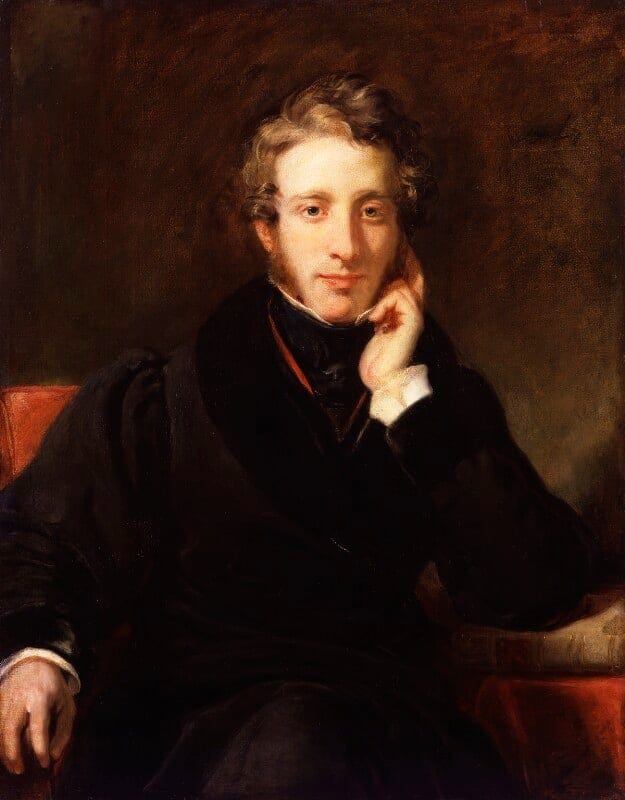
Politician and sensational novelist
Edward Bulwer Lytton was one of those Victorian man-of-letters whose talents were wide-ranging and who turned up in unexpected parts of history. He was a prominent British politician and the Secretary of State for the Colonies from 1858-1859. Right before his government was defeated, he appointed Richard Clement Moody to found the Colony of British Columbia.
Bulwer was as successful in the literary world as in the political world. He coined some of literature’s most famous phrases, such as “the pen is mightier than the sword” (Richelieu, 1839) and “it was a dark and stormy night” (Paul Clifford, 1830). The latter may cast doubt on his literary quality, but his work was nonetheless significant in both scope and influence.
The Last Days of Pompeii, published in 1834, was a bestseller for decades, was adapted for the stage numerous times, and was translated into ten languages before the end of the century. His gothic and scientific romances paved the way for later fantastical works like Bram Stoker’s Dracula (1897) and H.G. Wells’ War of the Worlds (1898).
You may not have read or even heard of his books, which fell into disrepute in the 20th century (partly due to their sensationalism), but you are probably familiar with another of his achievements: he persuaded Charles Dickens to change the end of Great Expectations (1861) so that Pip and Estella reunite at the end of the novel.
In fact, during the Victorian era only Dickens outsold Bulwer.
Bovril, anthropology, and progress
In 1871, Bulwer published The Coming Race, a novel about an underground alien race called the Vril-ya, who are far more powerful than humanity. They control a mysterious force called vril, an energy that gives them incredible telepathic and telekinetic powers.
The Coming Race had an imaginative appeal that established it as a forerunner to the science-fiction genre. Its influence is also apparent in more unexpected places: in 1886, John Johnston named his beef drink “Bovril” — a portmanteau of bovine and vril. Bovril can still be found across the world today — in fact, I saw it in a supermarket this week, a tangible reminder of The Coming Race’s lasting impact.
More controversially, some theosophists and occultists believed that Bulwer was one of them, and that vril was a real life force. (He was not; vril was meant to be a fictionalized version of electromagnetism, not mystical occult energy.)
The Coming Race is a work of political and societal commentary, science-fiction, and dystopian satire. But it is also a novel about anthropology, evolution, and the relationship between past and present. It was published in 1871, the same year that Edward Burnett Tylor published his seminal anthropological work, Primitive Culture.
Like Tylor, Bulwer considers the impact that remnants of the past have on the present, and how cultural change happens. In his portrayal of the Vril-ya, he undermines our understanding of progress and perfectibility, suggesting that primitive characteristics may conceal, or even contribute to, vitality and power beyond what the human race can conceive.
“Primæval monuments of barbaric thought and life”
In my last post for the Common Reader, I discussed connections between Tylor’s anthropology and the fairy tales of Andrew Lang.
In Primitive Culture, Tylor argued that humanity had progressed through three stages: savagery, barbarism, and civilization. However, his grand vision of developing civilization had exceptions that he called “survivals”: elements of human culture that do not fit this progressive narrative. While the rest of society evolved, survivals lingered as vestiges of the past. Survivals could be almost any cultural phenomenon: superstitions, children’s games, folklore, clothing, or rituals.
Lang used Tylor’s theory of survivals to explain why myths and folklore often seem bizarre or inexplicable. These stories were survivals of a past culture, he argued, and while they may not make sense in the modern world, they were rational in their original context. Primitive man was a genius who had conveyed some of his brilliance to modern humanity through legends and stories and even superstitions.
Survivals were carriers of ancient truth that otherwise would be long forgotten. These ideas emerge in Lang’s fairy tales, like Prince Prigio, in which believing in magic turns out to be perfectly rational and the only way to save the kingdom of Pantouflia.
But Lang’s positive view of survivals was markedly different from that of Tylor, who feared that they “set up in our midst primæval monuments of barbaric thought and life”. Survivals disrupted the progressive development of human culture by retaining “primitive” qualities in modern society. Consequently, Tylor perceived little value in survivals and portrayed them as “things worn out, worthless, frivolous, or even bad with downright harmful folly”.
Survivals highlighted tensions in how Victorians understood modernity and their relation to the past and other cultures. Many Victorian intellectuals, like Tylor, saw survivals as obsolete relics that hindered cultural progress. But other Victorians, like Lang, viewed survivals with wishful nostalgia, or even believed that they could catalyze further evolutionary development.
Popular fiction writers were particularly interested in survivals. Victorian popular fiction included genres like historical fiction, fantasy, adventure, and science fiction. In these fantastical stories, survivals appear in a wide variety of forms, ranging from fairy tales and magical artefacts, to lost worlds and other races. They reveal how their writers thought about human history and cultural change. And while anthropologists often saw survivals as dead relics, literary authors give them active — and sometimes living — roles.
The Coming Race
The Coming Race was written toward the end of Bulwer’s prolific literary career. He thought that the novel was too satirical to appear under his own name, so he published it anonymously and dedicated it to Max Müller, a philologist whom he had never met (but who had a friendly academic rivalry with Lang). This tactic succeeded: The Coming Race was an instant success and went through eight editions in eighteen months. It was also acclaimed by reviewers. The Examiner (rather hyperbolically) wrote that “George Eliot might claim it as one of her most finished productions”.
Like its author, The Coming Race’s narrator is unnamed, describing himself as a wealthy American who has become “a desultory wanderer over the face of the earth”. While exploring a mine, he falls into a cavern and escapes a fearsome underground reptile. He then meets the Vril-ya: a “race akin to man’s, but infinitely stronger of form and grander of aspect” who inspire an “unutterable feeling of dread”. These people have attained mastery of a mysterious force called “vril”, which gives them immense power both mentally and physically.
The Vril-ya adopt the narrator, whom they call “Tish”. Over the following months, Tish learns about their society, government, history, art, and science. Vril has enabled these underground aliens to achieve technological progress far superior to that of humanity, and they have created an egalitarian, communal utopia. But by eliminating competition and violence, the Vril-ya have also lost their capacity for artistic and moral excellence. One of the female Vril-ya, Zee, falls in love with Tish and helps him escape to the upper world, where he lives a solitary life, knowing that one day there will “emerge into sunlight our inevitable destroyers [….] The Coming Race”.
The lost world
Like Tylor and Lang, Bulwer was fascinated by remnants of the past that linger in modern society. Not having read Primitive Culture, which was only just published, Bulwer would not have called these remnants “survivals”, but they are strikingly similar to Tylor’s idea. Like Tylor, Bulwer is unconvinced that survivals are beneficial, but he does acknowledge their powerful, active role in present and future evolution.
Right from the start, Bulwer presents the lost world itself as a survival, a hidden remnant that has no apparent effect on the human world. When Tish arrives, he discovers relics of the evolutionary past. Some of these are extinct species, such as “curious animal about the size and shape of a deer”. Others are cultural: the Vril-ya buildings are reminiscent of “the earliest form of Egyptian architecture”.
This underworld has retained biological and cultural remnants from antediluvian days, and by stumbling upon it Tish has created an unprecedented connection between present and past. Yet as fascinating as this encounter is, at this point in the story the lost world has only archaeological interest — as Tylor would say, it is merely an obsolete relic.
This changes when Tish meets the underworld’s inhabitants. The Vril-ya are a lost species whom the narrator describes in terms evoking non-white races: they have the “gravity and quietude of Orientals”, “sphinxlike faces” and the “red man’s colour”. The Vril-ya also have immense power: “a nameless something in the aspect … roused that instinct of danger which the sight of a tiger or serpent arouses. I felt that this manlike image was endowed with forces inimical to man”.
The Vril-ya possess the primal, animal power of a tiger, but they are not barbaric, rather, they are far more evolved than humanity.
Survival of the fittest
The Vril-ya embody Tylor’s claim that survivals retain elements of the primitive in the most advanced societies — “primæval monuments of barbaric thought and life”. Yet Bulwer’s Vril-ya are far more than mere “monuments”. By portraying a remnant of the past as an intelligent species, Bulwer gives survivals an active role with considerable implications for life on earth.
Ultimately the Vril-ya are not relics that have miraculously clung to existence, but the embodiment of Herbert Spencer’s (and later Darwin’s) phrase “survival of the fittest”. In a letter from 1870, Bulwer wrote:
“The only important point is to keep in view the Darwinian proposition that a coming race is destined to supplant our races, that such a race would be very gradually formed, and be indeed a new species developing itself out of our old one, that this process would be invisible to our eyes, and therefore in some region unknown to us. And that in the course of the development, the coming race will have acquired some peculiarities so distinct from our ways, that it could not be fused with us, and certain destructive powers which our science could not enable us to attain to, or cope with”.
In the end, the Vril-ya are not survivals in Tylor’s sense of the word, but they have become a dominant species by eliminating survivals in their culture, an achievement Tylor would have admired.
Control of behaviour is key to the Vril-ya’s success. The Vril-ya’s ability to use vril has evolved over centuries of biological adaptation. However, unlike Darwin’s mechanism of natural selection, which is aimless, vril can be manipulated. The Vril-ya have enlarged thumbs with a nerve that helps them to conduct vril, and Zee explains to Tish that the nerve “has been slowly developed in the course of generations, commencing in the early achievements, and increasing with the continuous exercise, of the vril power”. This explanation suggests that evolution is driven by willpower and habit, and that individuals can purposefully influence it.
The Vril-ya have long-established traditions regarding gender relations, work, and moral behavior, but these are not enforced by a government; rather, they are willingly accepted and reinforced by habitual adherence. The narrator’s host, Aph-Lin, tells him: “We are all formed by custom – even the difference of our race from the savage is but the transmitted continuance of custom, which becomes, through hereditary descent, part and parcel of our nature”. Through habit and custom, the Vril-ya control their biological and cultural destiny and become a superior species.
The necessity of poetry
However, this enforced evolutionary progress ultimately backfires. As they created their society, the Vril-ya eliminated any survivals of their past, including virtue and artistry: “Without its ancient food of strong passions, vast crimes, heroic excellences, poetry therefore is, if not actually starved to death, reduced to a very meagre diet”. As much as Bulwer often fears the power of survivals, he nonetheless suggests that some survivals are necessary, and that those who do not value their survivals are ultimately destined for stasis and degeneration.
Tish soon finds the Vril-ya utopia full of “dullness and monotony”, realizing that “whatever our dreams of perfectibility […] we, the mortals of the upper world, are not trained or fitted to enjoy for long the very happiness of which we dream or to which we aspire”. Tylor believed that “progress has far prevailed over relapse”. Tish’s host, Aph-Lin, is similarly optimistic, rejecting the possibility that the Vril-ya are “likely to relapse” because he is confident in the Vril-ya’s mastery of their own evolutionary destiny. However, Bulwer ultimately undermines this vision of certain progress, questioning whether his readers have fully grasped what they mean by progress, and whether perfectibility is even possible.
Over the next few decades, this uncertainty became a key anxiety of the late Victorians, who feared that their own culture had apexed and was doomed to decadence and eventual degeneration. Lost world fiction became popular, and it often suggested that the British empire could be saved by regaining aspects of primitivity.
But in The Coming Race, the narrator is not an adventurer who rediscovers his own primal strength, but rather a witness to the consequences of eliminating the cultural and biological past.
In the end, “barbaric qualities” may be the key to our humanity.
Is progress desireable?
At the beginning of this post, I mentioned Andrew Lang, who famously (and controversially) wrote:
“The Coming Man may be bald, toothless, highly ‘cultured’, and addicted to tales of introspective analysis. I don’t envy him when he has got rid of that relic of the ape, his hair; those relics of the age of combat, his teeth and nails; that survival of barbarism, his delight in the last battles of Odysseus, Laertes’ son. I don’t envy him the novels he will admire, nor the pap on which he will feed bearsomely …. Not for nothing did Nature leave us all savages under our white skins; she has wrought thus that we might have many delights”.
I wonder if Lang was thinking of Bulwer’s Vril-ya, a species who are hairless and technologically advanced, but who can never enjoy poetry or feel passion. Though Bulwer was certainly not as optimistic about survivals as Lang was, The Coming Race nonetheless challenges what we mean by perfection, and explores the possibility that what we view as obsolete may actually be essential to our future. Given that the novel is written as an apologue or an allegory, perhaps the Coming Race that Bulwer fears is in fact a metaphor for our own species, stripped of the survivals like passion, moral excellence, and art that give life meaning.
The themes of The Coming Race — female emancipation, scientific discovery, the origins of power, and many others — have attracted considerable critical debate. Many readers have asked some formulation of the question: did Bulwer believe that progress (in its various societal, technological, and political forms) is desirable?
Fundamentally the novel asks a slightly different question: what would it look like to achieve progress that does not prove to be our own destruction?

Thank you for this essay. I had completely forgotten about Bulwer as an author I once intended to read. Adding to my to-be-read stack yet again.
Is the competition still running for the most cringe worthy opening line 'it was a dark and stormy night,'. I never understood this. It's a great line..Vril ya became Bovril of course....