

Jane Reigns Supreme
December 16th marks two-hundred-and-fifty years since Jane Austen’s birth. On the semiquincentennial of her birth, Austen is the most popular of the great English writers, the one who reaches the most hearts and minds. It is rare to talk to someone unliterary who loves Milton, Shakespeare, or Wordsworth. But Jane has leagues and leagues of admirers.
It’s still easy to be dismissive of her work. Disliking Jane Austen comes naturally. It happens to plenty of the best people. Mark Twain once said, “Every time I read Pride and Prejudice I want to dig her up and beat her over the skull with her own shin bone!” More recently, Giles Coren thought it was funny to describe her as “an average chick-lit writer of her day”.
Some people have more serious objections. Charlotte Bronte found her “elegant but confined”. Emerson, likewise, thought her books were “imprisoned in the wretched conventions of English society, without genius, wit, or knowledge of the world.”
In their defence, it is true that Austen is, as Virginia Woolf said, the hardest of the great writers to “catch in the act of greatness”.
But Woolf also said that she ought to be careful what she says about Jane Austen because of the elderly gentlemen “who resent any slight upon her genius as if it were an insult to the chastity of their aunts.” And among ordinary readers, those elderly gentlemen have carried the day.
Giles Coren had his little joke, but Pride and Prejudice has sold over twenty million copies.
It’s not just elderly gentlemen: young men write about being “Austen bros” in GQ. Adaptations of her books for film and television cause controversy if they don’t do justice—as the Janeites and elderly gentlemen see it—to Jane’s genius.
Mark Twain will have to hit his own skull with a shin bone if he wants a cheap laugh. Of all England’s great writers, she holds the most attention.
And why?
Why is Jane Austen quite so popular?
The reason is simple.
She invented the modern novel in order to answer fundamental questions about how to be good, happy, and flourishing in a commercial society. Her novels are about questions that are still central to our lives. How to live a good life in a commercial society? What is a moral education in the modern world? Who should we marry?
Jane reigns supreme because no other novelist else invented such important narrative techniques or had so much to say to readers about their lives and what it means to live in modernity.
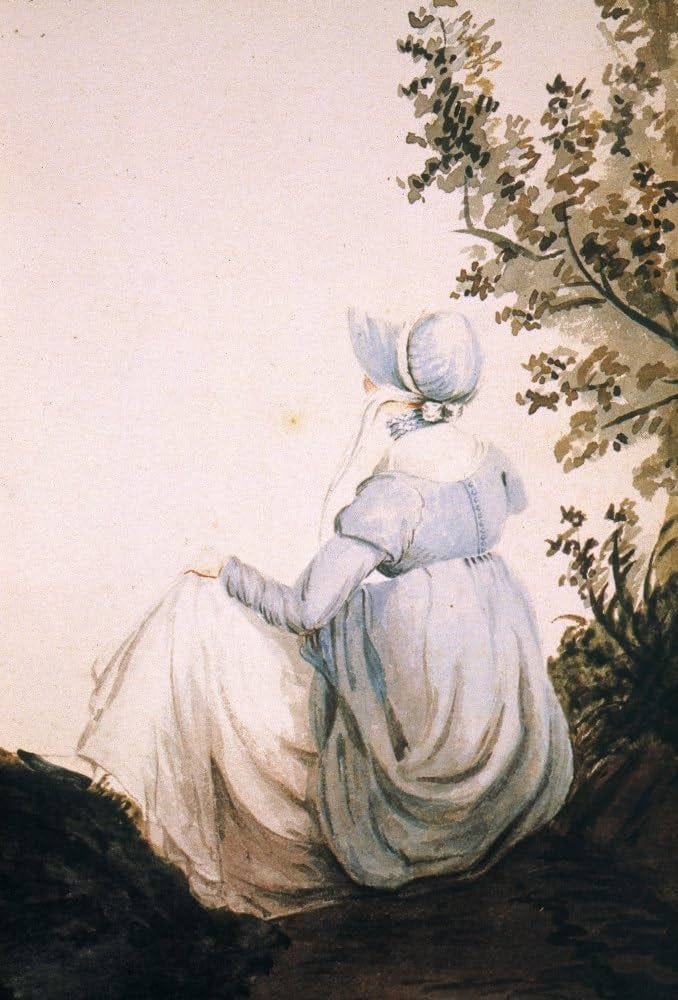
A perfect new art
To some, Austen looks like a romance novelist. A clever, ironic, wry romance novelist, it’s true, but a quaint, domestic writer of courtship and property nonetheless.
This is only part of the truth. Austen did unprecedented things with narrative. There are very few books that move so subtly between impartial narrative and the character’s perspective without making it clear which is which as Austen’s do.
Professor John Mullan called these inventions of narrative technique as experimental as Ulysses. A century of scholarship from people like Mary Lascelles, Dorrit Cohn, Peter Know-Shaw, Marilyn Butler, and many others, has revealed Austen’s delicate, expansive web of ideas, narrative innovation, and experimentation.
Austen used techniques to transform the old eighteenth century novel into an artistic form that was all about personal experience. Defoe made real characters we could believe in. Richardson gave us direct access to the wild and exciting thoughts and feelings of those characters. Fielding gave us rollicking, rolling, ever diverging tales within tales.
But it was Austen who gave us the perfect art of a socially realistic novel about people having to overcome their inner problems—rather than having to overcome problems imposed upon them by the world.
Austen did no less than create what we now expect from a novel. No Jane Austen means no George Eliot, no Henry James, no Virginia Woolf; no Fitzgerald, no Orwell, no Nabokov, no Joyce. Love her or loathe her, re-read her or fling her windmilling across the room: she was the great discoverer, the great innovator, the great path-breaker of modern fiction.
As Sally Rooney said, “Austen’s narrative structures, her command of pacing, her perspectival techniques, her staging of small knowable social worlds: these are the basic ingredients of what we would now call the novel.”
A new novelist for the new world
Austen invented the modern novel at the moment when the modern world began. She was born as the world was entering a new epoch: Enlightenment, prosperity, liberty.
The year after Austen’s birth, The Wealth of Nations was published, and The Declaration of Independence was issued. Thirteen years later, the French Revolution started. In Germany, new ideas about subjectivity and personal development were being developed by Kant, Schiller, and Goethe.
It was a time of great evil: colonialism was rising to a peak, slavery and the slave trade had expanded, and penal laws were vicious and unjust. But it was also a time of a moral reformation. Christianity created the abolition movement. Enlightenment thinkers insisted on the obligations of human rights. Early feminist ideas were circulating. Theories of sympathy were becoming central to ethics.
Whatever we want to call this period—the decades that hinge around the year 1800—whether we say Enlightenment, Romanticism, Modernity, the Great Enrichment, the Industrial Revolution, the birth of liberty—these ideas became the assumptions and conditions of our era.
This new world was a time of great artistic invention. When Austen was a young woman, Mozart was reinventing the piano concerto and opera. Less than a decade after Austen’s (early) death, Beethoven composed his late quartets, which were as unfollowable as later modernist novels like The Waves.
Experiments in neo-classical architecture defined the style of Austen’s youth. New ideas about landscaping were transforming the great estates. Imperial trade was bringing fruits and sugar and tea to people’s tables, on which Wedgwood plates and cups were being used.
For those who couldn’t afford imperial delights, there was English roast beef from the eighteenth century’s newly fattened-up cows.
We are still living in the long 1800, in a world of technology, individualism, liberty, subjectivity, fashion, economic growth.
Austen’s awareness of the changing world
It is sometimes said that Jane Austen was blissfully unaware of the changing world: her letters are full of discussion of bonnet trimmings and laces and muslins. This is not as drab as it sounds: what looks domestic in Austen is often more radical. Those materials were brand new things in the world: the product of trade and industry, and the spur to fashion and changing morality.
Young women dressed in different styles from their mothers for the first time. Dresses were longer, shapelier, hung closer to the body. What we think of as Georgian elegance was a revealing style: dresses no longer boxed and bulged but swayed and clung. New fabrics and styles were a liberation.
As the world changed, so did manners and morals. Women’s independence in their choice of husband is not unrelated to their independence in choice of dresses.
Slavery is at the heart of Mansfield Park, just as “culture war” debates about women’s morality are present when Mr. Collins reads a sermon to the Bennet girls. Competing philosophies of self-control and self-expression are the heart of Sense and Sensibility as they were the heart of contemporary ethical debate among philosophers—as they remain in the discourse today.
Austen’s heroines are some of the great individuals of literature—questers for independence in a world of gossip, intrigue, scandal, and control. Hierarchy was giving way to merit, as in Persuasion, just as women’s independence was raising questions of how acceptable it is to interfere in other people’s lives, as in Emma.
Whether dealing with the Navy disrupting the old social order, the duties of a property owner, or participating in culture wars arguments about the immorality of fiction, Jane Austen was inventing new forms of the novel to be able to present the confluence of old values and a new and shifting modernity.
Austen reinvented the novel for a reinvented world.
Innovations of fiction
Most exciting, perhaps, for the young Jane Austen, whose novels observe, model, critique, and display this changing world, were the innovations happening in fiction. On her father’s shelves she found Sterne, Richardson, Fielding—and she was allowed to read them, no matter the supposed immorality of novels.
Such intense pleasure did Austen take from novels, it is said she could tell you, on whatever day it was, what happened in the very, very long, epistolatory novel Sir Charles Grandison on that day. She admired Fanny Burney so much that her father subscribed to receive Camilla when it was published.
Here is how Elizabeth Jenkins describes the event, in her delightful (and recently reissued) biography from 1938.
According to family tradition, the Rev. George Austen paid the money to give his daughter this extreme delight. The anticipation, the eagerness and excitement with which the five thick, small volumes, with their elegant large print, were received and carried off to the dressing room can be understood when we think of our pleasure in getting hold of a book we have wanted very much to read, and multiply that many hundred times, by imagining ourselves without a cinema, without a wireless set, without a gramophone, without a daily newspaper.
Austen is a novelist of settlement: she writes about the landed gentry getting married. But she was also writing about a changing, shifting world, and writing in a strange new artistic form—a form which she permanently transformed.
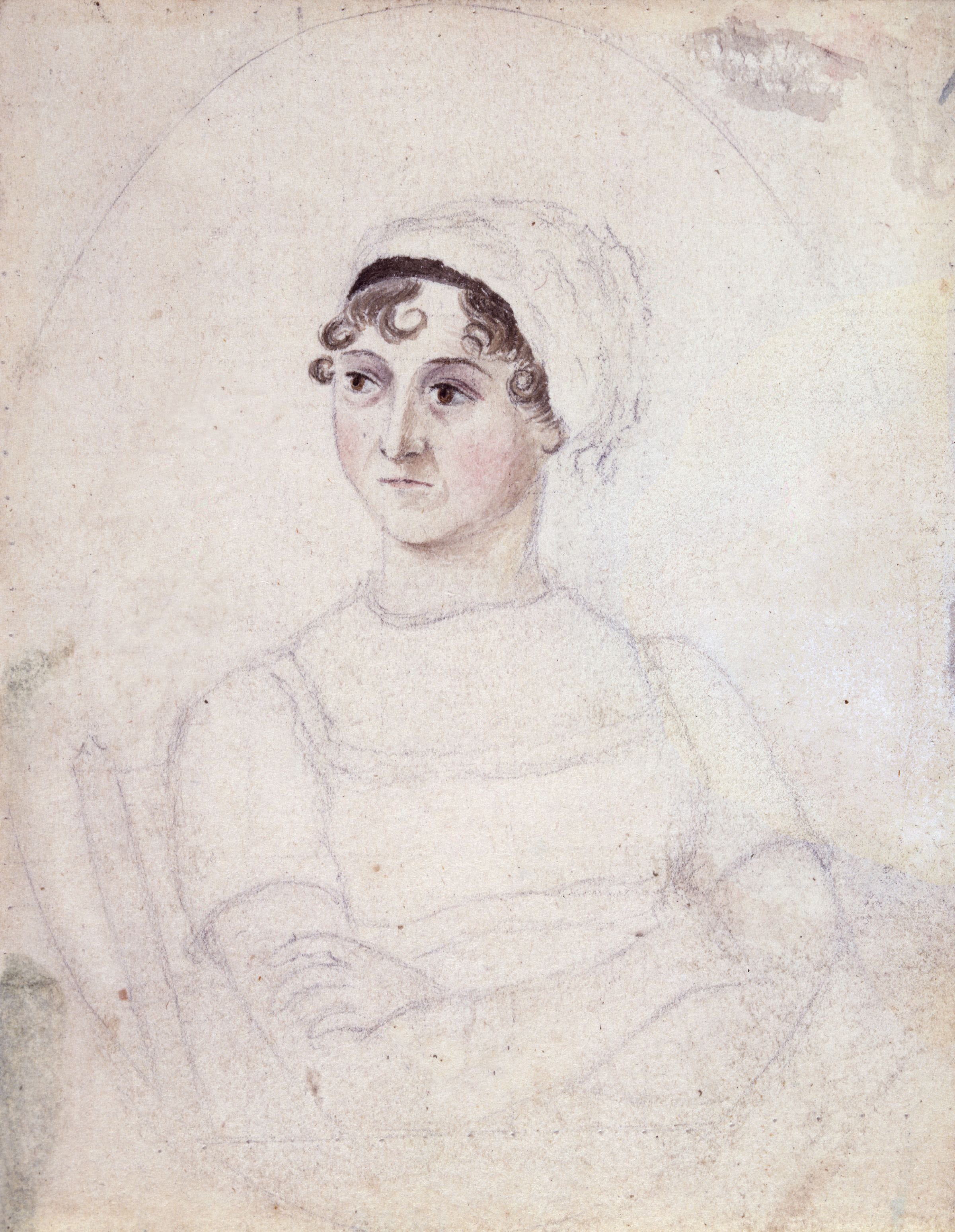
Austen’s moral vision
In both senses then—in the society she depicts and in the way she depicts it—Austen captures the world in which we still live. Dickensian London doesn’t quite exist anymore. But Austen’s England is still with us. We still walk down to the shops in town, still (just about) run into people at the drapier’s, still have awkward aunts who overpower meek-but-virtuous nieces, and still face life-changing questions about marriage in a socially mobile, commercial society. We are still eating fruit and sugar from half-way around the world, still wearing new fabrics and fashions.
And for us, as for Austen’s characters, questions of personal conduct, moral education, how to be good in a commercial world are paramount. Beyond politics and the culture wars and the urgent reactions to the daily scroll, there is still the one big question that faces us all in big ways and small every day: how to live, how to be good, how to flourish.
This is why we keep going back to Austen. She wasn’t merely an aesthetic innovator, a stylist, a genius of narrative technique, a wonderful plotter and controller of pace—she did all of that in the service of her moral vision.
The central concern of all her novels is moral education—how to raise daughters who grow up to be Lizzie Bennet, not Lydia; how to become Fanny Price not Mary Crawford; how to ensure you don’t spoil a child of talents so that they risk being too superior to find their own happiness or ruin others, like Emma Woodhouse.
Drawing on her knowledge of the Enlightenment philosophers, especially Adam Smith and his book The Theory of Moral Sentiments, Austen’s novels are all about what it means to see things from someone else’s point of view. That is the moral lesson Lizzie Bennet learns about Mr. Darcey, it is what Marianne learns about Elinor, and it is what Emma Woodhouse learns about all her meddling.
Austen’s narrative technique of “Free Indirect Style” allows her to move between impartial narrative and ventriloquizing her character’s thoughts, feelings, and speech. She gives us not lectures (like George Eliot) or highly-wrought elaborations (like Henry James) but a strong, simple vision of how a young person learns to see the world through someone else’s eyes. She does that by showing us the world from someone else’s perspective.
No author had done this before, not in Austen’s sustained manner. Every page of Emma is carefully controlled so that we only see what Emma herself sees, rather than seeing the whole truth. This method is so effective as a means of relating a moral through a story that it was refined and developed for over a century, sitting at the heart of Ulysses and The Golden Bowl. But no other author has used it so well to write about the issue that affects us all most of all—love.
The moral importance of everyday life
Jane Austen is so popular because she used her talents to write about things that really matter to readers’ lives. She didn’t pander to their expectations—either about the genre or the moral of the story—but nor did she dismiss their interests as petty or unimportant. She wrote characters who are loved, characters who we are still startled to realize we know all too well from our lives. She wrote about moments of awkwardness, embarrassment, and shame that still happen ever day. Drawing room mishaps, over-loud mothers, embarrassing sisters, vulgar relatives, and shameless friends.
She used her genius to write about the moral importance of everyday life in a world that is always reinventing itself. That is why we love her still and will continue to do so.
Her innovations are still relevant to our lives today. Readers know that she has more to offer them that is really useful than almost any other novelist, which is why they keep going back to her. No wonder that what Hermione Lee once called the English tradition of affection for Jane Austen is stronger than ever.
Long may she be read.
Jane Austen was not allowed reading in Communist Albania. I discovered her in "Western Ideas," a wonderful undergraduate course I took at Clarkson University. Pride and Prejudice was my introduction. Can't say I loved it. But Austen grew on me. And when I discovered "Persuasion," I knew I had a soft-spoken masterpiece. It is a book I read every November/December. I have to revisit those characters.
Pretty cool that Beethoven was also born on December 16, 5 years earlier.