

Wicked King
I didn’t read all of this book (the genre isn’t my thing) but it’s very well written and has a cult-classic quality. Here’s the opening.
Their right arms came off with a radial saw. It had taken two nights, the abductions and the dismemberments. The boys spent twenty-four hours bound and drugged. The girls were captive only a couple hours before the tables were ready. Two months later, the ritual site was scheduled for incineration. Mr. Mouse set the timer on the fuse that would burn his former home to carbonized spears and arrows. Then he drove his Aston Martin away from Dick Fenster’s guest house for the very last time.
The publisher, a small press, is on Substack, too.
Mozart: performance and posterity
I spent some time reading about Mozart last year. Not as much as I would have liked. Two books that I found interesting were Mozart the Performer by Dorian Bandy and Mozart & Posterity by Gernot Gruber. Mozart the Performer is beyond me at a technical level, so I worked slowly, listed to the music, asked a talent friend, asked llms, etc. It was a slow (and incomplete) read. But I learned that Mozart really does seem to have developed his compositional talent by improvising in performance, and that this can be seen in his scores. A very interesting book for the right person.
In Mozart & Posterity, Gernot Gruber points to a creative tension in Mozart: he wrote for commission and pay, never composing an opera for its own sake, keen to become a court musician, but he wrote so originally, ignoring what was “musically acceptable”, that it took posterity to recognise its greatness. Hayden gave the public what they wanted and was much less criticised at the time. Unity, simplicity, accessibility were wanted; (later) Mozart was none of these things. Mozart’s greatness was recognised, but as “the Sturmer und Dranger of genius rather than a ‘classical’ artist reflecting on his art in the search for balance.”
Mozart’s death brought much high praise, which wasn’t quite in accord with the more mixed reputation he had enjoyed in life, and the official funeral wasn’t mentioned in the Vienna newspapers. And of course rumours that he had been poisoned started to spread very soon after his death. His widow, Constanze, lived for another fifty years and became a mixture of “grail-guardian and business woman.” She organised concerts and tours and dealt with the unpublished work. But the cult of genius had begun when Mozart was a child prodigy and it never stopped after this point.
Other Mozart writing in 2024: 1791, How Mozart Became Mozart. Also, chatGPT o1 says yes, the 1980s were a very good decade for recordings of Mozart’s chamber music. Some good listening in there.
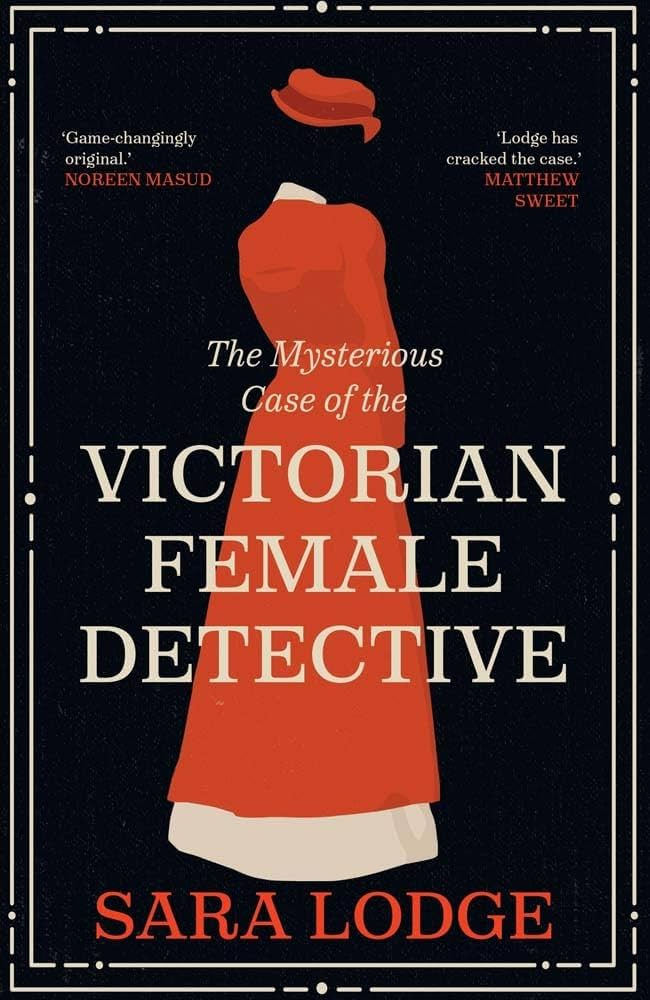
The Mysterious Case of the Victorian Female Detective
I spent a few hours dipping and skimming through this and didn’t regret a moment. It’s full of information. Did you know that women had been a regular part of the police force for several decades in the nineteenth century, often kept off the books? (The most necessary form of employment was to search women prisoners.) Or that the first novel with a female detective character was published in 1840, the year before Poe’s ‘Murders in Rue Morgue’? The novel (The Adventures of Susan Hopley) remained a theatre staple until the 1870s. One story is about a woman detective who infiltrated a criminal gang and when she was discovered had to smash through a glass window to use her rattle to alert back-up. When I get the chance, I will be going back to this one.
The Wood at Midwinter, Susana Clarke
Fans will regret, as I did, that this is a short story, not a full novel, and that is perhaps the highest praise one can give to a book: if only it were longer. Not Clarke’s best work, but it makes me all the more eager for her next novel. The Afterward is very interesting with some discussion of her father’s Aspergers.
Henry V, Dan Jones
I read the first couple of chapters to see what makes a book like this successful. The main technique is narrative delay. The opening line, for example, is: “The doctor was nervous.” Jones often uses three such delays in a section, which is then brought back to the trailed conclusion. The other main traits of the writing is the free use of cliche, which brings down the information density. He also likes using hendiadys. And threes: adjectives come in triples; there are tricolons aplenty. I was not very interested beyond this and soon gave up, perhaps unfairly, but it was all a bit “tv script”. A lot of popular history has this quality: what makes it compelling is the lack of information density, and the use of descriptive narration. (Helen Castor’s book The Eagle and the Hart which I am currently enjoying is exactly the opposite. Excellent stuff.)
Creative Capital
A biography of the first venture capitalist. I read half or slightly more and then had to pause but I found it fascinating. Well written, properly researched, not too long, in short, exactly what you want a book like this to be.
Annihilation
Just so boring. A real slog. Yes, yes the “new sincerity” is a good thing, but this novel is not. Not worth a full review.
Neverwhere
I wasn’t gripped by this in the way that I was by The Graveyard Book and Stardust. Only read half.
Enchanted Glass
I love Diana Wynne Jones and will keep reading her novels. This one is not her best (and I didn’t care enough to read the last thirty pages) but I was very happy racing through most of it. She is inimitable, even in her middling work. I have Fire and Hemlock up next… And I just read the first in the Dalemark Quartet. Give me your recommendations for other novels like these!
This book is riveting and heartbreaking. A very literary treatment of a true story and what the author describes, among other things, as the "unholy alliance between literary theory and psychoanalysis." It was a Pulitzer Prize finalist.
--The Best Minds: A Story of Friendship, Madness, and the Tragedy of Good Intentions--
By Jonathan Rosen
Thank you for the list of what not to read. After reading Pushkin's Mozart and Saliery in-school program, we, the children, were so influenced by it that we wanted to listen to both composers but couldn't find any mention of the second one anywhere. And thank you for "Hendiadys," a term unknown to me, a foreigner who never studied English.