

Shenandoah is the sort of place where nothing is modern. It is a land of iron bridges and freight trains. Of course, there are cars and television and smart-phones. But the places themselves—the towns, the mountain resorts, the restaurants and shops—all have the patina of another time. That was then, this is now, but now often feels a lot like then.
The furniture in the diners is either as old as the place or bought to look so. The food choices are all the sort of classics you go looking for. Fried pickles, peanut soup, chocolate meringue pie, southern fried chicken. The signs are often faded. Many houses and restaurants are abandoned, dark, falling down. I saw a Maxwell House coffee pot that could have been older than me, still perfectly serviceable, and with its own charm. That was then. This is then too.
The things that recur most often are churches and gas stations. They mostly come in pairs, and more frequently than I expected, even once I got used to their ubiquity. All those large pick-up trucks you see in places like Arlington and Austin look much at home out here, but I only a few times saw them actually hauling anything. The men driving them certainly look more likely to be making real working use of the loading space than the people in Austin who looked like digital marketing managers. But still, they must all have been on the return journey.
Inevitably, I realised in retrospect, we saw Confederate flags. Not in museums, or at re-enactments, but merely in people’s front yards. You can write whole books about the way this flag has been reclaimed, but it was the flag of a slave state and it is both chilling and absurd to see it flying today. I was reminded of the descriptions in Douglass and Jacobs of whippings, beatings, burnings. I thought of the slave who was hanged in The Bondwoman’s Narrative. I thought of the excellent Civil War museums we visited, the cannons neatly arranged on the crest of the hill, the proud memorials to the great bloody tragedy.
I thought too of the callow young communists who used to turn up to events at university with the hammer and sickle on their t-shirt. No matter to them that tens of millions were murdered, starved, persecuted, or merely lived in grinding misery. The idea of communism was too important. Human ideals are so distracting from human misery, human narrative so supple and sneaky a beast. It cannot be sensible to make the Confederate flag illegal today, but I am one who thinks the victorious Union should have crushed it into the dust of history. There were four million slaves in the South when war broke out. Six hundred thousand men died, a multiple of most other US military death counts. More men than perished fighting the Nazis.
Some of the Confederate flags were in good condition, flapping clear against the long stretches of snow. Some have been falling apart for years. We saw them in a little bucket, in flea markets, ready for you to take home. I completely understand why the South does this, but I cannot fathom what grievance—what sense of cultural identity—they can possibly wish to persist with at the cost of flying the flag designed for a military created with the express purpose of keeping four million people—and rising, rising, rapidly rising—in permanent bondage, raped, kept illiterate, branded. They need a new flag. It’s complicated. But also, it isn’t.
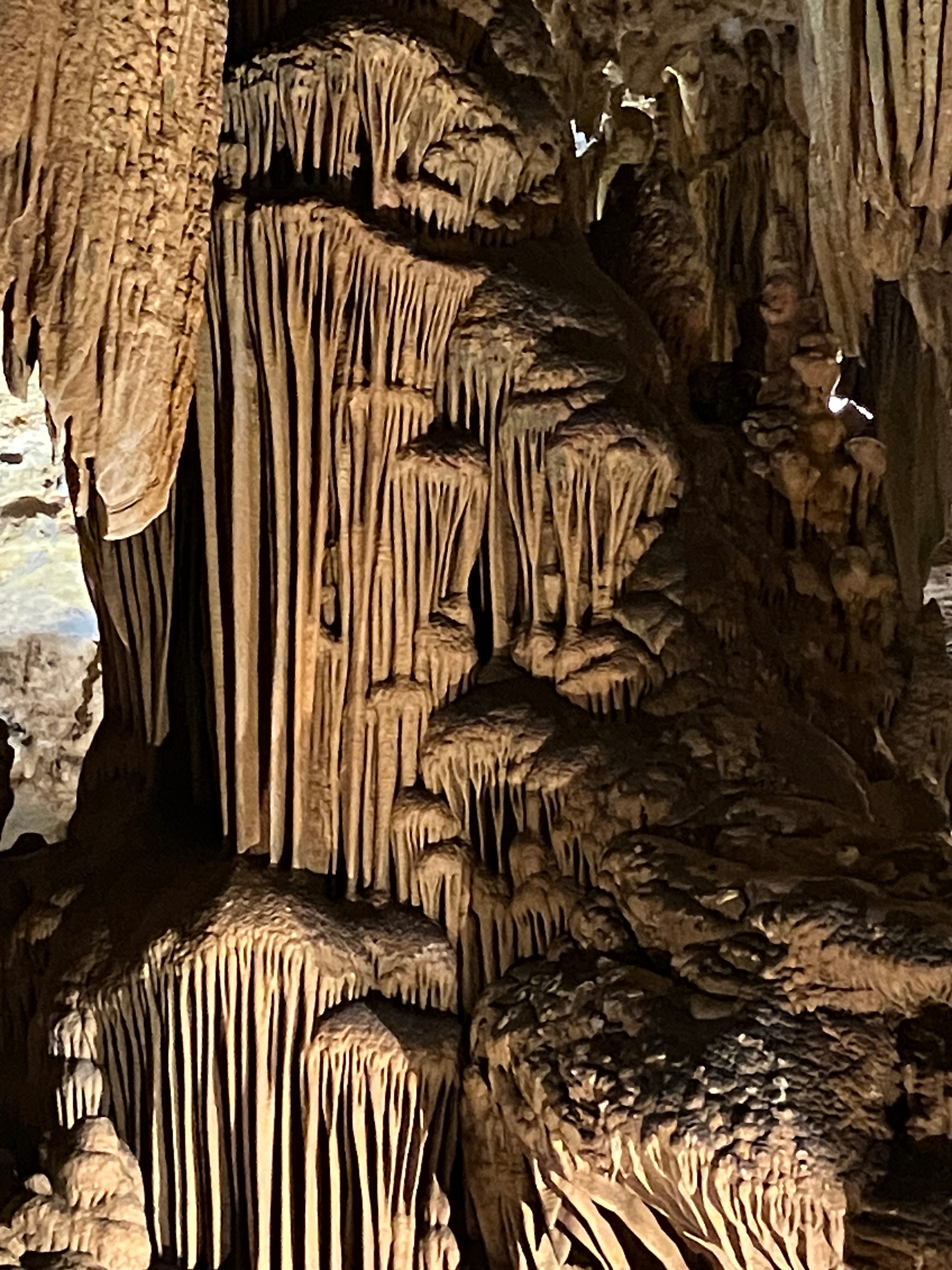
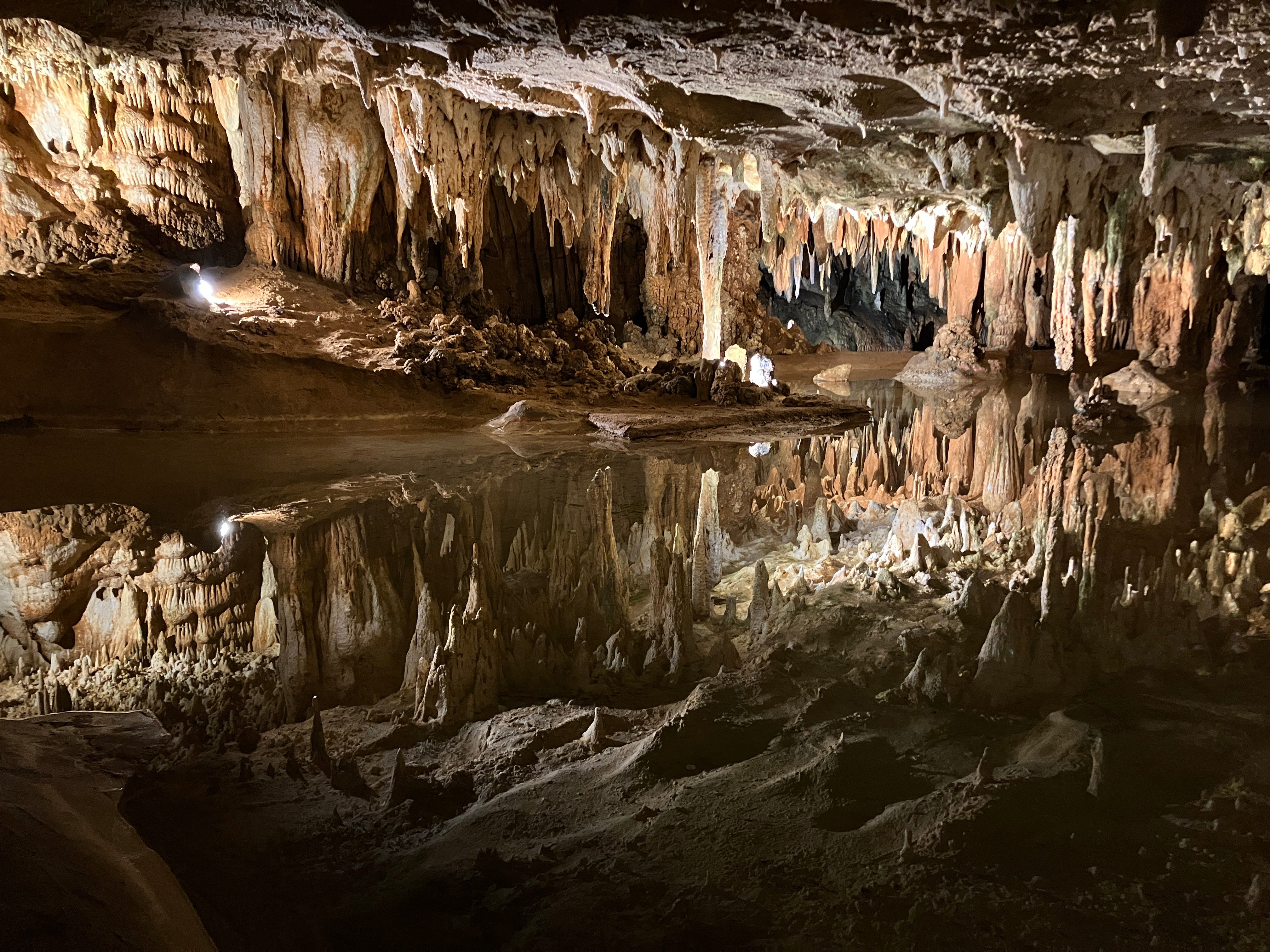
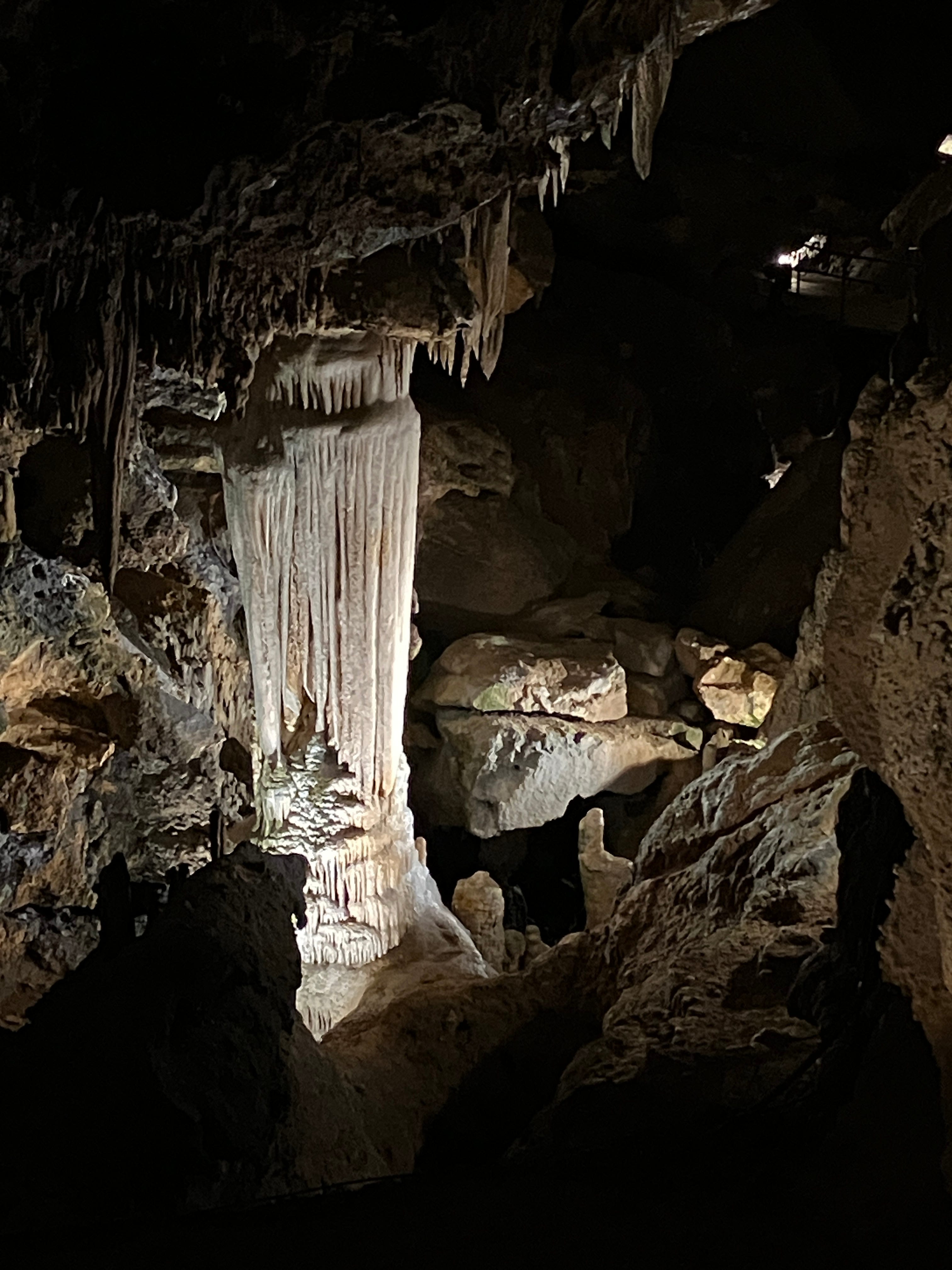
Shenandoah is also a place of great natural beauty. One only need to drive from one town to the next to pass over the Blue Ridge Mountains and feel amazed. We drove to the top of one, through the places where people stay in cabins in the summer. It was vast and splendid and incredibly American—everything I have seen in the movies, right there, in full brilliant reality. We went into the Luray Caverns and were simply amazed by the immensity. The darkness stretched out before us while the lights caught the millions-years-old stalactites and stalagmites, orange and white. Nature is fractal. These structures resembled trees and mountains and rows of monstrous teeth. One of them is called the Ghost of Pluto. Another cave resembles a cathedral. The reflecting lake is something science fiction can never match. Despite being a small place, it has a great vastness of its own.1 Parts of it looked like the landscapes in John Ford movies. It takes more than a century to produce one cubic inch of growth. Even the smallest spike has a timelessness I could not quite imagine. What has poetry against this? What need of human imagination in such a place? That was then and it was now and we were merely passing through.
For wonderful indeed are all his works,
Pleasant to know, and worthiest to be all
Had in remembrance always with delight;
But what created mind can comprehend
Their number, or the wisdom infinite
That brought them forth, but hid their causes deep?
I saw when at his word the formless mass,
This world’s material mould, came to a heap:
Confusion heard his voice, and wild uproar
Stood ruled, stood vast infinitude confined;
Till at his second bidding Darkness fled,
Light shone, and order from disorder sprung:
Swift to their several quarters hasted then
The cumbrous elements, earth, flood, air, fire
This is all a good tribute. I grew up in the Shenandoah Valley and I have complicated feelings about it. The Confederate flag is a good part of why. It’s a beautiful area and it was a good place to grow up. But I hated seeing that flag every day and I have always hated the nostalgia for traitors who took up arms against the United States.
Shenandoah and the blue ridge mountains have long been our go-to weekend getaway. You captured the beautiful contradictions wonderfully. Glad you're exploring the area!