

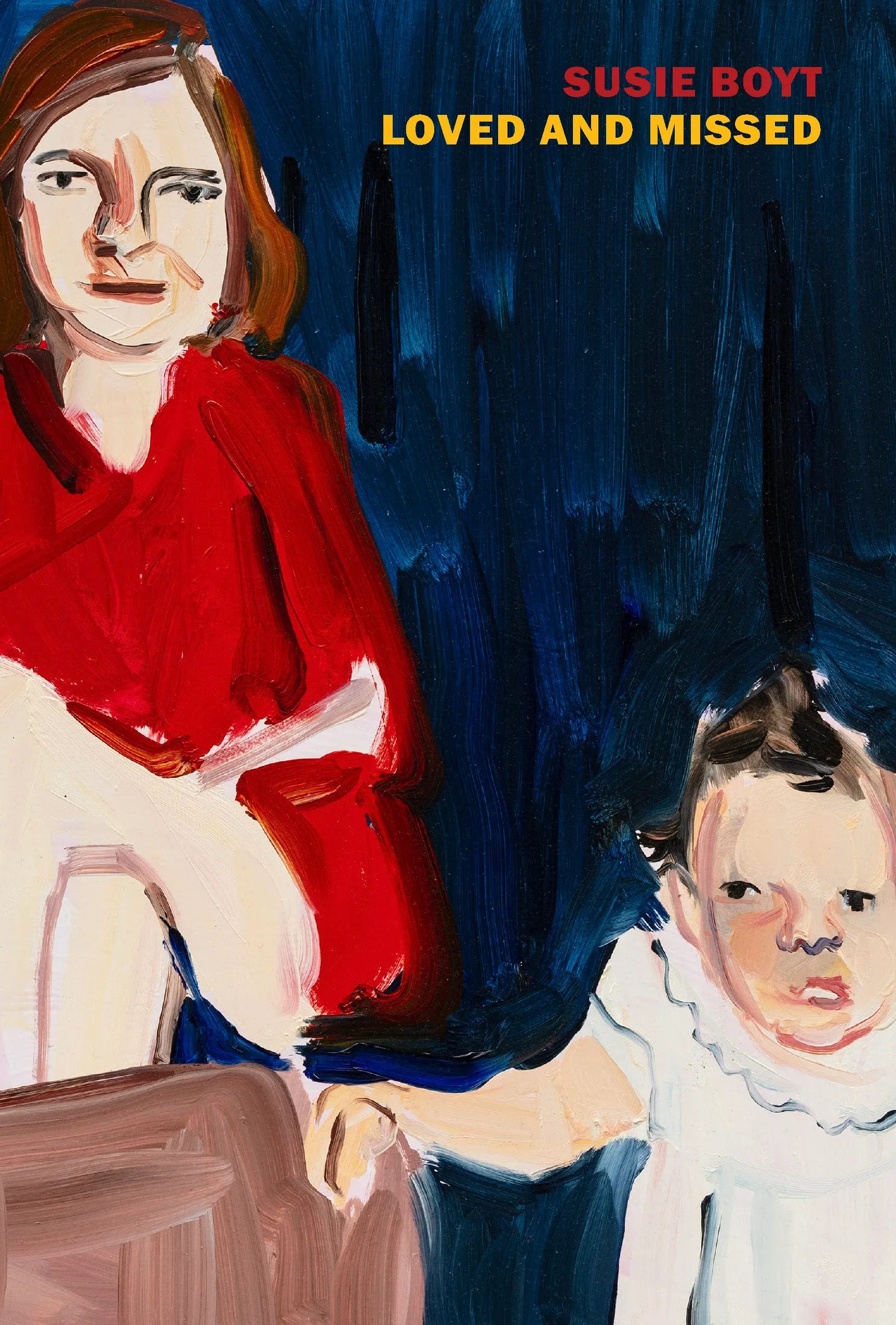
Loved and Missed, Susie Boyt
I read this on Celine Nguyen’s recommendation and it was fabulous. It is, as Celine says, hugely emotional, and by the end it is quite difficult to take, but all the sadness is balanced out with depth of feeling and the great love of the grandmother narrator. It is surprising to me that Susie Boyt is not more well known among the readers I know. Several of them had not realized she wrote novels, despite her FT column. Loved and Missed is in the tradition of twentieth century writers like Bainbridge, Taylor, Comyns, and if you like them I expect you will like this.
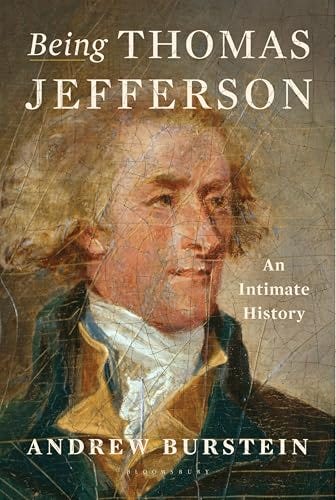
Being Thomas Jefferson: An Intimate History, by Andrew Burstein
I simply had to give up on this. Too much folk psychology and speculation dressed up as understanding Jefferson’s heart while mostly retelling a familiar story. Jefferson is tremendously important and interesting, in this of all years, but I didn’t need this book.
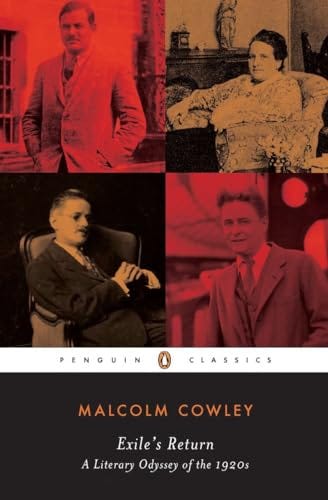
Exile’s Return, Malcolm Cowley
Useful and colourful account of the milieu and ideas of one particular group of American writers in the 1920s. A sort of early New Journalism. Reads as quickly as the whole period seems to have passed. Very little of it stayed with me, and I don’t admire e.e. cummings, though I perhaps knew more of it than I anticipated. At the end he says the period itself felt like being in a slightly too crowded room and leaving it felt like stepping out into winter sunlight. I felt the same leaving the book.
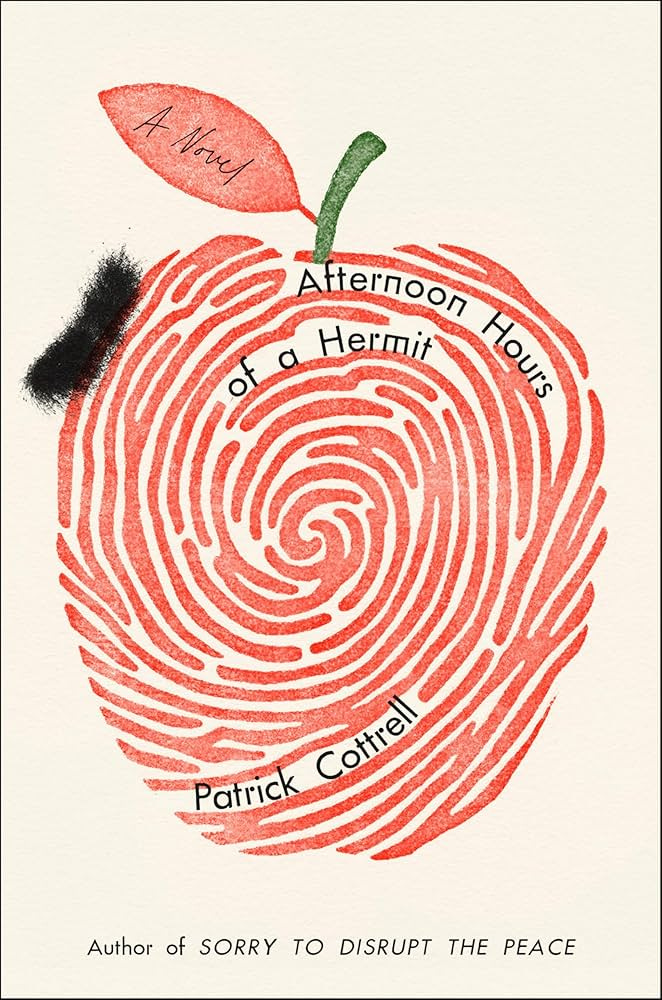
Afternoon Hours of a Hermit, Patrick Cottrell
A good example of a “craft” novel, quite compelling, though I do not currently feel like finishing it.
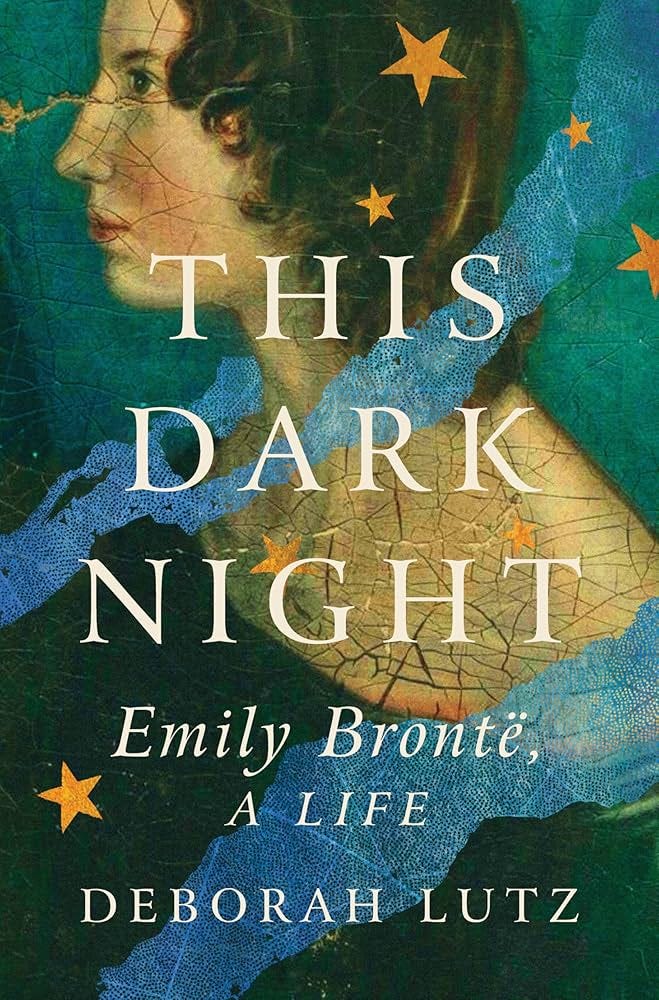
This Dark Night. Emily Brontë, A Life. Deborah Lutz
We can only yearn for Emily Brontë. So many papers were destroyed, her life can only be seen in glimpses, snatches, and context. We know what happened to her; we have what remains of her poems; but an account of her personality could be as short as one of Johnson’s Lives of the Poets and remain authentic to the records. English literature’s most intriguing woman—whose pale, proud, scornful, watching face stares out from the back of a family portrait—will always remain a mystery we cannot complete but only contemplate.1
This Dark Night is easy to read and offers a reassuring account of a woman who cannot ever be known; it smoothes her into something ideologically familiar. The book has many virtues, such as the discussion of Emily’s reading habits and context about her intellectual life, but if you love Emily Brontë on her own terms, you will be better off with one of the many books that already fill the shelves.
I am sorry to say I simply gave up reading half-way through.
This Dark Night is too-often typical of a particular sort of modern biography that fills in all the gaps of history with cliches and vapid questions. These questions come up so often, it is reminiscent of those lame school-exercises children are given. Were Emily’s fellow pupils unkind to her, do you think? What must Anne have thought of Emily beating her dog? Can a landscape hold on to an absence?
Lutz also has an ideological slant that becomes, at times, unsustainable. She claims that a “pagan or a mystical impetus” called the poem ‘I’m happiest now when most away’ “to life”.
I’m happiest now when most away
I can tear my soul from its mould of clay,
On a windy night when the moon is bright,
And my eye can wander through worlds of light.When I am not, and none beside,
Nor earth, nor sea, nor cloudless sky,
But only spirit wandering wide
Through infinite immensity.
What the word pagan is supposed to mean here, one can only speculate. Undoubtedly, Emily Brontë is not a conventionally Christian writer, but to write, as Lutz does, “This isn’t a Christian poem”, is gross simplification. In The Brontës and Religion, Marianne Thormählen explains Brontë’s use of “New Testament topoi relating to the various roles of the Holy Spirit in the life of the believer”, as well as the Spirit being presented as wind or breath. In the passages of John’s gospel read at Pentecost (the day when the Holy Spirit descended)
the Spirit is often referred to as the ‘Comforter’ (Jn 14:16). Utilising this topos, Brontë’s poem ‘My Comforter’ (1844) describes a ‘thoughtful Comforter’ who is ‘like a soft air’ or a ‘thaw-wind’, bringing ‘calm’ to the poet. Likewise, the later poem ‘Anticipation’ (1845) describes a ‘Glad comforter’, a ‘thoughtful Spirit’ who teaches the poet how to hope and look forward.
Here are two stanzas of ‘My Comforter’—
So stood I, in Heaven’s glorious sun,
And in the glare of Hell;
My spirit drank a mingled tone,
Of seraph’s song, and demon’s moan;
What my soul bore, my soul alone
Within itself may tell!
Like a soft air, above a sea,
Tossed by the tempest’s stir;
A thaw-wind, melting quietly
The snow-drift, on some wintry lea;
No: what sweet thing resembles thee,
My thoughtful Comforter?
Lutz generally underplays the importance of Christianity to the sisters, no doubt because her feminist reading is more acceptable if it is secular, and thus implicitly political, rather than evangelical and thus historical. Emily may not be especially doctrinally evangelical, but her love of her home life has to be seen within that context, as Lisa Wang demonstrates.
Evangelical families were particularly loyal and devoted, and bonds between parents and children were close and powerful. Emily Brontë was not the only child from an Evangelical home who suffered intense homesickness, even to the point of physical ill-health, when obliged to spend time away from it. Evangelically reared children loved their homes. To mention just one example, young Tom Macaulay was passionately devoted to his, barely surviving school terms and living for the holidays. Pat Jalland has recently emphasised that Evangelical families were often, contrary to modern belief, cheerful families, comfortable and content in their religion. It is no accident that so many sons of Evangelical men wrote affectionate biographies of their fathers.
They were raised by patriarchs who tempered paternal authority with unstinting devotion and frequent jocularity. Though many scions of Evangelical families drifted away from their parents’ religion, the characteristic family affection remained. Unsentimental and undemonstrative as the Brontës were, that emotion pervaded Haworth Parsonage from first to last.
Patrick Brontë’s children were especially fortunate in enjoying this warm domesticity while being spared the dark shadow that haunted many of these otherwise so happy homes. Unlike a large number of Evangelical Christians, the father of the Brontës was not constantly watching his young ones for early signs of evil propensities.
Lutz, instead, writes of the surprise that a “Victorian father of daughters” indulged the girls’ creativity. Lutz is often so generic that at times This Dark Night reads like a narrative for a television special.
So much of the deadweight in the book is composed of ideological cliches to which Lutz tries to fit Emily’s life. The characters in Anne and Emily’s stories are “forceful women who held powerful positions.” Charlotte Brontë, on the publication of Jane Eyre, became the “voice of and for women.” (None of the women who hated Jane Eyre at the time are mentioned, naturally.) As usual, Mrs. Gaskell’s superb biography of Charlotte is dismissed in a sub-clause.
We know Emily went on long walks and took her books with her. She was observed coming back from these walks, book in hand, by local working people, who called the girls “the lasses”. These people are kept safely in the footnotes, even though it would have been more accurate (we often can only know Emily as others saw her) and more interesting (to see her as she was seen in her context) to include them in the narrative. Being a governess or a teacher was indeed a miserable job. But which of these working people would not have gladly swapped lives with the lasses in the parsonage? It is not until Lutz wishes to recount the traditional Engels-based narrative about the miseries of emergent capitalism that working people are brought onto the page.
Lutz speculates that Emily would have supported the Reform Act because she later became a “keen observer of inequality”, which makes her sound like she wrote Mayhew’s London Labour and the London Poor. We are told that in a stream-of-consciousness diary entry (written on a piece of paper the size of a credit card), Emily spelled Robert Peel as Robert peel, before talking about the peeling of potatoes. Thus, Peel, a prominent Tory, was given a “female domestic context.” Lutz also tries to analyse Emily’s early sewing samplers as her first acts of “writing”, as they contain Bible quotations. Lutz may be a scholar, but she is not much of a critic. This sort of thing is what gives the discipline of English Literature a bad name. It is not the ideology itself which is objectionable, but the fact that it is all meaningless.
I should have put this book down sooner.
Here are the extracts about Emily from Gaskell’s Life of Charlotte Bronte
Fierce, wild, intractability. Emily Brontë's untameable spirit

Emily Brontë is perhaps the most compelling character in Elizabeth Gaskell’s splendid Life of Charlotte Brontë. Though she appears incidentally—it is, after all, the story of her sister’s life—whenever she does appear, she steals the scene, at least for me. Oh Emily—so sullen, so scowling, so fashionless, so desperate for the freedom of solitude!
These are some of the bare facts of her first twenty years or so.
When she was three years old, Emily Brontë watched her mother die. The body stayed in the house for seven days.
Her childhood routine was simple. Prayers, breakfast, and lessons, followed by lunch and a walk on the moors. In the evening tea and talk, stories and oral lessons from her father. The stories were taken to bed and discussed. Good training for writers, as Deborah Lutz says in her new biography of Emily, This Dark Night.
Sewing lessons began young. Charlotte Brontë finished a sampler aged six. The girls were taught by an aunt who took snuff from a gold box and always wore silk. She was unmarried and had lived a cosmopolitan life of gaitey and society in Penzance before taking over from her dead sister as mother to the Brontë children.
Newspapers were read aloud in the house and suicides became a theme of the girls’ work later on. Everyone was a writer and storyteller in the Brontë house, no matter their age. All the while, the moors were a persistent presence, whether in storms or snows or showers or sunshine. They became as important to Emily as all the talk and books and news she was immersed with inside.
Growing up when children became servants and factory workers, the Brontë girls were lucky that their father, like Jane Austen’s father, not only wanted them educated but gave them the freedom of the library—and the freedom of his own mind, telling them about history and religion himself. They had the great privilege of growing up with an intellectual priest for a father. But their school at Cowan Bridge was hellish—in both Charlotte and Emily’s books, schools are places of despair, frustration, cruelty, and death.
In the parsonage, there was no fireplaces upstairs. Downstairs, the coals were burned merely to prevent suffering. She had warm clothes and good food, though. Girls at the school walked to chapel through snow and ate very little. Chilblains and hunger were normal. In 1825, two of her sister died from typhus within weeks of each other. The others were brought home from school to avoid further illness. Emily was seven. Lutz finds the echo of her mothers grave being opened, twice, for the daughters to be interred, in Heathcliff’s twice opening Cathy’s grave.
The family had to be raised as it could be. Emily told her father to reason with her brother when he was naughty—and if he would not listen to reason, whip him. Patrick Brontë inclined towards talking about history, and the girls played Civil War games. A cherry tree in the garden stood in for the Royal Oak in which Charles II hid from the Roundheads. Plays of the civil war were written. Games were developed about heroes, soldiers, sea battles, deaths. They became obsessed with islands.
A visitor in 1833 described the scenery as “wild and uncultivated.” Elizabeth Gaskell wrote of the “solitude and loneliness” of the place. The church was grim as well. It conducted two or three funerals a week and had no heating until Emily was twenty-three. Emily and Anne sat with their backs to the rest of the church, a quirk of the positioning of their family pew, but also, according to the sexton who was a friend of the family, because “they were always the strangest.” Their mother was buried close by. Wild and lonely a place it may have been, but somehow it suited Emily Brontë.
In ‘The Night-Wind’, the speaker of the poem talks to the voice of the wind, who brings a seductive sense of the dark woods beyond the parsonage. The speaker resists the wind’s temptation, asking it to leave her human feelings to flow in their own course. Shortly afterwards, the wind tells her during a storm,
Thus truly, when that breast is cold,
Thy prisoned soul shall rise;
The dungeon mingle with the mould—
The captive with the skies.
Nature’s deep being, thine shall hold,
Her spirit all thy spirit fold,
Her breath absorb thy sighs.
Mortal! though soon life’s tale is told;
Who once lives, never dies!
When she was twenty, and becoming a slightly androgynous woman, described as more like a man, dominant, Emily went to teach in a school in Halifax. It was hard work, but she wrote many poems while she was there, including these lines about her home.
The house is old, the trees are bare,
Moonless above bends twilight’s dome;
But what on earth is half so dear,
So longed for, as the hearth of home?
The mute bird sitting on the stone,
The dank moss dripping from the wall,
The thorn-trees gaunt, the walks o’er grown,
I love them, how I love them all!
She knew her home intimately and not only from her domestic work. Emily knew all the different ways the wind blew, knew its “breathing spells” or when it was a “lonely vesper.” She planted the parsonage garden with lilacs, peas, and cornflowers. The whole family read and annotated works of natural history.
I like this survey of your current reading, don't remember seeing these in the past. I always look forward to the similar postings by Cowen.
Lovely post. I have to say I was quite relieved to find you occasionally give up on books, I always feel guilty when I do that (and I do) so it's reassuring to find such an accomplished critic playing the same game.