

A View of the Harbour was rather an outrageous gap in my reading. I have a minor specialism in the adultery novels of the post-war period, and an associated interest in what is sometimes called—unfairly and inaccurately, in my view—“the feminine middlebrow”. It was once my ambition to write a book about these novels. None of the existing critical work, splendid though some of it is, really seemed to get things right to me. The constant omission (or the most glancing of references)—in both popular and scholarly work—of The Tortoise and the Hare, by Elizabeth Jenkins, is symptomatic of the wider problem. That book is unavoidably conservative. It tells a story of women’s lives honestly, and is, to that extent, part of the broader feminist project that is often traced to Virginia Woolf. But the novel’s theme is the pain caused by divorce, there are frankly middle-class attitudes on display, and it has plenty of C.S. Lewis-type disdain for “modern parents”. Jenkins is far too good a novelist to make her book simply political, but the overall disposition is Tory (as indeed EJ was). And Tortoise is a very splendid novel. The great Carmen Callil once told me it was her favourite of the Virago Modern Classics. The tradition it belongs to cannot be understood without it.
Most of the commentary, understandably, focuses on these novels as “telling the story of women’s lives”, as well as on the fact that they establish an alternative tradition to modernism. There is a sort of pleasure associated with the “feminine middlebrow” that is quite different from reading James Joyce and his American inheritors. But that makes the genre rather a mixed bundle. Can we really put The Fountain Overflows, One Fine Day, or The Death of the Heart, in the same “middlebrow” category as Dorothy Whipple or Monica Dickens? Whatever that dreaded word is supposed to mean (and I think it is more properly applied to a sort of reader than to a sort of book), it cannot honestly yoke together Sylvia Townsend Warner, Elizabeth von Arnim, and Elizabeth Taylor.
The excellent work done by Virago and Persephone originated in the fact that it was women’s writing they were trying to save and re-issue. (When Virago re-published Rosamund Lehmann, she sold hundreds of thousands of copies.) But being written by a woman is not enough for a novel to join a tradition or be part of a critical grouping. The feminist angle that almost all commentary takes (from the mild end of the scale about women’s lives to the more political readings) too often risks, in my view, reading these books as social history, manifesto pieces, examples-of-a-favoured-idea, and thus begins to diminish them all to period pieces. The best appreciations treat them not as “feminine”, or “middlebrow”, but as art. None of this is to deny the importance of the feminist (or the feminine): it is merely to say that within the tradition that runs, approximately, from Mrs. Dalloway to The Blue Flower (this is artificial: it carries on today and can be traced back much further, as the novelists themselves are often careful to suggest in their books) there is so much more at play.
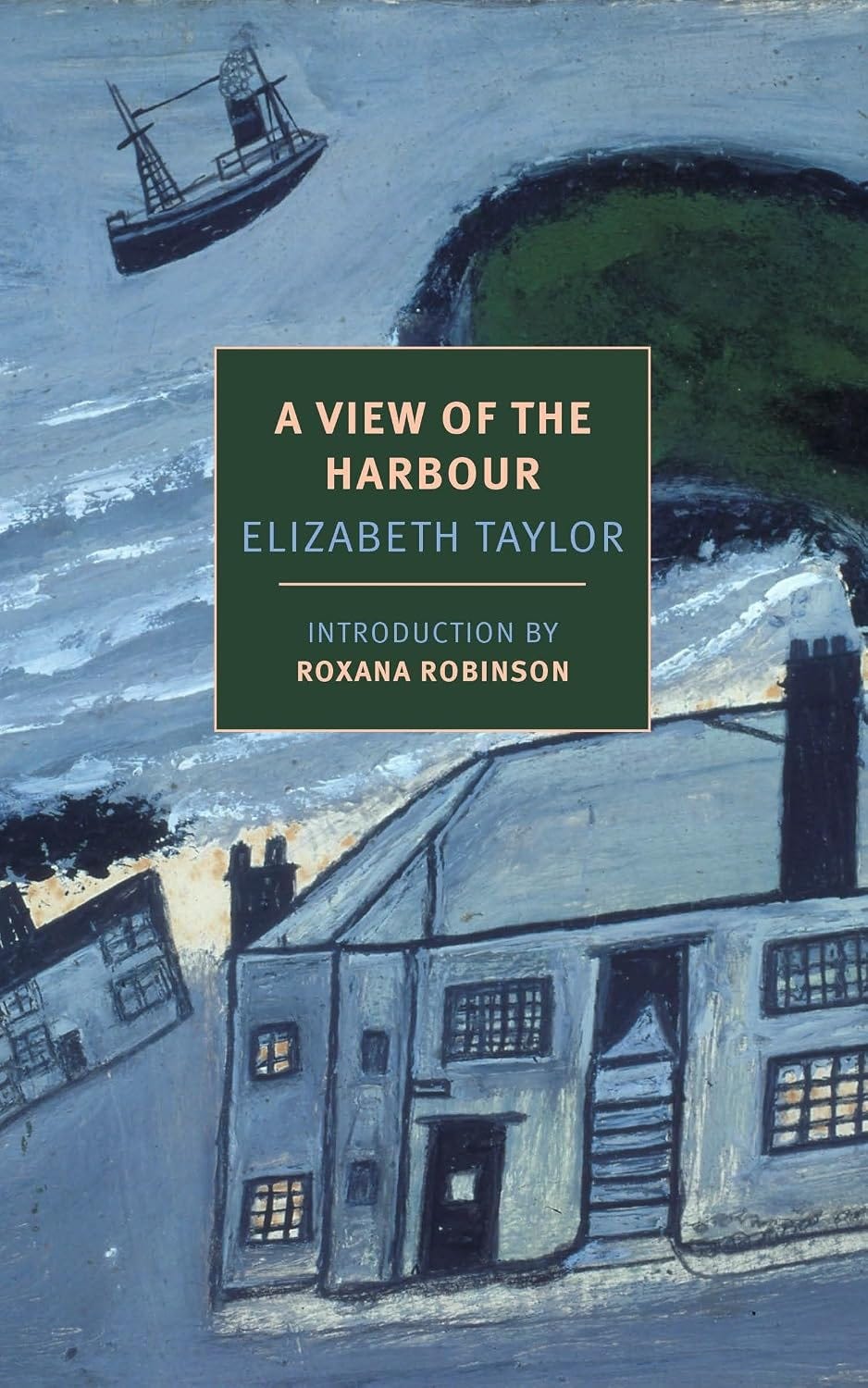
If I were to write a book about all this now it would perhaps be called Perpetual Summer, a phrase from A View of the Harbour. This captures the sense within so many of these novels of nostalgia: not in a narrow, melancholy sense, but as a perspective on the way lives and societies change over time. Some nostalgia is gloomy; some is accepting; some matures into wonder; some is cheerful. Perpetual summer is exactly what these books know cannot be achieved. What the women novelists saw, that cannot really be seen in books like A Handful of Dust, Lucky Jim, or Flaubert’s Parrot, is the profundity of ordinary life. This has often been dismissed as domesticity, as if everything in this category were, in Nabokov’s words, “the tinkling of teacups”. But there is a great depth of emotion to be found in daily life, small communities, and simple lives, and it takes all the resources of a great writer to bring that out fully and significantly. Why cannot life be perpetual summer—this seems to be the question the women novelists were investigating, seeing clear-eyed.
One can imagine a book like Parallel Lives, organised around some of the writers, perhaps linking each to a theme—Fitzgerald and God, Taylor and aging, West and the supernatural—but branching out to see the coherence and diversity that made a century of women’s writing so much more than “women’s writing”. They were often talked of as women writers by male reviewers, and that attitude led a great many men to misunderstand a great many books, some of them written by first-rate novelists, even a genius or two. These novels are often as subtle, conflicted, and sensitive as a poem by Philip Larkin. More should be written about those aesthetic qualities alongside the lives of the writers as professional writing women.
A great deal of attention has been given to Elizabeth Bowen, and no doubt she would merit a section of her own, but has enough attention been given to her place among these other writers? There are plenty of letters between her and people like Elizabeth Jenkins. (Bowen’s handwriting is utterly maddening to decipher, all loops and swoops, sprawling over the page, up the margin, with barely a concern for letter formation, but I cannot sit in judgement: her writing is almost as bad as my own.) They saw themselves as professionals and wrote to each other as such, perhaps not in the way that Dickens or Amis wrote about themselves, but Stella Gibbons had her own sense of herself as a professional writer and that is something that she and Monica Dickens and Elizabeth Bowen really do have in common.
I am, of course, proposing my own too-narrow category. Not only have I so-far kept Muriel Spark and Iris Murdoch out of the lists (and why should they not be seen as part of the tradition of Bainbridge and Burnett?) but there are no men. And my argument is that these women are distinctive as women, but not as distinctive as women as some critics have suggested. One can hardly imagine this project without including E.M. Forster as well as Barbara Pym, Pritchett, Hartley, Green (and Greene) as well as Virginia Woolf. Part of the point of such a critical endeavor would be to insist not just on the inclusion of The Tortoise and the Hare within the tradition of Bowen and Taylor (and Agatha Christie incidentally) but also that of Henry James.
My own prejudices are on display in other ways. I have no time for William Trevor, who might be an obvious addition, but all criticism is personal, after all. As you might have wondered, I see Bowen not exactly as a modernist. And I have a biographical tendency. But these prejudices are all in line with the novelists I am writing about. Many of them wrote biographies, had mixed feelings (at best) about modernism, and were happy to admire some writers from a distance, or not to admire them at all. They worked their own work, and it will take a new effort of criticism, that gets beyond the perspectives already established, to see that work both in new lights and in its own light.
I remembered, as I was reading A View of the Harbour by the pool today, that when I was young I would have scoffed at the idea of “women’s novels”. No Handmaid’s Tale for sixteen-year-old me, thank you! But little did I think, that, at the same time, I was obsessed with Jane Eyre, had been the only boy I knew who read (and liked!) Are You There God, It’s Me Margaret, and, though I enjoyed making jokes about Jane Austen’s inadequacies, had been quietly stunned by Sense and Sensibility. No such silly attitude can long survive the encounter with great writing and over the years I became as interested in Penelope Fitzgerald as I was once in Dickens.
I had, too, a young scepticism of modernism, while, again, not realising how incompatible this was with my constant fascination with T.S. Eliot, a poet about who I have never been less than intently conflicted. What I have learned in reading these novels (and still reading them, filling in outrageous gaps!) is that what has been called “feminine middlebrow” is a tradition all of its own. In its conflicts with (and connotations of) modernism, this writing became a century-long project of moral seriousness, expert technique, and great aesthetic pleasure.
What I had not learned in the arrogance of adolescence is that there is no such thing as “women’s writing”, there are only novels and writers, some of who are women, and some of who happen to be as absorbing, fascinating, and mind-occupying as those books we would never call “the male highbrow”.
Further Reading

The feminine middlebrow is my absolute favourite "genre" and, like other famous cultural phenomena, difficult to define but immediately recognizable to its fans. The British seem to do it best, especially in the mid 20th century, but there are wonderful novels from every Anglophone country. I am on a quest to find a similar vein in French and Italian writing and haven't had great success. It could be that those cultures don't quite reproduce the cool sardonic tone required, or at least that I require. I still have "Middlebrow Matters" by Diana Holmes to read but I'm not sure it will turn up the French Pym or Taylor or Fremlin.
You know the quote from Othello which is the epigraph of ‘The Tortoise & the Hare? (It’s printed before the Introduction in my 1983 Virago edition)I think the question posed by Emilia ‘Who hath done this deed?’ and Desdemona’s answer ‘Nobody; I myself. Farewell.” - I think that’s so often the painful idea explored in so many of these books. You could describe it as ‘Why can’t there be a perpetual summer?’ But I think it’s darker than that, and often melancholic and repeated across many of these books.