

This post is for the people thinking about reading more great literature in 2026.
Here are ten reasons why literature matters.1
Happy New Year to you all! And happy reading.
1. Particular Pleasure
Literature is a form of pleasure. The heart asks pleasure first, and literary pleasures are unique, intense, non-trivial. Literature offers intense, big, complicated, difficult pleasures, not just fun and enticing ones.
Girls’ Life is right. Books like Jane Eyre still hit differently. The best books give us a sort of pleasure we cannot get anywhere else.
There is only one Jane Eyre and nothing else compares.
2. The Force of Language
Literature works through a special force of language.
When he travelled the world on the Beagle, Charles Darwin’s favourite book was Paradise Lost. He thought of Milton as he watched the sea at night. The way the dark materials of creation are described in the poem echoes in The Origin of Species.
The theory of evolution owes an influence to Milton’s poetry, which inspired Darwin to reimagine the universe.
As Samuel Johnson said, poetry is a “force which calls new powers into being”.
3. Knowing Human Character
Literature understands people. Why do people do and say the things that they do? Don’t we spend half our lives gossiping about other people, confused, outraged, curious about their behaviour? Other people are so inscrutable. Literature is dedicated to explaining them.
And it does so with much more grace and nuance and insight than most psychology books. Forget the heuristics. The best way to understand people is to imagine them deeply, individually, with the force of language only literature can achieve.
Put down your pop psychology and pick up your Tolstoy.
4. Expressing Human Passion
Literature expresses human passion. A lot of modern books are interested in human actions—the reasons that explain our behaviour and the techniques to change it. Literature is more often about the rich, mingled mess of life and the role of human passion in human action.
Poetry is read at births, weddings, and funerals. It is used to commemorate wars and celebrate nations. Poetry gives the most intense and memorable expression of the feelings that we cannot otherwise express.
5. Solitude and Focus
Literature cannot be dealt with quickly. A poem cannot be absorbed as rapidly as a tweet or a video. A novel requires sustained attention. Re-reading, conversation, and accumulated knowledge are the essence of literary life.
For many readers, this makes literature a way of dealing more slowly with the world—a means of finding solitude and focus. For however long you read a book, you are in that world, not this one, cultivating yourself, expanding your imagination.
6. Freedom of Mind
Literature is read for its own sake before anything else. Darwin read Milton out of love, out of aesthetic compulsion, not because he was looking for a solution to his scientific problems.
Once he had absorbed the poem, possessed the poem, it was his. It lived with him, occurred to him, arose in his memory. It became part of the freedom of his mind. The force of Milton’s language became Darwin’s — to remember, revisit, revive.
Once the imagination breaks new paths in your mind, you are free to explore them and extend them.
Literature gives you the means of that expansion.
7. Excellence and Virtue
Literature is morally serious. It is often concerned with the same questions as philosophy: what makes a good life, how do we live well, what matters most?
Literature answers these questions with what Northrop Frye called “the voice of the genuine individual”. Rather than systems, literature gives you individuals.
An individual applying the force of language to a moral problem is a form of excellence. The cultivation of this excellence—the development of, and interaction with, voices of genuine individuals—whether as reader, writer, or critic, is the core virtue of literary life.
8. Ambitious Imagination
Literature is one of the highest human ambitions. To be a great poet is to write for all time. Rome is gone, but Horace is still read. Florence is no longer a Renaissance power, but Dante is still being translated.
Even today, someone new to literature sent me a WhatsApp message with a quotation from Tolstoy followed by the skull emoji.
How many writers make you do that one hundred and fifty years later?
9. Civilization
Literature is thus the heart of a great civilization, a record of society and its language. A partial, incomplete, inadequate record, but still a record full of excellence and accomplishment and feeling and morality and ideas and imagination.
Literature contains the peak achievements of a language. It is the glory that was Greece and the grandeur that was Rome, and it cannot crumble away in the rain.
10. The Quest for Meaning
Literature is about the human search for meaning. All our lives are quests for meaning, and the quest is the heart of literature, from the Odyssey to The Lord of the Rings. Ancient heroes, Arthurian knights, Puritan pilgrims are all instances of the Western individual in search of a sense of purpose, accomplishment, and meaning.
This is just as true of Jane Austen and Henry James as of Chaucer and Dante. Quests can be journeys of the mind, journeys of the spirit, journeys of the drawing room. In Emma, even a small picnic is life-changing.
Life is a journey. Literature is our means of making sense of the journey.
Great literature is calling you.
I hope these reasons prompt you to read more great books in 2026, whether it’s Agatha Christie, Atlas Shrugged, or Jane Austen.
Ignore the culture wars; block out the secondhand musings of newspaper philosophers; turn off Netflix.
Read Proust on your iPhone. Or while you nurse a baby.
Turn to the great works of civilization.
See that your life is a quest for meaning.
Become as ambitious as the poets whose work outlived empires.
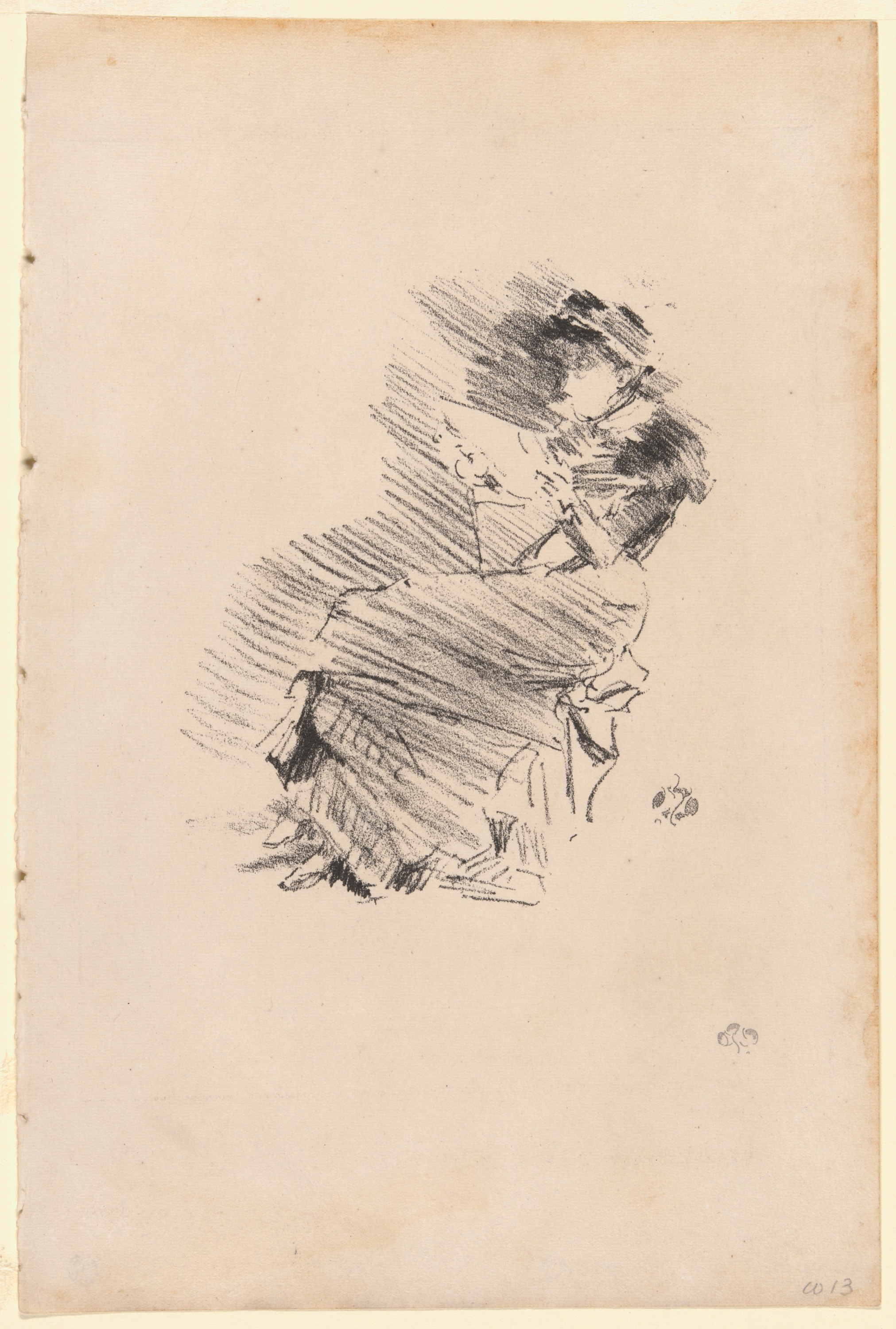
(A friend who read a draft told me her preferred reasons are 3 and 4… I think I agree.)
I appreciate great literature more since my retirement. I suspect this is because I have more time to consciously read these works thereby creating a more immersive experience. There is nothing more satisfying to me than to curl up in my armchair in front of my wood burner on cold, damp days and simply drift away into my reading. Or to languish in my garden in the summer sun amid the sounds of garden birds and bees. Absolute bliss!
I find I appreciate great classic literature all the more by reading modern literature in between.