

There is no indifference to Wuthering Heights. As one of the early reviews (anonymous) said, “Wuthering Heights is a strange sort of book, — baffling all regular criticism; yet, it is impossible to begin and not finish it; and quite as impossible to lay it aside afterwards and say nothing about it.” The Brontë sisters excited a vivid and assured set of reactions from the start. Many assumed they were men (Thackeray didn’t, nor did Elizabeth Barrett Browning: “Plainly Jane Eyre was by a woman. It used to astound me when sensible people said otherwise.”). Some thought all their books were by the same man. In the Quarterly Review it was called “too odiously and abominably pagan to be palatable to the most vitiated class of English readers.”
Below I have compiled some quotations—some short, some long-ish—from the various critical reactions to Wuthering Heights. You will see F.R. Leavis dismissing it as “sport” and Q.D. Leavis trying to downplay the metaphysical aspect, as part of a long arc in which Wuthering Heights was first reacted to morally, then critically, and now historically. I left in F.D.’s comments on Charlotte because they are just so extraordinary. He never fails to leave me blustered. Elsewhere there is talk of toasted cheese, devils, consumption, and the true nature of the book’s religion.
It is often said that the greatness of a classic can be found in the sheer range and plurality of responses it inspires, but one thing you will take away from these extracts is that while many critics are entitled to dislike the book, they allow their feelings to mar their judgements, and to make false or downright unliterary proclamations. How chastising it ought to be to read the history of criticism!
…in spite of its truth to life in the remote nooks and corners of England Wuthering Heights is a disagreeable story. The Bells seem to affect painful and exceptional subjects: – the misdeeds and oppressions of tyranny – the eccentricities of 'woman's fantasy.' They do not turn away from dwelling on those physical acts of cruelty which we know to have their warrant in the real annals of crime and suffering, – but the contemplation of which taste rejects. The brutal master of the lonely house on 'Wuthering Heights' – a prison which might be pictured from life – has doubtless had his prototype in those uncongenial and remote districts where human beings, like the trees, grow gnarled and dwarfed and distorted by the inclement climate; but he might have been indicated with far fewer touches, in place of so entirely filling the canvas that there is hardly a scene untainted by his presence.
Anonymous, probably H. F. Chorley, Athenaeum, 1847
We detest the affectation and effeminate frippery which is but too frequent in the modern novel, and willingly trust ourselves with an author who goes at once fearlessly into the moors and desolate places, for his heroes; but we must at the same time stipulate with him that he shall not drag into light all that he discovers, of coarse and loathsome, in his wanderings, but simply so much good and ill as he may find necessary to elucidate his history – so much only as may be interwoven inextricably with the persons whom he professes to paint. It is the province of an artist to modify and in some cases refine what he beholds in the ordinary world.
Anonymous, Examiner 1848
It is in parts very unskilfully constructed: many passages in it display neither the grace of art nor the truth of nature, but only the vigour of one positive idea, – that of passionate ferocity. It blazes forth in the most unsuitable circumstances, and from persons the least likely to be animated by it.
Anonymous, Britannia 1848
There is an old saying that those who eat toasted cheese at night will dream of Lucifer. The author of Wuthering Heights has evidently eaten toasted cheese. How a human being could have attempted such a book as the present without committing suicide before he had finished a dozen chapters, is a mystery. It is a compound of vulgar depravity and unnatural horrors, such as we might suppose a person, inspired by a mixture of brandy and gunpowder, might write for the edification of fifth-rate blackguards. Were Mr. Quilp alive we should be inclined to believe that the work had been dictated by him to Lawyer Brass, and published by the interesting sister of that legal gentleman.
Anonymous, Graham’s Magazine, 1848
It is 'a dark tale darkly told;' a book that seizes upon us with an iron grasp, and makes us read its story of passions and wrongs whether we will or no. Fascinated by strange magic we read what we dislike, we become interested in characters which are most revolting to our feelings, and are made subject to the immense power, of the book, – a rough, shaggy, uncouth power that turns up the dark side of human nature, and deals with unbridled passions and hideous inhumanities.
Anonymous, Literary World 1848
I was then just completing Jane Eyre, at which I had been working while the one-volume tale was plodding its weary round in London: in three weeks I sent it off; friendly and skilful hands took it in. This was in the commencement of September, 1847; it came out before the close of October following, while Wuthering Heights and Agnes Grey, my sisters’ works, which had already been in the press for months, still lingered under a different management.
They appeared at last. Critics failed to do them justice. The immature but very real powers revealed in Wuthering Heights were scarcely recognised; its import and nature were misunderstood; the identity of its author was misrepresented; it was said that this was an earlier and ruder attempt of the same pen which had produced Jane Eyre. Unjust and grievous error! We laughed at it at first, but I deeply lament it now. Hence, I fear, arose a prejudice against the book. That writer who could attempt to palm off an inferior and immature production under cover of one successful effort, must indeed be unduly eager after the secondary and sordid result of authorship, and pitiably indifferent to its true and honourable meed. If reviewers and the public truly believed this, no wonder that they looked darkly on the cheat.
Charlotte Brontë, 1850
Curious enough it is to read Wuthering Heights and The Tenant of Wildfell Hall, and remember that the writers were two retiring, solitary, consumptive girls! Books, coarse even for men, coarse in language and coarse in conception, the coarseness apparently of violence and uncultivated men – turn out to be the productions of two girls living almost alone, filling their loneliness with quiet studies, and writing these books from a sense of duty, hating the pictures they drew, yet drawing them with austere conscientiousness! There is matter here for the moralist or critic to speculate on.
George Henry Lewes, Leader 1850
Wuthering Heights – we know little of Agnes Grey – is one of the most repellent books we ever read. With all its talent – and it has much – we cannot imagine its being read through from any fascination in the tale itself. The powers it displays are not only premature, but are misdirected. The characters sketched are, for the most part, dark and loathsome, while a gloomy and sombre air rests on the whole scene, which renders it anything but pleasing …
Anonymous, Electric Review 1851
I’ve been greatly interested in Wuthering Heights, the first novel I’ve read for an age, and the best (as regards power and sound style) for two ages, except Sidonia. But it is a fiend of a book, an incredible monster, combining all the stronger female tendencies from Mrs Browning to Mrs Brownrigg.* The action is laid in Hell, – only it seems places and people have English names there. Did you ever read it?
D.G. Rossetti, letter, 1854
*Elizabeth Brownrigg, midwife, hanged in 1767 for murdering Mary Clifford, a workhouse apprentice.
From the first we breathe the fresh dark air of tragic passion and presage; and to the last the changing wind and flying sunlight are in keeping with the stormy promise of the dawn. There is no monotony, there is no repetition, but there is no discord. This is the first and last necessity, the foundation of all labour and the crown of all success, for a poem worthy of the name; and this it is that distinguishes the hand of Emily from the hand of Charlotte Brontë. All the works of the elder sister are rich in poetic spirit, poetic feeling, and poetic detail; but the younger sister's work is essentially and definitely a poem in the fullest and most positive sense of the term.
A.C. Swinburne, Athenaeum 16 June 1883
As the term, classical, has been used in a too absolute, and therefore in a misleading sense, so the term, romantic, has been used much too vaguely in various accidental senses. The sense in which Scott is called a romantic writer is chiefly this; that, in opposition to the literary tradition of the last century, he loved strange adventure, and sought it in the Middle Age. Much later, in a Yorkshire village, the spirit of romanticism bore a more really characteristic fruit in the work of a young girl, Emily Brontë, the romance of Wuthering Heights; the figures of Hareton Earnshaw, of Catherine Linton, and of Heathcliff-tearing open Catherine’s grave, removing one side of her coffin, that he may really lie beside her in death – figures so passionate, yet woven on a background of delicately beautiful, moorland scenery, being typical examples of that spirit.
Walter Pater, Appreciations, 1889
It is this suggestion of power underlying the apparitions of human nature, and lifting them up into the presence of greatness that gives the book its huge stature among other novels. But it was not enough for Emily Brontë to write a few lyrics, to utter a cry, to express a creed. In her poems she did this once and for all, and her poems will perhaps outlast her novel. But she was novelist as well as poet. She must take upon herself a more laborious and a more ungrateful task. She must face the fact of other existences, grapple with the mechanism of external things, build up, in recognizable shape, farms and houses and report the speeches of men and women who existed independently of herself. And so we reach these summits of emotion not by rant or rhapsody but by hearing a girl sing old songs to herself as she rocks in the branches of a tree; by watching the moor sheep crop the turf; by listening to the soft wind breathing through the grass.
Virginia Woolf, The Common Reader, 1924
Finally, Emily Brontë does away with the most universally accepted of all antitheses—the antithesis between life and death. She believes in the immortality of the soul. If the individual life be the expression of a spiritual principle, it is clear that the mere dissolution of its fleshly integument will not destroy it. But she does more than believe in the immortality of the soul in the orthodox Christian sense. She believes in the immortality of the soul in this world. The spiritual principle of which the soul is a manifestation is active in this life; therefore, the disembodied soul continues to be active in this life. Its ruling preoccupations remain the same after death as before. Here she is different from other Victorian novelists, and, as far as I know, from any novelists of any time. Emily Brontë does not see human conflict as ending with death. Catherine Earnshaw dreams that she goes to heaven, but is miserable there because she is homesick for Wuthering Heights, the native country of her spirit. Nor is this a parable: it is a sort of prophecy. For when in fact she comes to die, her spirit does take up its abode at Wuthering Heights. And not just as an ineffective ghost haunting as much as in life she exerts an active influence over Heathcliff, besieging him with her passion.
Thus the supernatural plays a different part in Wuthering Heights from that which it does in other novels. Most novelists, intent on trying to give a picture of life as they know it, do not bring in the supernatural at all. Those who do, either use it as a symbol, not to be believed literally, like Nathaniel Hawthorne—or like Scott, as an extraneous anomaly at variance with the laws of nature. With Emily Brontë it is an expression of those laws. It is, in truth, misleading to call it supernatural; it is a natural feature of the world as she sees it.
Lord David Cecil, Early Victorian Novelists, 1934
NOTE: THE BRONTËS
It is tempting to retort that there is only one Brontë. Actually, Charlotte, though claiming no part in the great line of English fiction (it is significant that she couldn’t see why any value should be attached to Jane Austen), has a permanent interest of a minor kind. She had a remarkable talent that enabled her to do something firsthand and new in the rendering of personal experience, above all in Villette.
The genius, of course, was Emily. I have said nothing about Wuthering Heights because that astonishing work seems to me a kind of sport. It may, all the same, very well have had some influence of an essentially undetectable kind: she broke completely, and in the most challenging way, both with the Scott tradition that imposed on the novelist a romantic resolution of his themes, and with the tradition coming down from the eighteenth century that demanded a plane-mirror reflection of the surface of ‘real’ life. Out of her a minor tradition comes, to which belongs, most notably, The House with the Green Shutters.
F.R. Leavis, The Great Tradition, 1948
…they are figures that arise on and enact their drama on some ground of the psychic life where ethical ideas are not at home, at least such ethical ideas as those that inform our ordinary experience of the manners of men. They have the “anonymity” of figures in dreams or in religious ritual. The attitude toward life that they suggest is rather one of awed contemplation of an unregenerate universe than a feeling for values or disvalues in types of human intercourse. It is an attitude that is expressed in some of the great Chinese paintings of the Middle Ages, where the fall of a torrent from an enormous height, or a single huge wave breaking under the moon, or a barely indicated chain of distant mountains lost among mists, seems to be animated by some mysterious, universal, half-divine life which can only be “recognized,” not understood.
Dorothy Van Ghent, The English Novel: Form and Function, 1953
No mystical explanation is needed for … Catherine Earnshaw—though it is natural that at that date Emily Brontë should feel obliged to provide something of the kind, and inevitable that it should take the form of not very impressive rhetoric (in Chapter IX, ‘ “If all else perished and he remained” ’ etc., and elsewhere). Natural too that Emily Brontë should have had difficulty in explaining even to herself her genuine insights and that she should be driven to attach, to the delicately truthful notation of them in action and dialogue, explanations of them as ‘poetry’, a prose rhetoric of declamation which is in resonance with much that is unsatisfactory in the rhetorical verse of the Gondal cycle. It is very unfortunate that the brief, and on the whole misleading, ‘metaphysical’ parts of Wuthering Heights should have been not only overrated but universally seized on as a short cut to the meaning, the significance of the novel (to the virtual exclusion of the real novel enacted so richly for us to grasp in all its complexity). We might consider as a related weakness Heathcliff’s mainly melodramatic explanations of himself, Heathcliff being made up of so many inconsistent parts that the novelist evidently was in some perplexity to make him cohere enough to make an impressive final appearance and exit. [In contrast to her carelessness about Heathcliff we must note the care she took to make plausible Lockwood’s burying himself at Thrushcross Grange, being kept there by illness to hear Nelly’s long narration, and returning for the conclusion of the Linton-Earnshaw history, as also her providing an explanation of Nelly’s being more sensitive and better educated than an ordinary housekeeper, as she needs to be.]
Q.D. Leavis, ‘A fresh approach to Wuthering Heights’, 1969
For just as one of Frankenstein’s most puzzling traits is the symbolic ambiguity or fluidity its characters display when they are studied closely, so one of Wuthering Heights’s key elements is what Leo Bersani calls its “ontological slipperiness.” In fact, because it is a metaphysical romance (just as Frankenstein is a metaphysical thriller) Wuthering Heights seems at times to be about forces or beings rather than people, which is no doubt one reason why some critics have thought it generically problematical, maybe not a novel at all but instead an extended exemplum, or a “prosified” verse drama. And just as all the characters in Frankenstein are in a sense the same two characters, so “everyone [in Wuthering Heights] is finally related to everyone else and, in a sense, repeated in everyone else,” as if the novel, like an illustration of Freud’s “Das Unheimlische,” were about “the danger of being haunted by alien versions of the self.” But when it is created by a woman in the misogynistic context of Western literary culture, this sort of anxiously philosophical, problem-solving, myth-making narrative must — so it seems — inevitably come to grips with the countervailing stories told by patriarchal poetry, and specifically by Milton’s patriarchal poetry.
Sandra M Gilbert and Susan Gubar, The madwoman in the attic: the woman writer and the nineteenth-century literary imagination, 1979
Or perhaps, Mr. Linton hints with his second, ambiguous designation, the dark-skinned child arrived in Liverpool as a result of the trade for which the city was most famous in the late eighteenth century. In 1769, the year in which Mr. Earnshaw found Heathcliff in the Liverpool streets, the city was England’s largest slave-trading port, conducting seventy to eighty-five percent of the English slave trade along the Liverpool Triangle, exchanging manufactured goods from the Mersey region for West African slaves, who were exchanged for plantation crops in the American and the Spanish American colonies. Perhaps the young Heathcliff, Linton suggests, is the cast-off offspring of one of those slaves, or “an American or Spanish castaway.” Thousands of black slaves were living in England itself in the late eighteenth century, concentrated particularly in the port cities of London, Liverpool, and Bristol, to which they had been brought by captains of slaving vessels and planters, government officials, and military officers returning from the West Indies.
Susan Meyer, Imperialism at home: race and Victorian women’s fiction, 1996
Schleiermacher, commenting on his rejection of the literal existence of Satan, wrote in The Christian Faith that ‘the Scriptures always refer us to our own inner life’. The use of the Bible in Wuthering Heights is predicated upon a similar assumption. Biblical texts are taken as foundational rather than authoritative: that is, they provide narrative frameworks for the exploration of the spiritual life, rather than doctrinal statements that define the limits and characteristics of that life. The collapsing church at Gimmerton, the reluctance of the parishioners to contribute to the financial support of a minister and the fact that, as Thormählen says, ‘the only character ... who repeatedly and passionately expresses religious sentiments is a canting rascal’ are typical of the novel’s rejection of dogmatic forms of religion, which are generally portrayed as either irrelevant or dangerous. Nevertheless, as I have attempted to demonstrate, liberal Protestant theology allowed dogma to be rejected while the Bible and its key narratives of fall and redemption were retained, though with their meanings altered.
And…
It seems to me, however, that Wuthering Heights, for all its supposed mysticism, is firmly located in a specific Protestant context: the historical period at which liberal, Romantic Protestantism sought to counter the challenges of Enlightenment Rationalism by redefining religious epistemology and emphasising the personal, intuitive relationship with the divine. It would be an oversimplification to assume that Wuthering Heights displays a rejection of religion. The novel reinterprets biblical narratives, finding new meanings in the sacred Christian texts and making all external religious authorities secondary to the personal God-consciousness. It draws upon Evangelical approaches to the Bible, but its final position is one more akin to that of thinkers such as Schleiermacher and Blake, each of whom sought to reinterpret, not reject, Christianity. The novel’s theology is neither orthodox nor systematic, but it, nevertheless, belongs within the history of early nineteenth-century Protestantism.
Simon Marsden, ‘VAIN ARE THE THOUSAND CREEDS’: WUTHERING HEIGHTS, THE BIBLE AND LIBERAL PROTESTANTISM, Literature & Theology, 2006
That religion had become more or less problematic in most Western societies by the end of the eighteenth century, can, of course, be put down in large measure to the growing influence of the Enlightenment and the concomitant spread of secularism. Such factors undoubtedly help to throw some light on the inherent liberalism of Nelly Dean’s Christianity.* But if there is thus something peculiarly ‘modern’ about Nelly’s religious outlook, it is Lockwood who, with the hotchpotch of religious, superstitious and secular notions co-existing uneasily in his otherwise well-stocked mind, seems to be par excellence the precursor of the type of cultured persons who, though avowedly agnostic or even atheistic, nevertheless have their pseudo-religious moments, even if these constitute little more than paying visits to historical church buildings. This idea is to some extent suggested towards the end of Wuthering Heights when we find ourselves wondering whether Lockwood’s grumbling to himself about Cathy and Hareton with the words, ‘They are afraid of nothing. [. . .] Together they would brave Satan and all his legions’ (WH, p. 337) is not an unconscious seeking of solace in religion for another disappointment in love, just as we may well have been wondering by then, and will again wonder while reading the final paragraph, whether behind the unwonted interest that this apparently unbelieving aesthete has been taking in the decaying Gimmerton Kirk and its churchyard, there does not lie a certain nostalgia for a lost religious faith.
Graeme Tytler, The Role of Religion in Wuthering Heights, Brontë Studies, 2007
* “Nelly’s liberalism is especially noticeable when her advice to Heathcliff in the last days of his life includes this detail about the Bible: ‘Could it be hurtful to send for some one — some minister of any denomination, it does not matter which, to explain it, and show you how very far you have erred from its precepts, and how unfit you will be for its heaven, unless a change takes place before you die?’”
I always have wondered why Pater found the Romantic spirit more in Hareton and the younger Catherine than in Catherine Earnshaw, but I think now that Pater’s implicit judgment was characteristically shrewd. The elder Catherine is the problematical figure in the book; she alone belongs to both orders of representation, that of social reality and that of otherness, of the Romantic Sublime. After she and the Lintons, Edgar and Isabella, are dead, then we are wholly in Heathcliff’s world for the last half-year of his life, and it is in that world that Hareton and the younger Catherine are portrayed for us. They are—as Heathcliff obscurely senses—the true heirs to whatever societally possible relationship Heathcliff and the first Catherine could have had.
Harold Bloom, Bloom’s Modern Critical Interpretations, 2007
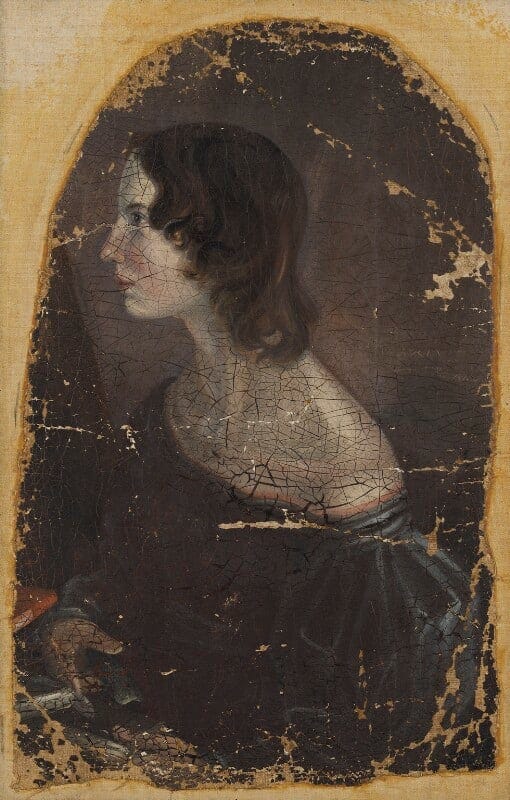
"It is 'a dark tale darkly told;' a book that seizes upon us with an iron grasp, and makes us read its story of passions and wrongs whether we will or no. Fascinated by strange magic we read what we dislike, we become interested in characters which are most revolting to our feelings, and are made subject to the immense power, of the book, – a rough, shaggy, uncouth power that turns up the dark side of human nature, and deals with unbridled passions and hideous inhumanities."
Absolutely the best possible review of Wuthering Heights. Really enjoyed the contemporaneous reviews - thank you!
Fascinating! Thank you for this.
Critical reception through the years always very interesting.
More of this sort of thing please!