

I have already reviewed Sovej Balle’s On the Calculation of Volume and recorded a podcast about it with Rebecca Lowe in which we discussed the novel’s philosophical implications. Today I want to write about a specific moral question the novel brings up.
Philosophical narration
On the Calculation of Volume is not just about philosophical questions: it is written in a philosophical manner. Look at this paragraph from the third volume.
I have met someone who remembers. Yesterday. That is to say, I met him yesterday. But he remembers, too. He remembers that we met yesterday. Actually, we met the day before, but we didn’t speak until yesterday.
Tara narrates with the distinction-making habit of a philosopher. She keeps clarifying her meaning, anticipating possibly obtuse accuracies. The drama is her thought process.
Here’s another example.
He discovered that much of what he had previously read had not stuck in his memory. It had all been sorted into what he could use, which was funneled into his work and what he had no use for. Both types were forgotten.
Like a philosopher, Tara is constantly interested in questions of being. She pares things down to their smallest natural unit. She wishes to know what exactly everything and everyone is. What sort of being does it have?
The plot is a series of nested thought experiments. The overarching experiment is: What happens if a woman wakes up and realizes she is living in a time loop where the day resets for everyone else, but for her time runs normally?
The related question I want to discuss today is:—What do we owe each other once we become different sorts of people?
I don’t mean “different sorts of people” in a colloquial way, such as a person whose interests or habits change, but in the philosophical sense of being.
Are all people the same sort of being?
Does there come a point when someone is no longer a person in the sense that the people they associate with are persons, and if so, what are they owed by their friends and family?
Consider children and the elderly. Time runs differently for them than it does for the middle-aged. For young children, words like “not on this day” can mean anything from yesterday to several months ago. For the elderly, time passes more quickly. One of the great pleasures of intergenerational friendships and acquaintances is the ability to meet across these time differences.
Now consider a starker case: people who lose their sense of time, their sense of the future, and perhaps of the past.
The obvious example is dementia. There comes a point when a person with dementia is no longer the same person they were before the dementia. They lack psychological continuity: memories are gone, they don’t recognize people.
But there is also a sense in which they are a fundamentally different type of person. They have different personhood than a “normal” adult.
People with sufficiently advanced dementia can become upset and alarmed in those moments when they realize what is wrong with them—when they step back, for a moment, into the way the non-demented experience time without those limitations.
The same is true of many people who are suffering from various sorts of mental illness or who are in an asylum.
If these differences are extreme enough, we think of each other as different types of person. The fundamental equality of all people is compatible with the idea that children and adults are not the same sort of persons. We are one species with many varieties.
Do we have different obligations to people who are a different type of person to us?
It is self-evident that normal adult persons have different obligations to people in these conditions than they do to each other. I cannot simply leave my children to act as if they are adults, and we cannot leave people with dementia to do that either.
Colleagues assume they are all experiencing time in a standard way, and that a standard level of responsibility can be reasonably assumed of each other. I know you will turn up to the meeting at 14.00, or that you can reasonably be expected to. For a child or someone with a serious mental health problem, that cannot be assumed to the same extent.
The reason why we might not think this is a good distinction is that personhood changes slowly: children gradually grow up into our sense of time and obligations; dementia takes hold over months or years. Sometimes it is possible to change a person’s personhood very quickly, as with a lobotomy, or a personality-altering accident. But in general, we become different sort of persons without quite realising it.
Classical liberal philosophy insists on an equality of all people, irrespective of their type of personhood. The speechless autistic, the asylum-bound catatonic, the unmoving elderly person, the infant, all these are held to deserve equal respect and care. But that often entails acting differently towards them than we would towards people not in those conditions.
This is a question of degrees of independence. It is commonly judged that without sufficient independence, we become ontologically diminished. But the imprecision of these states makes it important to discuss exactly what obligations we owe each other. (And what obligations we have towards our “future selves”.)
The time-loop experiment
In On the Calculation of Volume, Balle runs this thought experiment with a married couple. They are both of sound mind, healthy, and fully independent. But for one of them, time resets every day, and for the other, although it is always 18th November (with unchanging weather), time carries on.
For Tara, time continues as normal despite the day resetting every night. Her hair grows longer every day. She has to cut her nails. She gets older. For Thomas, although he ages by one day, the next morning he is back where he started. Thomas can recognize Tara, but when she explains the time-loop, he becomes upset and disturbed. Both of them suffer from knowing that they no longer live in the same sort of time.
The question Balle poses is whether Thomas is still a person in the same sense that Tara is a person. If time runs completely differently, how can they be the same sort of being?
She knows that she will get older: he no longer has true beliefs about her future. This is akin to a married couple where one has dementia or one becomes mentally unwell (as in so many Victorian novels). But Balle poses the most difficult question: Thomas is still a “full” person in his time zone, but not in Tara’s.
Tara regularly feels obliged to go back to Thomas, but also to leave him alone. She is conflicted in her obligation to him as a person she lives with and loves: should she tell him the truth and upset him, or leave him happy in his time loop? He thinks she is on a business trip. Is it kinder to reveal herself, or to leave him in “his reality”.
Balle seems to be saying that, yes, under conditions of sufficient difference, we do owe different duties to other people once they are not the same sort of person as us, even though we are still moral equals (as the end of the book makes clear: Tara may, in some ways, feel more obliged to strangers than she used to). Tara still holds Thomas as a moral equal, and is drawn back to him, but she concludes (in the first three volumes, at least) that she not only has fewer duties towards him now that they live in different times, but that she cannot interact with him as if he was the same sort of person as her.
The way we experience time is fundamental to how we perceive each other and to what duties we feel we owe each other.1
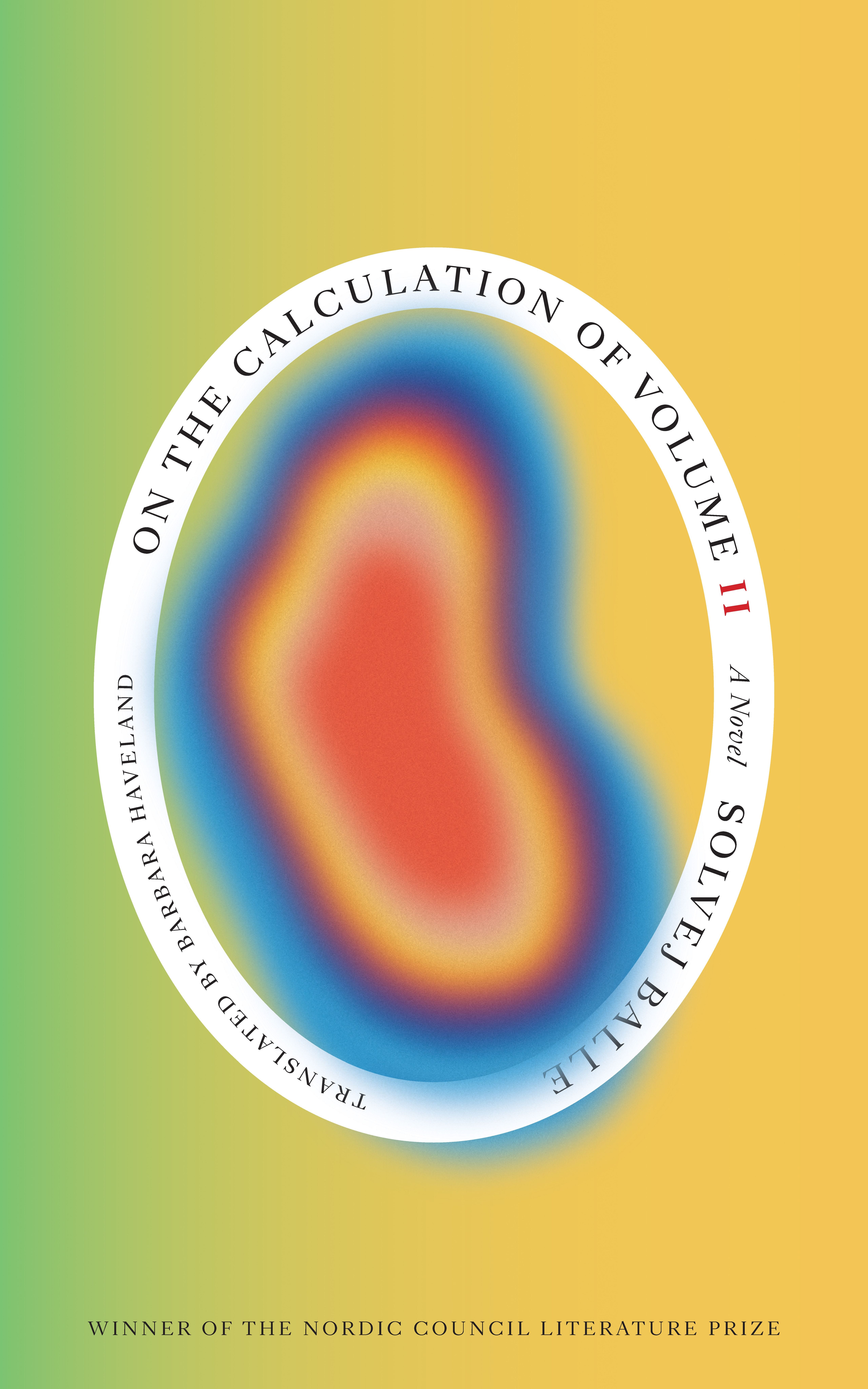
In the first three volumes, we have the narrative from Tara’s diary. So while it is unlikely that this is all “in Tara’s head”, it is possible that Tara is the one who is, for example, living in an asylum, and that her diary is a fabrication.
One possible path forward for the novels is that Balle will show us the story from Thomas’s perspective. This also seems unlikely, but the moral questions of what we owe to each other are fundamental to Balle’s story and as Tara keeps changing so will her conflict about her relationship to Thomas.
What Balle exposes is that becoming “different sorts of people” doesn’t dissolve obligation, it distorts it. What we owe each other no longer rests on reciprocity, shared time, or mutual expectation. Across the lifespan, we slip out of sync quietly. Childhood, illness, ageing all alter the terms long before love or recognition disappear.
The moral strain isn’t working out whether we owe something, but how to live with duties that can’t be balanced or discharged. Care becomes asymmetrical, repetitive, and wearing. The novel refuses comfort because there is none to offer. What we owe each other, once we become different sorts of people, is not equality of exchange, but the harder work of remaining ethically present in conditions that no longer settle.
“What happens if a woman wakes up and realizes she is living in a time loop where the day resets for everyone else, but for her time runs normally? “
You know, my understanding of the book is “What happens if a woman wakes up and realizes she is living in a time loop where the day resets for her, but for everyone else time runs normally?”