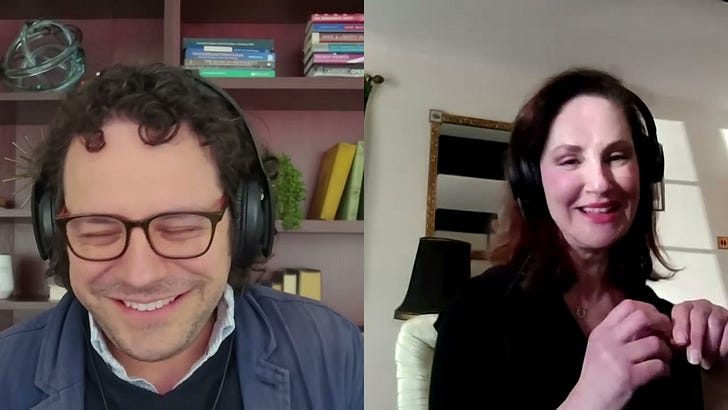

What a pleasure it was to talk to Ruth Scurr, author of John Aubrey: My Own Life, about the great man himself, who was born four hundred years ago this month. Aubrey is best know for his splendid Brief Lives but he preserved a huge amount of knowledge which historians still rely on. There are many things we only know because of Aubrey—things about people Hobbes and Hooke, Stonehenge, architectural history. We also talked about Janet Malcom, the genre of biography, and modern fiction.
HENRY OLIVER: Today I’m talking to Ruth Scurr. Ruth is a fellow of Gonville and Caius College in the University of Cambridge, where she specializes in the history of political thought. But more importantly, she is the biographer of John Aubrey, one of my favorite writers, who is celebrating 400 years of his birth this year. Ruth, hello.
RUTH SCURR: Hi, Henry.
OLIVER: Can you begin by giving us a brief life of John Aubrey?
SCURR: So born in 1626, 17th-century antiquarian, collector, early fellow at the Royal Society. Well connected to scientific and the literary circles of his day. Someone who sees himself more as a whetstone: a person who could help sharpen other people’s ideas. As a recorder, someone who treasured the details, the minutiae of the lives he encountered, and pass those details on to posterity.
He’s nonjudgmental, witty, kind, inventive. Very, very sociable. Very good friend. But he’s hopeless at self-advancement. Begins his life as a gentleman, but he inherits debts from his father and he can never really achieve financial stability.
Never marries, ends up homeless and worried about being arrested for his debts. And he has to sell his precious collection of books periodically through his life to raise some much-needed cash, but he keeps his manuscripts safe. And he does this at the end of his life by putting them into the Ashmolean Museum in Oxford, afterwards known as the Bodleian, and where they still are today.
OLIVER: So how many manuscripts did he save for us?
SCURR: Of his own manuscripts or other people’s manuscripts?
OLIVER: Other people’s. Because he was collecting all sorts of precious things.
SCURR: Oh, absolutely. He was the person who, when someone died, would go round if he could to their house and ask what was happening about the manuscripts. He’s particularly concerned, obviously, with his friends. So he had a close relationship with Robert Hooke and he wanted to make sure that Hooke’s many inventions and scientific contributions were recorded.
And he has this wonderful line in the life of Hooke where he says, “It’s so hard to get people to do right by themselves.” And in his childhood, he had seen the fallout from the dissolution of the monasteries. He’d become very troubled by the habit of using manuscript pages which had been displaced in the dissolution. He saw them being used in schools to cover textbooks. He saw them being used to—or he heard about them at least being used—to wrap up gloves or to create stoppers in bottles. And this really troubled him from, from a very early age.
And I think he has another beautiful line where he says after the dissolution of the monasteries, whereas these manuscripts had been kept safe, they flew around like butterflies. And he wanted to catch them and preserve them and to stop people letting the papers and the precious manuscripts of their relatives do the same. So he was very instrumental in rescuing manuscripts, other people’s manuscripts. And then fortunately with his own, he knew Ashmole and they had the shared astrology interest.
Ashmole was a very different sort of person who basically said to Oxford, look, I’ll give you my collections, but there has to be a museum for them. And luckily Aubrey was able to use that museum as a safe place for his own manuscripts.
OLIVER: So we know things about Robert Hooke and Thomas Hobbes and all these other luminaries of the 17th century, thanks to Aubrey. What else do we know, thanks to him?
SCURR: We know what Stonehenge looked like in his day because he was a very good draftsman. He drew pictures of Stonehenge. He’d grown up in Wiltshire, he’d known those stones from childhood. He understood that Avebury nearby was a comparable monument, and he took Charles II to see it, and persuaded the king to get the locals to stop breaking up the stones, to reuse the stones, which was the practice.
He also made drawings of windows because he was possibly the first person as a historian of architecture to realize that you could date buildings by the style of their windows. So we have those drawings. He was also interested in the history of costume. He did a survey of Surrey, of Wiltshire.
So these are all sort of focuses in his manuscripts and people who’ve used them come to really appreciate how pioneering Aubrey was. But of course he doesn’t finish them. He doesn’t publish those manuscripts. So it’s very easy really to overlook the innovation and the contribution and the wonderful imagination that he had.
OLIVER: You mean if he’d published a book, he would have a much bigger reputation?
SCURR: Well, I think there’s two things. Yes, but in a sense, you know, the Brief Lives have been published after his death in various forms. But I think one of the most engaging things about Aubrey is that he’s a modest and self-effacing person. And I already mentioned the idea he had of himself as a whetstone to other people’s talents.
There aren’t that many people—certainly not in my life, maybe there are in yours—but who would effortlessly describe themselves as a whetstone to other people’s talents. Most people want to be at the center. They’re happy to have clever and literary friends, but they want a place there at the table as well.
And Aubrey really was very, very invested in helping other people to do right by themselves, as he said about Hooke. And he very movingly—this is one of the inspirations really for my book that I wrote about him—he spent all that time collating the information about other people’s lives. And for his own life, he puts down a few lines, a couple of facts and everything.
He says, well, this could be used as the binding of a book. You know, it’s sort of waste paper really. So he doesn’t write his own life. Other people’s lives he’s going to convey to posterity. He doesn’t see his own life as really being at that level of needing the attention that he gave, for example, to Milton or to Harvey or Hobbes, as you mentioned.
OLIVER: He’s born the year after Charles I comes to the throne. So he obviously lives through a fairly terrible period of history and very tumultuous, changeable in lots of different ways. The new world, the new learning, new religion, new politics, everything is changing. And he’s obsessed with the old ways. How did these historical events—is he reacting against his time? Is he just born in a lucky time in a way?
SCURR: So he was a student in Oxford during the Civil War. And you are right. The upheaval is very disturbing for his generation. It means he gets called back from Oxford by his father because it’s dangerous to be there. And he’s really, really upset by that because, it’s like us, when we were students or our students today. You finally get away from your family and there you are in this place with all these exciting peers and access to books that you’ve never had before or at least to that extent, libraries, et cetera.
And suddenly there’s a war on and you’ve got to go home. So there’s that disturbance. Then there is the fact that actually he was close to Hobbes. Hobbes actually was a Malmesbury man, so Wiltshire, very near Aubrey. And had come back to visit the school where Hobbes had been, which was where Aubrey was at school. And so they had met in Aubrey’s childhood, and then he would’ve been aware of Hobbes having to go into exile. And then Hobbes coming back, of course. And that’s a very important time in his life.
And it’s not an accident that Hobbes asks Aubrey to write his life because Hobbes knows how careful Aubrey is. And he knows that Aubrey has information that he can convey in the life. So that is really the first life that he writes. And it’s different from the others. There’s a different sort of origin. And it’s after he’s done that, that he starts to think, well, actually, you know, I can think of at least 50, 55 other people’s lives. And now I’ve got my hand in, I might start on those as well.
So in that period of upheaval there are wonderful stories. Maybe we’ll look at some of the Brief Lives, but there’s this amazing story that he captures in the life of William Harvey, which is a description of Harvey having been at the battlefield in Edgehill and recording one of the people who had been fighting and wounded, surviving by having the good sense to pull a dead body on top of himself, to keep himself warm on the battlefield. Things like that, which make the war very much alive. This is brutal, this civil war. It’s a long time ago and we think we passed over it, but the really brutal reality of war is captured in the Brief Lives through the anecdotes and the stories of that generation that Aubrey preserves.
OLIVER: How English is he?
SCURR: Well, as opposed to what?
OLIVER: Welsh.
SCURR: Okay. Well he goes to Wales often and is very interested in Wales. I think he sees himself as English. I think he’s very invested in English customs and stories and people. He’s not nationalistic in any sense like that. What he’s interested in is the inherited ways of living.
And he’s very interested in language and different dialects. That’s one of the other things; he starts to collect different words. He was very aware of the Cornish dialect, for example. So I’d say it’s a very decentered England that’s rooted in customs, traditions, inherited stories.
And there’s a big place there for both the future and the past. Huge excitement about The Royal Society, English science, what can be achieved through the sharing of knowledge. But again, Aubrey’s not an insular person in that respect. So, he wished he could go on the Grand Tour when he was a student. He would really have loved to have done that. It’s one of the things that he actually talked to Harvey about, going and traveling as his contemporaries, for example, John Evelyn did.
But Aubrey actually says—this is very typical of Aubrey—that his mother persuaded him out of it. His mother didn’t want him going off on the Grand Tour. She was afraid for him. And he regretted it later in life. But it’s so typical of Aubrey that he would pay attention to his mother and her anxieties.
OLIVER: This interest in the present and the past—so he loves all the history, but he’s in the Royal Society. One thing I like in your book is the way he talks about, oh, my grandfather still dresses in the old ways, like he’s an Elizabethan, but at the same time he’s doing a very sort of Baconian project. He’s influenced by Bacon. Is Aubrey a sort of paradox? Does this make sense in a way?
SCURR: Only in so far as lots of other people are as well. I was just looking at the Harvey life, and there’s a story there about how when Harvey was a student he was meant to be setting sail with some friends. And he’s stopped and told, “No, you can’t get on this boat. You have to wait.” And he says, “Well, what have I done wrong? Why can’t I get on this boat?” He said, “No, honestly, we need to have a word with you. You are not going on the boat.” And then the boat sinks, everyone dies. And this is apparently because the guy who stopped him had a dream that he needed to stop Harvey going. Harvey told Aubrey that story.
Harvey also is—as Aubrey sort of slightly inaccurately puts it, is the inventor of the circulation of the blood. And you think, well, that’s going a little bit far, perhaps not actually the inventor, but certainly the first person to discover, to understand about circulating blood.
So there’s another example of someone’s life includes, I wouldn’t be alive unless somebody had had this premonition and dream that I was about to die. Which is from a completely different world, from the rational, scientific understanding of the body or the other scientific advances that are going on at the time.
OLIVER: And Aubrey’s happy to just sort of coexist with both of those because of his interest in astrology?
SCURR: And not just astrology. He’s very interested in astrology and nativities, as he called it. In some of the Brief Lives, you see the sort of recording of the information that would be needed to cast an astrological shape for the life.
But he is also interested in the fact that people believe in fairies and ghosts. He doesn’t look down on those beliefs. Nor does he say that he necessarily believes in the presence of fairies or the interventions of the supernatural. But he’s got a very open mind in relation to that. And certainly being simultaneously interested in early astronomy and astrology together is, to us, very striking. But then I think it was much more normal.
OLIVER: Why do you think he resisted ordination?
SCURR: Because he said the cassock stinks. He considered ordination several times because he knew it would be a living, it would be a way of being able to have some income, probably not very onerous duties. Some of his friends say to him, “Come on, Aubrey, it really won’t be that much work. You’ll just get a curate who’ll do it all, and you’ll get the living, and then you won’t have to be worrying all the time about your paycheck. You haven’t got a paycheck. It would be a living coming to you.”
And on one occasion, one of the reasons he gives for not doing that is he thinks well, what if there’s another religious upheaval and I have to change sides again? What if Roman Catholicism comes back and I ended up on the wrong side of it?
And, again, would it really have been that difficult to go with the flow? But I think, in his own way, he had found his way of living, which was intensely sociable. And perhaps he didn’t want that constraint of being a member of the clergy around him.
OLIVER: Do you think he was a nonbeliever?
SCURR: Well. I don’t know the answer to that. I don’t think so at all. I think he probably was a straightforward Christian believer. I think perhaps he’d seen enough of the religious conflicts and wars to be afraid of fanaticism on both sides. And that would fit certainly with his relationship with Hobbes.
I don’t have any reason to think he’s an atheist. He’s got a beautiful way of writing about death and there’s this wonderful line he has when he says, “God bless you and me in our in and out world.” So the fact that we refer to his works as the Brief Lives because they’re short, but everybody’s life is brief.
And even those who live, as he did, into his 70s, it feels brief. And there’s these very moving descriptions of him at funerals. I was thinking about this the other day because he often records where someone’s buried. And I recently wrote my first entry for the Dictionary of National Biography. I did the one for Hilary Mantel, which was a great honor and extremely interesting.
And when I came back to the Brief Lives, I thought, gosh, I wish I’d put at the end of that DNB entry where she’s actually buried, that would’ve made sense to do that. And I didn’t do it because the DNB is quite formalized; they’ve got their formula and you need to stick to it.
But maybe I’ll add it in. Because it seems to me very moving to record where people are actually buried. That would fit I think with her religious sensibility, with a regard for the afterlife, and with the rites of passage at the end of life.
OLIVER: What is it that makes Aubrey such a good biographer?
SCURR: So I think the modesty that is in his spirit, the noticing, the minutiae that he both notices and values and his wit. He has a sensitivity to these funny and revealing quirky stories about the people that he knows. Or he finds them in the stories he’s told by people who did know them.
There’s an eyewitness account aspect to it as well. Or at least it’s an oral history. “I was told this by . . .” He’s extremely precise. He’ll try to assemble the facts so far as he can, and then he’ll tell you what people’s close friends said about them, and he will do so very, very carefully so that you know this is a story that he’s been told that he’s passing on.
And then he doesn’t pass moral judgment. He doesn’t adjudicate. And finally, he thinks of himself as doing all of this for posterity and that posterity, i.e. us or the people who come after us, will find things there and he’s not going to tell them what to find. He’s not going to shape the life and say, this is what you should think about it.
He will give you the raw materials, he’ll give you the stories, he’ll give you a flavor of the details of the life, and then posterity can look there and can see, for example, the disagreements between Hobbes and Isaac Newton. There are people who’ve written lives of Hooke and Newton. And there are people who’ve written lives and you can be team Newton or team Hooke. Interestingly, Aubrey is team Hooke. He doesn’t write a life of Newton. And he wants, as I said, to do well by Hooke. But his way of doing that isn’t to say Mr.
Hooke was fantastic and Newton robbed him of lots of his ideas. He says, let me show you, let me assemble and make a catalog, if I can, of all these hundreds of contributions that Hooke made.
OLIVER: When did you discover Aubrey?
SCURR: So I discovered Aubrey because I was reviewing for the LRB, The Biographer’s Tale, and I had come across a really interesting—and it’s still in the introduction to my book—a really interesting reflection on the difference between Aubrey and Lytton Strachey, a reflection made by Anthony Powell, and I had quoted it or alluded to it in my review. And I had gone and started to read Aubrey as a result of that. So I was led to it through reviewing, via Anthony Powell, and then into the Brief Lives.
But then another very strange thing happened, which is I met for the very first time, Janet Malcolm, who is someone who became very important in my life. And because she knew or had been told that I’d written this review, she read the review before we met. And she said to me, she said, “Ruth, I read your review”—and I doubt Janet Malcolm was a massive fan of A.S. Byatt, to be absolutely honest. We never really discussed that further, but she said, “I read your review and I was really interested in this Aubrey. I was so interested in what you quoted about Aubrey and the difference between his biographical approach and Lytton Strachey.”
And then it sort of stuck in my mind and suddenly as I was coming toward the end of my first book, which was a totally different book on Robespierre and the French Revolution, I just knew I wanted to write about Aubrey. And I think at the time my then-husband really thought I’d gone mad actually, because you’re not supposed to do that, are you?
I mean, you’re supposed to stick in your period and certainly build on it. So, you know, a book on Marra or even Napoleon would’ve been okay, that would’ve made sense. But to circle back to the 17th century and write about Aubrey seemed extremely eccentric.
OLIVER: Well, what was Janet Malcolm like?
SCURR: Oh, Janet was absolutely wonderful. She has this reputation of being sort of terrifying. And, of course, I was extremely interested in her forensic examination of biography which we had very interesting conversations about. She was a deeply kind person, extremely nurturing of younger writers, and extremely funny as well.
That’s the other thing that you don’t associate with her sometimes from this sort of public image of a very austere interviewer, The Journalist and the Murderer, In the Freud Archives, et cetera. Actually, she was a really warm and extremely witty person.
OLIVER: A lot of historians don’t think biography is real history. Why do you take biography seriously?
SCURR: Well, Michael Holroyd writes Works on Paper—and I love Michael Holroyd so much. And he has this wonderful line—I won’t remember it exactly—but it’s about biography being the bastard offspring of history and the novel, and both are ashamed of it.
And I think some of those distinctions actually have broken down. I know lots of historians who are very interested in biographical writing. I think it depends. There are certain historical schools that maybe are not so interested in lives.
And to be fair, the history of ideas is—which I belong to, and in a sense I’m a rebel from—is one of those. I remember there coming a point where I had spent so much time thinking about the constitutional ideas for the representative republic in the middle of the French Revolution, that actually the French Revolution could have been happening on Mars for all it mattered about the actual sequence of events. What mattered was the structure of the ideas.
And it’s difficult because the school I belong to in Cambridge wants to put the ideas into context all the time. But again, by context you don’t really mean people’s lives; more the discourses and the conversations and the ideas of the time that are the landscape, the intellectual landscape, if you like.
So I rebelled at a certain point and I was like, well, you know, I’m actually going to go through the revolution day by day because that period is short. And I think it really matters, the lived experience there. I think many, many history books quote Aubrey with enormous respect and say, “as Aubrey says,” or, “according to Aubrey,” and pull those details forwards.
I suppose some history is quite instrumental in its use of biography, so it wants to draw the reader in with a few anecdotes and a little bit of what does somebody wear on their head? And who was their first love, that kind of thing. But it’s perhaps not very engaged with the real work of trying to capture the shape or the feel of a life.
OLIVER: And of a temperament, right? I think one thing biography gives us is that sense that a lot of these big decisions or events in history are quite temperamental. As well as being based in ideas and events.
SCURR: Oh, yeah. Absolutely.
OLIVER: Your life of Aubrey, at one point you tried to write as a novel.
SCURR: Yeah. I had to stop that quite fast.
OLIVER: Why?
SCURR: Because Aubrey is too important. I didn’t want to make up things for him. As someone who’s come right up to that line of the history and the novel, I do think it’s very clear to be on one side or the other. And again, going back to Hilary Mantel, she wrote those wonderful Reith Lectures on historical fiction.
And, like her, I think that it’s not about ignoring the facts or embellishing the facts. It is about the gaps. It’s about imagining what isn’t in the record and should have been, and trying to reconstruct that inside the novel. But at the time, I felt that the gaps with Aubrey didn’t actually matter that much.
There was so much there that I could pull together to give a sense of him and his sensibility. Now actually, scholars in this field will all be very, very keen to advance our knowledge of those gaps. And that’s wonderful. You know, what exactly was Aubrey doing when he visited France? You know, at the time I wrote my book that seemed very unclear.
I think my colleague in Oxford, Kate Bennett, knows that now and will write her own biography. And she will fill in many of these gaps that I sort of happily included in the form that I’d found for his life because giving him that first person voice, I was able to focus on the evidence that I thought had been very underused at that point.
OLIVER: Now Kate Bennett did a wonderful edition of the Brief Lives with lots of excellent footnotes and investigations. And you wrote that it gave us a new understanding of Aubrey.
SCURR: Absolutely. And of the lives themselves. And Kate and I got to know each other and became friends while we were both writing our books. And people we knew before we met were very keen to sort of set us against each other. So they would wind us up. I would meet someone and they’d say, “Ruth, there you are. You’ve written a book about the French Revolution and now you are going to write a book about Aubrey. But don’t you know there is a scholar in Oxford who spent her entire academic life working on Aubrey?” And it built up a picture of fear that you shouldn’t trespass on somebody else’s ground.
And then people would do a sort of reverse thing to her that they would say, “Oh, Kate, gosh, you’ve been working a long time on Aubrey and where is your Clarendon edition after all? And did you know there’s somebody in Cambridge who’s going to write this popular book about Aubrey?”
Anyway, finally we met at a conference and we really actually just liked each other and we decided it’s fine. I was doing my thing. She’s doing something very different. And we became friends, and I see that as a triumph over a sort of more traditional, maybe even dare I say, male and territorial approach to academic life and to knowledge in general actually.
OLIVER: Yeah. Because the two books are great complements to each other. They’re not rivalrous in that sense.
SCURR: Absolutely not. Kate’s book, it’s not just an addition. It’s as much as you can ever do. It’s a reconstruction of the manuscript as Aubrey left it and intended it with all the gaps and the notes to himself to fill this in. And his changes of mind and his deletions and all of that. And so it’s an astonishing thing. Because it’s not just a copy of it. It takes you in, it helps you understand what he was intending with those collections, as you called them, my pretty collections.
And so that edition that she had been working on for a very long time came out in 2015, the same year as my book came out. And it felt like an amazing year for Aubrey. And now, we’ll be celebrating the 400th anniversary of his birth. But that year, 2015, was a very special, obviously for us, but I think for Aubrey more broadly.
OLIVER: How much of an influence has Aubrey had on English biography?
SCURR: As we know, there’s the huge influence in terms of “Aubrey says.” Open any book on the 17th century, and it will be “Aubrey says,” “according to Aubrey,” et cetera. So a huge influence in that respect. With regard to the actual form, I think it’s very, very pervasive and important, and we have to look at it very carefully.
I mentioned earlier the very important difference between what Aubrey does and what Lytton Strachey did. There are some similarities in so far as Strachey will go for the vivid detail. He give you these powerful anecdotes. But actually he spins them as well.
And that’s what Anthony Powell so brilliantly showed. And the example was of Francis Bacon, the life of Francis Bacon who Aubrey has a description of Bacon right at the end of his life, the circumstances leading up to Bacon’s death where he is on Highgate Hill and he decides to conduct an experiment to see if snow will preserve a chicken or a hen as well as salt. So he is stuffing this carcass of the hen with snow. Catches a cold, ends up having to stay with a friend, sleeps in a bed that hasn’t been aired for a long time, and dies. And that’s the end of Lord Bacon.
So Aubrey gives us all this, and then along comes Lytton Strachey. And he takes it, and he says an old man disgraced, shattered, alone on Highgate Hill, stuffing a dead foul with snow, which makes it sound like he’s lost his mind at the end of his life. And then Anthony Powell examined that and he said, look, the story of stuffing the hen with snow is Aubrey’s.
Bacon was certainly an old man at the time of the incident. He was disgraced. He may have been shattered. No doubt at times he was alone. But Aubrey’s story of stuffing the foul on Highgate Hill shows Bacon accompanied by the king’s physician, conducting a serious experiment to test the preservative properties of snow and, on becoming indisposed, finding accommodation in the house of the Earl of Arundel.
And so you take that same story and, as Anthony Powell says, you combine the story, the fragment preserved by Aubrey with some epithets, and you convey an oblique point. It’s a biographical method for actually building up a picture of the person. And it really matters what you do with those fragments.
So I think the fact that Aubrey is pretty pure about this, he gives you the fragments and another biographer might come along and think, okay, what’s going on here with Venetia Stanley and dying in her bed after drinking Viper wine? Let’s build up a story about that. And there was a rumor at the time that her husband had murdered her, et cetera. Aubrey doesn’t comment. He just gives you the fragment. And I think afterwards, people have not only used the fragments in their own work, but they’ve also developed a technique of working up those fragments into whatever picture you decide as a biographer you are going to draw.
OLIVER: Now as well as a historian, you are a literary critic. You review novels. You are a Hilary Mantel admirer. Who else among the modern fiction writers do you admire?
SCURR: Amongst the modern fiction writers? I’m getting quite old, Henry. Lots of my people are dead now. Alice Monroe is someone I’m extremely interested in. Hilary Manel, obviously, Beryl Bainbridge, Penelope Fitzgerald. And I love the fact Penelope Fitzgerald was a biographer simultaneously with becoming a novelist.
And I was thinking back to this actually, that Charlotte Mew and Her Friends—that’s the title. And then the Anthony Powell is John Aubrey and His Friends. And I was thinking, is there something about these people who have a lot of friends and the biographical genre? It’s interesting.
In terms of younger people writing, I just read a wonderful short story by Gwendoline Riley in the latest Paris Review. “A–Z” it’s called—very disturbing. Very, very good story. And Gwendoline has a novel coming out later this year, which I shall read with enormous interest. It’s going to be called Palm House. I absolutely revered George Saunders, although I haven’t yet read Vigil. I’m only on Substack for George Saunders and you Henry. That’s it, basically.
OLIVER: That shows very good taste.
SCURR: Very good taste. Yeah. And a couple of others. My friend Danielle Allen’s The Renovator, I also subscribe to, but very few. But George Saunders wrote a wonderful post on his Substack about maybe a year and a half, maybe more even ago, about how he found the solution to the beginning of Lincoln in the Bardo. And he wanted to find a way to tell the story of the death of Lincoln’s son. It’s so typical of him—and I love this—he said he didn’t want the ghosts. He knew it was going to be narrated by the ghosts in the morgue. And he couldn’t have them coming home one evening saying, “Oh, you know, I just popped over the wall and had a look in through the White House window. And guess what I saw?” So how was he going to get the voices in?
And then he said he’d got these extracts from the letters and from the literature that he needed. And he ended up putting them all on the floor and thinking, what order shall I put them in? And that reminded me of when I was struggling to find a way to write about Aubrey. I suddenly had the idea that I could just put them as diary entries without comment.
I would sort of curate these entries and things like that. So, that was a very interesting moment for me about sort of the construction and the choices that go in both to writing a novel and to writing, in my case, a sort of experimental biography.
OLIVER: So Hilary Mantel, Lincoln in the Bardo, Penelope Fitzgerald, Beryl Bainbridge—there’s a lot of historical fiction here. This is the genre you most enjoy. It’s been a sort of golden age for historical fiction.
SCURR: But those people aren’t just historical fiction writers. It’s very important. They have all written historical fiction, but actually they write other novels as well. It doesn’t matter the order in their careers, they go in and out of it. So I would say that actually it’s those people as writers and sensibilities that attract me.
Anita Brookner is another example. I love Anita Brookner’s novels. I also love her book on David, the revolutionary painter, that she wrote—Jacques-Louis David—that’s a fantastic book. So there’s a sense in which I see them as writers and the genre of historical fiction, you are right, it does cut across, but I don’t think that’s what I’m following. I think I’m following what I find on the page from a particular sensibility and of course a command of language, which is in all of those cases, absolutely extraordinary.
OLIVER: Because they’re all quite innovative as historical novelists as well. And it’s not the main part of what is recognized as their achievement in a way.
SCURR: No, no.
OLIVER: It’s been quietly a second great period of the historical novel. It seems crazy to say Hilary Mantel is our Walter Scott, but that is quite high praise.
SCURR: So I think you deal much more definitely than I do with these sort of epoch-defining ideas. I think I’m just more intermittently focused on particular things that I like. I used to do an enormous amount of reviewing. I’ve had to stop it because—talk about being the whetstone.
I was constantly reviewing when I was in my 30s and much of my 40s actually. And I don’t regret it in the least. And one of the reasons I don’t regret it, especially with novels, was because I would never have read all those novels if I hadn’t been reviewing them.
And even some of the nonfiction, I wouldn’t. But here’s an example: Because I’d been reviewing so much, I ended up quite early 2007, becoming a Booker judge. And part of that process is that anyone who’s been on the list before they automatically get entered by the publisher—McEwen and Barnes, et cetera. Fine.
And then the publisher can put forward two books they choose and they can be anything. And then they assemble a list of so-called call-ins. And those are the books where the publisher says, “Oh, please, please call this in. I mean, we didn’t make it one of our two, but we think it’s absolutely amazing and you must read it.” And you think, well, if it’s so amazing, what were you doing not making it one of your two. But anyway, whatever, we call it in. And on that call-in list there was actually, Anne Enright’s novel, The Gathering, and that ended up winning the year I was a judge.
And I knew Anne Enright’s writing because I had reviewed several of her earlier books, especially one called What Are You Like?, which is quite obscure. It’s not the book people think of when they think about Anne Enright. But I knew because I’d done all that time in the reviewing trenches, as it were, how extraordinary Anne Enright is as a writer. And we were able to say, well, absolutely go ahead and call this in. And then sure enough it won.
OLIVER: What about biography? Modern biography? You like Michael Holroyd?
SCURR: Well, we’ve already talked about Janet Malcolm. She’s a sort of anti-biographer in some respect, sort of subversive of the entire genre. I very much like and respect Antonia Fraser’s historical biographies and especially her one of Marie Antoinette which, again, came out very close to when my Robespierre book came out. And it’s like seeing the other side of the story and that was absolutely extraordinary.
And one of the biographies I go back to over and over again I’m extremely interested in Virginia Woolf. You are obviously a fan with The Common Reader. I was looking at it, preparing for this, that she’s got this absolutely hilarious short biography of John Evelyn, and it is called Rambling Round Evelyn. Do you know it?
OLIVER: Yes.
SCURR: It’s so beautifully constructed. It’s got the butterflies landing on the dahlias pretty much throughout the actual text of the short biography. But then it’s got this brilliant bit where she sort of makes fun of John Evelyn. And she says, the difference between then and now is, if we saw a red admiral, we would admire it, but we wouldn’t—and this is very mean of her—we wouldn’t rush into the kitchen and get a kitchen knife in order to dissect the red admiral’s head. Right? It’s so ridiculous and it so makes fun of Evelyn.
I was listening to the podcast you made with Hermione Lee. And Hermione was saying that she thought what made Woolf such a good critic was that she was very empathetic. But I also think she’s capable of that kind of sharp, wicked distance as well, where she goes, I see you, John Evelyn, you are so proud of your garden, and you’re actually—looked at from my point of view—a bit of an idiot in some respects as well.
OLIVER: I like her because she’s so judgmental, which is not a very popular thing to say, but she is. She is really capable of saying that, you know, as long as prose will be read, Addison will be read. But on the other hand, he’s boring and rambling and not very good in many ways. Absolutely cutting.
SCURR: No, totally, totally. Yeah.
OLIVER: What about some of the sort of big names: Richard Holmes, Claire Tomalin?
SCURR: Yeah. Oh, Claire, absolutely. I mean, goodness, they’ve been such influences on me, both of them. Absolutely Richard and his Footsteps and then of course, and those other books, The Ratters of Lightning Ridge and then The Age of Wonder. That’s so important, so wonderful.
Claire, I revere, I loved and still recommend to my students her book on Mary Wollstonecraft. I also, by the way, love Virginia Woolf’s essay on Mary Wollstonecraft. I think that’s a different sort of thing where Woolf describes Mary Wollstonecraft pursuing her lover like a dolphin. She won’t let him go. He thought he’d hooked a minnow. He wasn’t expecting a dolphin to come after him. It was Mary Wollstonecraft. So, Claire Tomalin, her Peyps, Hardy, absolutely hugely important books and deeply, deeply humane actually.
And that’s the other thing, I think biography, by definition, you do get the sharpness of Woolf or Strachey, but I think to put someone else’s life at the center of your book, that’s a humane act. It’s to say, no, I’m going to spend this number years of my life preserving and communicating this other person’s life. And that’s a very wonderful thing to do.
OLIVER: What do you think of the sort of standard criticism of biography, that it’s just not accurate enough? So, for example, Austen Scholars will point to various things in the Tomalin biography where she’s deleted the facts or said things to make the narrative flow, but it’s just not really accurate enough. The novelistic tendency overwhelms the historical one or whatever. You’ve obviously avoided that with various decisions you made in the Aubrey book, but as a genre.
SCURR: I’d never say that. That would be a real hostage to fortune, wouldn’t it?
OLIVER: Well, you know what I mean?
SCURR: And saying, look at, look at this—
OLIVER: Page 28.
SCURR: —at this piece of nonsense you introduced. Well, accuracy is extremely important. What I think about that is it all contributes to knowledge. If someone comes along and finds a mistake or wants to bring in some other evidence—
And actually Kate Bennett, she does this with Aubrey as well. She says that, oh, Aubrey’s really got this wrong, or he’s gotten in a muddle about that. She’s not saying, and therefore let’s just chuck it out because it’s inaccurate. You need to see this as well as that. So I think of it more as a collaborative relationship about adding to knowledge and if somebody corrects a previous book or previous claim or something, or point something, then that’s fine actually.
Again, going back to Holroyd, he thought that that biography was an art form constrained by the facts. So he’s got a place for art in it. And I know what he means by that. And I think ultimately that’s probably why I couldn’t write a novel about a biographical subject because of being constrained by the facts. And yet Hilary Mantel has written many historical novels that are absolutely constrained by the facts. It’s just what they’re doing besides the facts, alongside the facts. So perhaps some people are going to come along and contribute other information and other people will come along and contribute some imaginative answer to the whole. And both are fine. I think we should be liberal broad church here.
OLIVER: Is the genre dying?
SCURR: Not so far as I’m aware. We are always doing this about genres dying, aren’t we? Those things are always dying.
OLIVER: People talk about biography dying a lot.
SCURR: Well, perhaps they do. I haven’t been listening to that. Why do they say it’s dying?
OLIVER: Because you can’t sell these 700-page lives of people.
SCURR: We can’t sell most books. I mean, if we’re going to go buy sales . . .
OLIVER: This, yeah. Well, this story in The Times recently as well, that all the nonfiction that sells now is trash and that the serious books aren’t there. And the whole civilization’s dying routine.
SCURR: Well if it is, we just have to carry on doing what we are doing.
OLIVER: Yeah. What do you think is going to be the future of biography? Because I think more than a lot of other nonfiction genres, it’s so changeable, it’s so flexible. If you look at any decade, you see so much variety in structure and form. What do you think is coming next?
SCURR: I’m like Aubrey; I think that’s going to be for posterity to decide. As long as there are human beings, we will tell stories and we will want to tell stories about ourselves, and we will want to tell stories about the people we have loved and or hated, or the people who we think matter, for whatever reason, in science, in art, in literature. There will always be a need for the story of the human life.
I think it will inevitably change enormously in ways that we couldn’t possibly imagine. Just as Aubrey knew that he couldn’t possibly imagine what posterity was going to make of the information that he had collected, and he didn’t think that was something that he should be constrained by. He thought it was about passing it on.
OLIVER: And what will Ruth Scurr do next?
SCURR: I’ll ask her. I think she’s supposed to be writing about Rousseau and is very excited about that, but has been massively distracted by the Royal Society of Literature and becoming chair of that. So, I’m trying to pull myself back into my project. And I was very excited actually, because again, when I was looking at The Common Reader I saw Woolf refer to the Montaigne, Pepys, and Rousseau as people who had provided these spectacular portraits of themselves. And I was very excited by that. So I’m going to write a book about Rousseau and his time in England.
OLIVER: Very exciting. I look forward to it. Ruth Scurr, author of John Aubrey: My Own Life, thank you very much.
SCURR: Thank you, Henry.