

You can hardly imagine the British without their novels. How would the British be understood without the observations and provocations of Jane Austen, Charlotte Bronte, Charles Dickens, and Virginia Woolf? What would we think of ourselves if they had not thought of us first?
Ever since its rather dull beginning on Robinson Crusoe’s island, the British novel has been a means of holding up the mirror not to nature but to the British idea of civilization. That is why Jane Austen is beloved the world over. She is as English as blushing roses and clotted cream—exemplary of Englishness. She knows how civilization works in the drawing room and the drapier, what ideas and beliefs it relies upon, what pains and pity it takes to raise a young woman of good morals as well as good manners. As much as the philosophers and economists, theoretical thinkers of civilization, Austen saw the usually unseen mechanisms of social life.
So did all the great novelists. From the emotive nationalism of Walter Scott to the romping picaresque of Henry Fielding to the austere psychology of Henry James, the novelists have shown us what it takes to create and preserve a culture. This is one of the primary functions of literature in a great civilization. The Greeks had Homer, the Romans Virgil. For many years, the English had their poets. It was once unthinkable that the scions of English national life had not got Shakespeare close in their heart. Alas, no more. But they still, just about, read novels. A great nation cannot long survive without a vision of greatness and a vision of itself. It is largely from the novelists that we get that vision now, to whatever extent that we do still get it from literature.
We might think that our elites are less dedicated novel readers than once they were. The days of Harold MacMillan and Alec Guinness reading Trollope with monastic devotion are gone. Instead, we have the proud philistinism of Truss and Starmer. But it is not so long since the days when John Major spoke feelingly of his love of Trollope. Tony Blair loved Ivanhoe. The archetypal literary MP, long associated with figures like Michael Foot and Enoch Powell, has more recently been alive in Frank Field, Alan Johnson, Rory Stewart. I have seen Michael Gove light up in discussions about fiction. Nicola Sturgeon is now a fiction reviewer. On Desert Island Discs Kemi Badenoch chose Vanity Fair, Ed Miliband chose The Hitchhiker’s Guide to the Galaxy, and Theresa May chose Pride and Prejudice.
We are long past the days when every home had, as well as a Bible and a Shakespeare, editions of English classics like Johnson and Addison. But are we past the days when the novelists are still afforded their corner of the house? Visit the homes of even the least literary lawyers and civil servants and you are still likely to see at least a few novels on the shelves. I was once friends with an old lady who broke out into great smiles when she talked about Surtees. A friend recently told me about her grandmother (who left school at fourteen) who remembers Jane Austen’s birthday every year. No-one needs to be told about the popularity of Middlemarch. P.G. Wodehouse remains untouchably popular with readers of all stripes. The good old London Library has a wealth of novels—and it was not unusual to find that obscure titles had been checked out. During the pandemic, sales of the great novels were reportedly high. Watching Netflix has taken over from fiction-reading, but not entirely.
There is a long history of this affection for novel reading. People went simply wild for Pamela and Clarissa, in a way that we cannot quite conceive without referring to Sally Rooney. Writers like Dickens and Trollope became newly popular during the Second World War. Night after night, as the bombs fell on London, the King’s Private Secretary, Sir Alan Lascelles, separated from his evacuated family, sat in Buckingham Palace reading the Chronicles of Barsetshire and Palliser. (And indeed all of Trollope’s other novels, which he owned in pocket editions.) Jane Austen’s fame grew in the nineteenth century as readers declared that her books made them feel they really had spent time with the characters. Many of Dickens’ early readers were illiterate listeners. Jonathan Rose has documented working-class movements that organised themselves to read classic literature. Long gone are the days of the Boots Lending Library or the naming of towns and roads after Walter Scott’s novels, but this sense of affection remains, as seen in the continued success of the Persephone, Virago, and Penguin classics series, the many film and television adaptations of Victorian writers, and podcasts like Backlisted.
Above all, what displaced the novel from the heart of English life was radio and television, and then the internet. In the 1860s J.S. Mill, advising a young woman on her ambitions to read the great works told her to work to a set number of pages of the hard stuff (philosophy) in the mornings when her mind was fresh, and to pursue the “lighter literature” of novels in the evenings, not merely for pleasure, but to keep her reading stamina well trained, and to become conversant with the history of manners and culture. A good deal of that young lady’s time would now be given to Netflix and HBO. To bring up a child as a reader today requires hard limits on screen-time of all descriptions.
And the novelists are adapting to the screen, which is the global home of Jane Austen. I sat next to a data center programme manager on a flight to New York recently. After we discussed data centers, he asked me what I do. Oh I love Jane Austen he told me. And he knows her through the movies. His favourite is Laurence Olivier. Just as The Odyssey recently sold a million copies because of the new Christopher Nolan film, so many of the British novelists will be known around the world because of adaptations. New technology took away the mass audience for reading—the novel will never be central to our culture again; we cannot go back to 1852—but it is also a new way for novels to find audiences. The novelists’ influence is still strong.
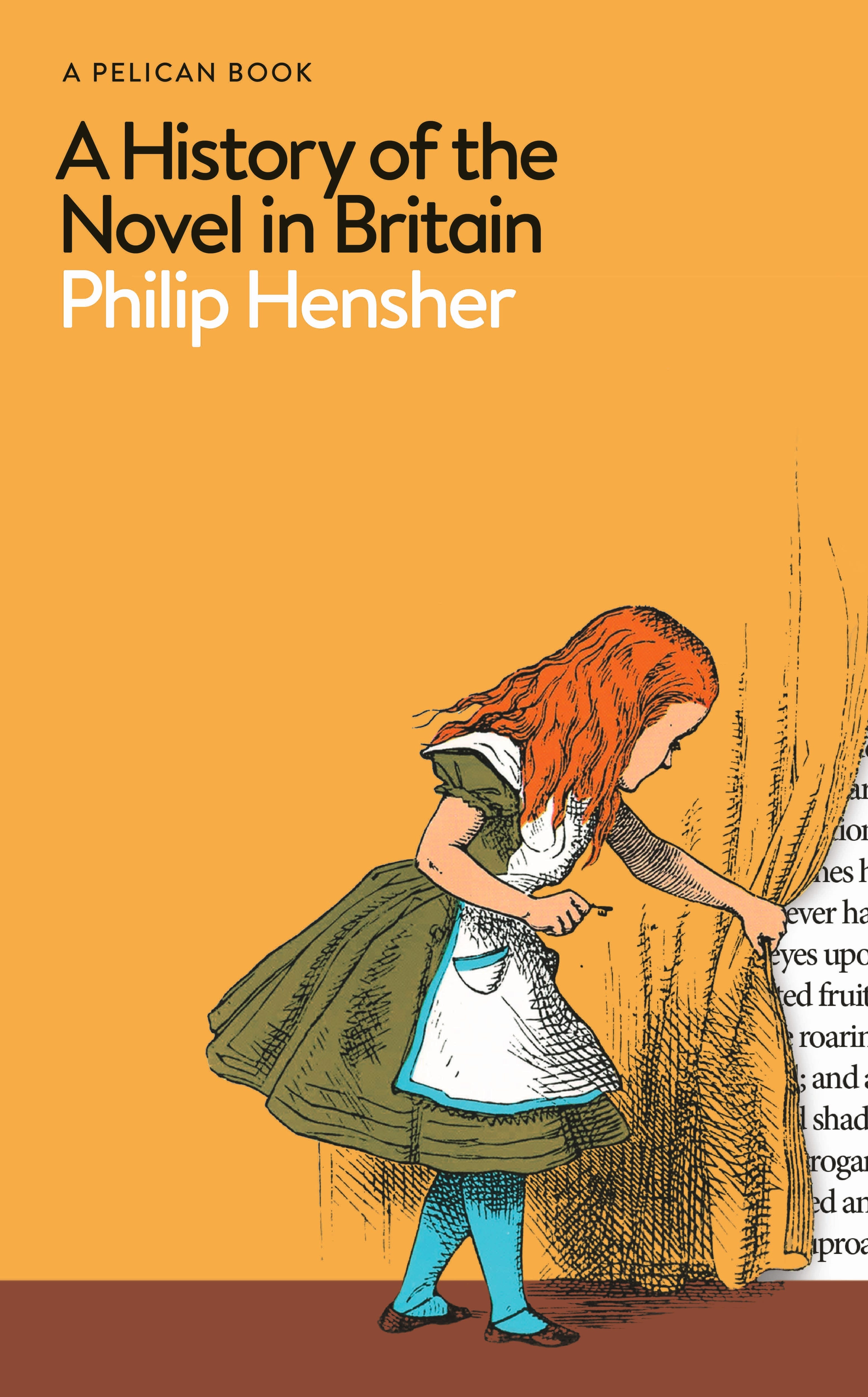
The novel is sometimes imagined as a bulwark against that sort of cultural change, a refuge from (or resistance to) the dominance of commerce and technology. One of the pleasures of Philip Hensher’s new A History of the Novel in Britain is his alertness to the role of economics in the development of the novel. As well as the expected history of novelists and their work, Hensher provides an account of the commercial factors that changed the form and content of novels, such as the role of cheap printing in serialization and magazines in the golden age of genre stories. Chief among the “patrons” who, according to Hensher, have done more harm than good, was Charles Mudie, who set-up Mudie’s Lending Library in 1842, and was, largely, responsible for phenomena such as the three-volume novel and sexual censoriousness that shaped the novel for the rest of the century. Of course, a lot of this comes down to public taste. Kingsley Amis records in his memoirs being told to tone-down a swear word in his second novel, otherwise he would lose the Boots Lending Library purchase of 2,000 copies. Amis made the correction. That was in 1955, a long time after Mudie. The British public had reticent taste, not just the “patrons”. The British idea of civilization was not only created by the novelists, but recorded by them in form and content, in absence as well as presence.
As a novelist himself, Hensher is especially alert to the way writers record modern speech. My favourite example, perhaps because it is so much of my own time, comes right at the end, when he quotes Zadie Smith (who he rightly calls “a gifted listener”): “Jones give it a rest. I’m having a fucking debate. Hifan, what school you at now, mate?” People did speak like that when I was young. Reading that line now, I can hear the intonations of year 2000. Hensher’s whole history is full of these little noticings; quotation is the primary critical faculty, and in the hands of an astute novelist, it works slightly differently than it does for a critic, though in what precise way is hard to say: Hensher has a professional respect for many of the writers he discusses here, and that gives the book a singular pleasure.
Hensher is enjoyably provocative and idiosyncratic. These really are his own opinions, based on a tremendous amount of reading and a long-developed critical faculty. Amelia is said to be a very good novel (a proposition which I find extraordinary). He is very hard on Walter Scott, regarding him as more or less a bad writer and not much more. (But who cannot love Ivanhoe?) Surtees is praised to the hills. The Sacred Fount is claimed as the most difficult novel in the language, ahead of Finnegans Wake (an intriguing claim). Wodehouse is proposed as Modernism’s greatest legacy, perhaps the most enjoyable section of the book. Agatha Christie gets light, but critically astute, praise.
Christie is one of Hensher’s blind spots. Christie is a bizarre author to disdain. He isn’t crass about it, but it cannot be right to say that her novels are “a pure game, with strict rules” in which “Psychological investigation is reduced to nothing.” It is true that “a room in an English country house is plunged into impenetrable darkness at 6.30 p.m. during British Summer Time by the lights being turned off” but Jane Austen put apple blossom on the trees at the wrong time of year and Shakespeare allowed Romans to wear spectacles. Hensher slips into the mistake of judging her as the sort of novelist she is not. I no longer find it possible to read Christie, having inhaled so many of them in earlier years, but a great deal of respect ought to be owed to her achievements, both as a writer and commercially. She is one of the most read, most loved, and most accomplished British writers, even if what she wrote was not literature.
In general, though, Hensher brings a liberal and catholic attitude to his project. This is the novel in Britain, not the British novel, and so writers like Christine Brooke-Rose are included, and attention is given to the post-war writers in Britain who worked in other languages. (I have not read Brooke-Rose.) The history of the novel includes diversity of genre as well as social status, gender, or ethnicity of the writer. In true liberal fashion, Hensher puts this diversity to no political end, but merely uses it as a methodology for his narrative. It also allows him to poke some of the shibboleths of literary attitudes.
In a splendid passage about Arnold Bennett and Virginia Woolf, Hensher points out how absurd it is that Woolf—daughter of perhaps the most influential editor of his day who was related to Thackeray and a Duchess—is often called an “outsider”, while Arnold Bennett, who never lost his provincial accent, is thought of as “establishment”. Woolf, Hensher points out, believed champagne was opened with a corkscrew, whereas Bennett made and spent an awful lot of money. (Woolf relied on a small private income, before her books and the Hogarth Press started earning.) Still, Hensher is able to offer high praise to Woolf’s fiction (though he hates The Waves), and sees her merits, while also seeing the strength of Carey’s argument in The Intellectuals and the Masses. So many critics play the game of equanimity in order to be able to revert to the pre-ordained political conclusion all the more plausibly. Hensher declines this sort of bluster and makes authentic judgements.
This is a plausible approach because Hensher has read an awful lot and he is careful not to cite novels he hasn’t read, or to footnote what he has and has not read. (The bibliography is fifty pages long.) This is a vast history of the British novel, not a popular account of the canon with some context. Alice Thomas Ellis is a familiar name to even a moderately well-read person in the British novel, but Lady Florence Dixie is not. He has endured more Charlotte Yonge than I was able to, and more Margaret Oliphant than I thought was humanly possible. Writers like Eliza Haywood are given sensible treatment, as are Victorian writers who only attract minority followings like George Meredith. He spans the sentimental novels of the eighteenth century to the work of John le Carré.
The strength of Hensher’s interests and the fact of his knowledge coming from his life as a writer makes the book compelling on its own terms. He has an assured and simple tone, which is flexible enough to sustain such a large project without ever going stale or lapsing into critical complacency. Both in his novels and his Spectator criticism, Hensher shows a more conservative disposition than many other writers, and this is put to witty effect at several moments.
Just as a modern-day prize committee would never reward a novel that chose to inhabit the point of view of a Brexit supporter, or even a Conservative voter, with any sympathy, so the mere fact of Mudie’s regime of patronage warned publishers away from novels that fell short of an ideal standard of morality.
He is, unlike some of the scholarly histories of the novel, capable of being direct and succinct. “Austen’s characters speak in astonishingly direct ways”, he tells us, arguing that her “virtuosity in rendering speech” is the key to her great superiority above the other writers of her time. It is in his constant antagonism to the novel and its enemies—be they overbearing patrons or fussy moralists who fretted that novels were degrading—that Hensher’s clipped judgements are most enjoyable.
An analysis of the contents of ten very humble lending libraries in London in 1838 is of great interest, not just for the analysis of what ordinary readers were borrowing and reading, but for the attitudes of the statisticians. In declining numbers of copies (from 1,008 per category to 10), they run:
Novels of the lowest character, being chiefly imitations of Fashionable novels… Fashionable novels…Novels by Walter Scott, and novels in imitation of him…Novels by Captain Marryat, Cooper, Washington Irving… Miscellaneous Old Books… Romances, Castle of Otranto…Voyages, Travels…Novels by Miss Edgeworth, and Moral and Religious Novels… Novels by Theodore Hook, Lytton Bulwer… Lord Byron’s works, Smollet’s d[itt]o, Fielding’s d[itt]o… Works of Good Character, Dr Johnson, Goldsmith… Books decidedly bad.
We will not waste time on these commentators, except to note they have registered one of the great moments in literary culture, from consumption by an elite with money and time, to a universal culture of considerable sophistication. As this culture of universal consumption took hold, and anyone could find a novel they could enjoy, it created one of the most glorious phenomena in world history: the British novel from the 1830s to the First World War.
You will notice that Hensher is not afraid to draw the line at a provocative point. It would be no fun were he not willing to draw such lines. It is not quite as provoking as when Elizabeth Jenkins wrote that the great age of the English novel came to an end in 1870, with the death of Dickens, which excludes Middlemarch and Thomas Hardy. But both views represent the sort of idiosyncratic taste that is essential to a working novelist. What motivates Hensher is what has motivated so many readers and writers of novels. Jonathan Rose has documented the ways Victorian readers responded to literature: valuable and fascinating as his work is, the novelists themselves are another source of that information, as in this extract from Elizabeth Taylor’s A View of the Harbour.
Lily went flicking through one book after another, but listlessly; for the choosing of the book brought the thought of the quiet evening when she would read it. The books themselves with their thick greasy boards sickened her, but gave escape into the land of the living. ‘Audley Court’, she read, ‘lay low down in a hollow, rich with fine, old timber and fertile pastures.’ In the spell of these words she sank deeply as if under an anaesthetic, away from empty and makeshift reality: she went down willingly and pleasurably, relinquishing with eagerness the gritty irritations of the harbour streets, the smell of fish, the dusty shops with their cast off clothes and furniture.1
Taylor is, unsurprisingly, one of the novelists Hensher admires, and a sign that his tastes, while they may not be exactly those of most readers, will be sympathetic with many modern novel readers, among whom Taylor, and her ilk, remain remarkably popular. It would be unfair to compare her to other novelists, or to lump her in with the “feminine middlebrow”, a category that under-describes all its contents, especially Taylor. Hensher provides a characteristically succinct and insightful summation:
They are novels of consistent classical purity of expression, taking immense care with the establishment of character, setting, motive, and plausible psychology; something of the same quality can be seen in other novels of the period, such as Elizabeth Jenkins’ fine The Tortoise and the Hare (1954), but Taylor’s work sustains that to an unusual extent. Like other novelists of decorum, she found chaotic and subversive presences very useful; she is probably the last serious novelist in English to be actively and consistently interested in the views of servants…
Naturally, I am prejudiced in favour of Hensher as he can see the value of Jenkins, which even specialists in this period almost never do, but he is certainly right to point out how “central to the literature of her time” Taylor was, much more so than was realised at the time by her publishers, though surely a whole book could be made of the anecdotes behind publishers’ misapprehensions, such as Muriel Spark’s comment that she didn’t think her publisher, Harold MacMillan, understood her books.
What I missed most was the presence of ideas. You will not get much in the Ian Watt line. Everything Hensher writes is perfectly sensible, but to my sensibility it leaves an absence. When he does draw parallels they are intriguing. The emergence of Richardson from the conduct books of the early eighteenth century is well-handled, for example, but the first thing I shall read on Hensher’s recommendation is probably Class by Jilly Cooper, which Hensher says is essential to read along side Alice Thomas Ellis. He also calls Cooper “the sort of excellent novelist that Q. D. Leavis taught the aspiring intelligentsia to despise.” So perhaps I shall try Riders.
Every novel is a novel of ideas, not in the sense of being a novel that explicates and sermonises but in the deeper, broader sense that nothing can be written that is not founded on some belief, some worldview, some ideology, or some instinctive understanding. Hensher did not need to expand his view to the relationship between Jane Austen and the Enlightenment or Charles Dickens and the utilitarians to give this vision of the novel its due place. He might have given more space to the Ruskinian and Christian ideas in Penelope Fitzgerald (an author who I would have given more space and more praise) for example. I proposed this vision of the novel as inherently a form of ideas to Hensher at a Civic Future event this summer and we disagreed quite straightforwardly. To my mind, to conceive of The Portrait of a Lady as a novel without a set of ideas at its heart is hardly to conceive of it at all. To Hensher, my perspective was unthinkable. Ideas are not as absent from this account. He identifies Wells’ “principle… that the impossible fact convinces if it is surrounded by a mass of objectively plausible, even banal, properties.” But overall it felt to me like some of the most exciting aspects of fiction—its ability to work not just as a means of examining moral problems but intellectual and social problems of all sorts, as a partner to philosophy—were given less space than they deserve.
As I said before, what makes this book worthwhile and fascinating is Hensher’s personal approach, wide reading, and professional novelist’s disposition. It will surely remain as the standard popular account for a long time to come. The novel is not only the major literary form of modern times, it is practically the only form many readers now care about, including professional readers, and as it continues to adapt to its relegated but important position, Hensher’s book will be a provocative and useful guide to anyone who wants to know more.
The heart of Hensher’s account is that the novel is adaptable, constantly trying new things in response to changes in copyright law, book pricing, implicit censorship, swelling and shrinking audiences, fashionable beliefs among the literary elite (this is why he thinks so many novels in the late twentieth century were so short), and, most of all, reactions to the novels of the immediate past.
As the screen gives way to AI, we will be living through a new period of change akin to the radio or the printing press, a whole new set of mediums will emerge, a new way of spending time, a wholly different balance of modes of entertainment and intellectual engagement will become normal. Shakespeare required indoor theatre. Dickens needed serial publishing. Hollywood needed celluloid. Likewise, whatever new conditions AI provides may lead to new forms of cultural creation. This may or may not lead to a new burst of life for the novel, but it need not be the death of the novel. Whether AI becomes a new medium of fiction, a spur to new innovations in human writing, takes the place of “conduct books” and philosophical inspiration, or is merely the foil against which many writers define themselves, we do not yet know. But we can be sure the novel has a future.
That is why, although it was sensible of Hensher to stop his account in the year 2000, claiming the usual critical difficulty of not being able to properly assess modern work, a long essay with his views of the modern (and future) novel would be a suitable epilogue—perhaps he shall publish one elsewhere. It is still the case that writers like Emma Cline, Sally Rooney, and Kiran Desai achieve large readerships and occupy a significant place in modern culture. Perhaps it is less true of British writers, or of writers in Britain, but the cultural commotion caused by writers like Houellebecq is not yet a dead force in the world.
It is more and more true that what we all thought was normal life is gone and never coming back. Whether that drives us to read once a year or once a day, whether we read for pleasure, escape, intellectual stimulation, cultural and historical curiosity, or all of those things, whether we read novels the way we go to the gym or the way we eat cake, they will still be an irreplaceable, incommensurable, irreducible part of living. Just this week, I saw a video go viral of a young woman finishing a novel as an airplane landed. She was sobbing. Nothing works quite like a novel.
Philip Hensher’s new A History of the Novel in Britain

Presumably the minor inaccuracy is intentional. The opening line of Lady Audley’s Secret being: “It lay down in a hollow, rich with fine old timber and luxuriant pastures.”
Well if ever a review made me immediately buy a book, this is that review and this is that book. This will be enjoyable autumn reading.
I'd be interested to know others' assessment of the overall quality of this new Pelican series, which looks great: https://www.penguin.co.uk/series/PELBKS/pelican-books