

I am delighted to have contributed an essay to Liberty Fund’s new Forum about John Locke’s Essay Concerning Human Understanding. Here is the opening.
One day, when my son was three years old, he stuck his finger into a candle. We were sitting at the table before dinner and he touched the flame without warning. When his sister asked him why he had done it, he told her he just wanted to know what the flame was like. I remembered this when I was reading Locke’s Essay Concerning Human Understanding, in the section when Locke discusses how certainly we can know the world beyond ourselves, and he writes: “he that sees a candle burning, and hath experimented the force of its flame by putting his finger in it, will little doubt that this is something existing without him.” (IV.xi.8) This is how the love of philosophy begins: in a curiosity of the world and a willingness not just to question it, but to test it directly. It illustrates Locke’s larger point about man’s capacity to reason without the use of formal logic. “God has not been so sparing to men to make them barely two-legged creatures, and left it to Aristotle to make them rational.” (IV.xvii.4) We become philosophical as we become interested in knowing the qualities and limits of the world and ourselves. And that begins in childhood.
For the modern, empirical, skeptical mind, Locke’s finger-in-the-flame is akin to the philosopher leaving Plato’s cave. In that experiment, my son became a novice of philosophy. What he learned, he could not communicate. He did not have the language he needed. He was, essentially, at play when he touched that flame. To philosophise, then, requires some play. To be rational requires us to do “irrational” things, like touching a flame.
Coming later this week and next there will be essays by Rebecca Lowe, Oliver Traldi, and Galen Strawson. You can read my whole essay here.
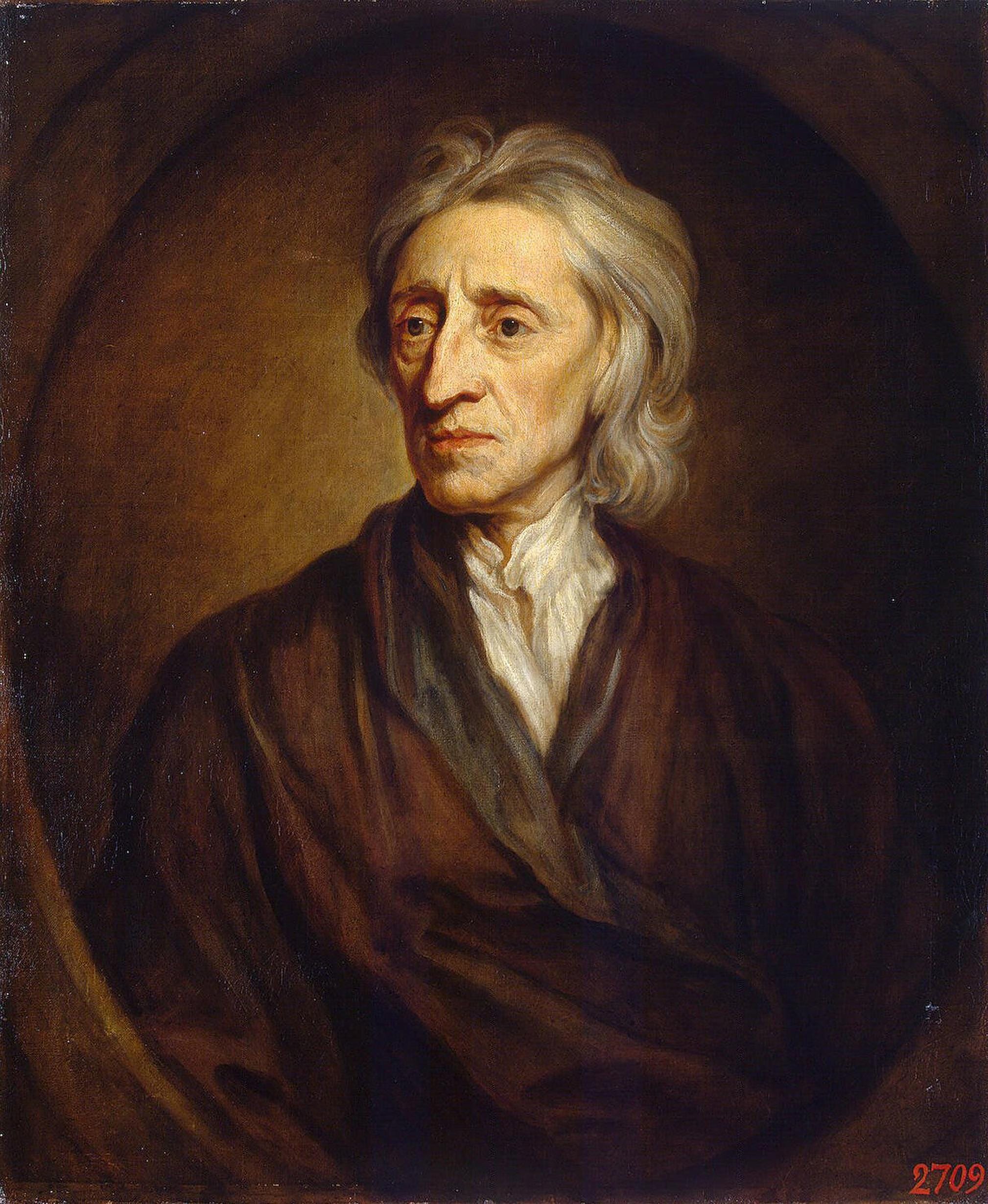
.jpg)
I find it soothing and entirely natural that Locke would retain the wonder of a child. Isn't that how the best things are achieved? thank you for sharing the full essay.
Thanks for this essay!
I think the notion you mention of play is also the measure of original voice in literature, on the one hand of a child and on the other of a concert pianist. Otherwise you remain within someone else's cone of influence and never sound very different from them or the multitude sharing the same influence.
Separately, but related, I've been entertaining the notion of the Cogito with regard to artificial/virtual constructs, in the sense that the measure of authenticity can be derived from the measure of one's own creative voice in the act of creation, to the extent one can be original with it. Whatever else is occurring, one can still hear oneself in the act of creation. This borders on solipsistic, but not entirely.